
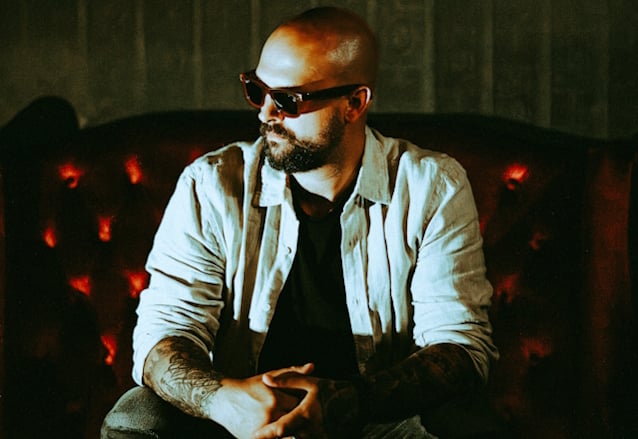
SIFYN, the Minneapolis band founded by former VEIL OF MAYA vocalist Lukas Magyar, have released a new single, "Code", and announced the EP it belongs to. "Self-Encrypted" arrives December 4.
"Code" is about the strain of shouldering someone else's pain — specifically, the tension between the urge to protect a person and the knowledge that they have to find their own way through. The video opens on a television screen lost in static before erupting into colour and flashing light, mirroring the song's push and pull.
Magyar is treating the single as a signpost. "We can't wait to see how people react to our new sound," he said. "'Code' is full of brilliant moments and I think our fans will agree. It'll give everyone a glimpse of what is next for us."
On the EP as a whole, he is similarly direct. "'Self-Encrypted' is an exciting collection. We packed a lot of substance into this body of work. I look forward to performing every track on this EP. It's challenging and it's emotional and energetic, but mostly it's just a ton of fun."
"Self-Encrypted" track listing:
- Code
- Sovereign
- Sew Me Up
- Invoker
- Lexicon
SIFYN began as a studio project and grew into a full band over close to a decade. The current lineup is Magyar on vocals, guitarists Mike Green and Dustin Korth, bassist and co-writer Derek Sampson, and drummer Avery Frisk. Their sound pulls metalcore's weight together with alternative rock textures, early-2000s emo volatility and pop-minded melody — muscular rhythms and skyward guitars under a layer of cyberpunk-sheen production — without pledging allegiance to any single scene.
The bigger shift on "Self-Encrypted" is one of distance. Where the 2022 debut "Marionette" routed pieces of Magyar's life through fictional characters, the new EP drops the disguise entirely, dealing with loved ones in crisis, identity, ideology, dreams and personal agency with what the band describe as the urgency of a deathbed confessional.
The band's argument is that narrowing the focus to lived experience made the songs more universal rather than less, leaving room for listeners to enter the story and ask their own questions rather than just watch someone else look for answers.
Source: blabbermouth.net