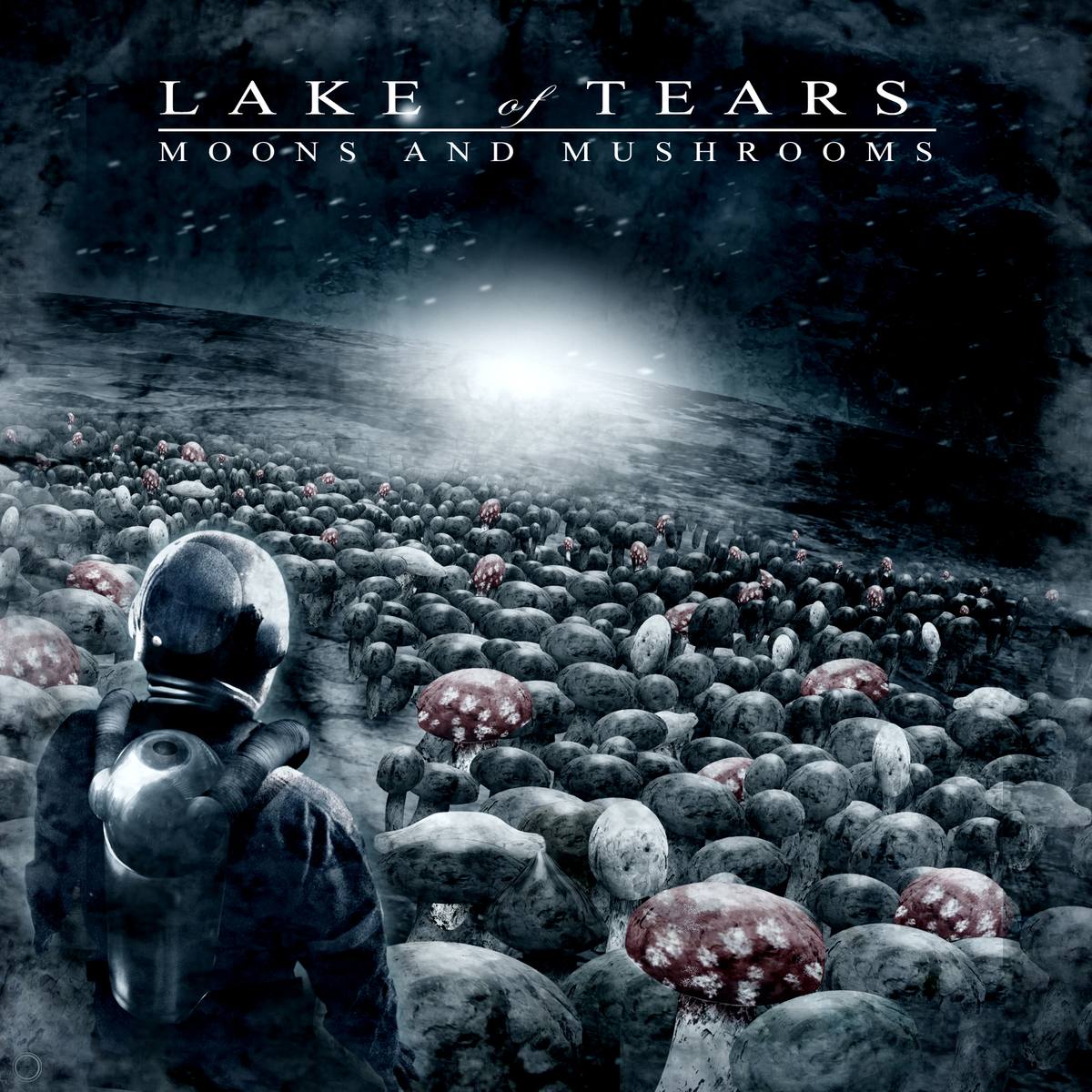
On April 26, 2007, LAKE OF TEARS' seventh album was officially released. What the new disc would sound like was a question many fans of the Swedish melancholics had been pondering. The only clue was the song "Children of the Grey," which LAKE OF TEARS had been performing at concerts in 2006. Let's say right away: after the first listen of Daniel Brennare's new work, you really want to exclaim, "What on earth is this?" The answer can be found by listening to the disc a few more times. It's different — simply different, and very unexpected. Most of the compositions lack the symbiosis of flexibility and melodicism that we hear on "A Crimson Cosmos," and there's certainly none of the psychedelic sadness that permeates "Forever Autumn"; even the gentle melancholy of the "Black Brick Road" has vanished somewhere, and the quiet organ sounds are gone. The album is unlike anything LAKE OF TEARS have ever done before. Granted, their releases have always differed from one another, sometimes quite dramatically, but they were always united by a certain simplicity of delivery for not always simple material. The only exceptions were the doom-laden debut and, to some extent, "Headstones." Now "Moons and Mushrooms" joins them. Before discussing the current disc in more detail, let's note an important fact: Magnus Sahlgren had been playing lead guitar in the band for about a decade, yet throughout that entire period he was never officially listed as a member. Now we can once again call LAKE OF TEARS a quartet, since the unchanging trio of Daniel, Mikael, and Johan has been joined by Magnus as a permanent musician, and in the album booklet we see four photos of the members. The cover art perfectly matches the album's title — and for the second time in the band's history, we see fly agaric mushrooms on it (these mushrooms, which have become one of the group's main symbols, first appeared on "A Crimson Cosmos" ten years ago).
Now, in more detail about what we hear across the eight tracks of "Moons and Mushrooms," totaling just over 40 minutes. The disc opens with the solemn and very dark riffs of "Last Purple Sky"; while their structure may recall the beginning of "A Crimson Cosmos," that's where the similarities end, and there is a certain detachment and heaviness in the broadest sense hanging in the air. Second comes the album's shortest song, yet bearing the longest title in the band's history: "You Better Breathe While There's Still Time." Stylistically, it continues the line set by the previous track, then breaks off into a brief keyboard passage, and from keyboards begins the next song — the remarkably beautiful "Waiting Counting," which features that combination of tension and heaviness with melancholic lightness so characteristic of LAKE OF TEARS. Its keyboard ending flows organically into "Like A Leaf," a song that seems written specifically for fans of the album "Forever Autumn" — a stunning and enchanting piece, there's simply no other way to put it. "Children Of The Grey" brings to mind "Crazyman," at least rhythmically, though it sounds considerably heavier. "Head On Phantom" and "Island Earth" are cut from the same cloth — sounding detached and contemplative. Listening to the album's closing track, "Planet Of The Penguins," one can't help but recall the genre in which the band once began their career — doom metal, of course — and stylistically, this depressive composition with its wonderful guitar solo is a kind of tribute to that heavy music genre.
What makes this album so different from everything we've heard on the band's previous releases? The realization comes after several listens: it lacks the warmth and unassuming sincerity that radiate from "Forever Autumn" and are present on other discs. The music on "Moons and Mushrooms" is not simply dark and depressive — it sounds more measured and contemplative than ever. The album keeps the listener in suspense for nearly its entire duration. And it's behind that very tension that the sadness and melancholy distinguishing LAKE OF TEARS' work lie hidden — you have to hear them. I strongly advise against shelving this album if it doesn't resonate with you on the first listen; better to spin the disc a few more times. The album feels more cohesive than ever, and the compositions truly come alive only in conjunction with one another.