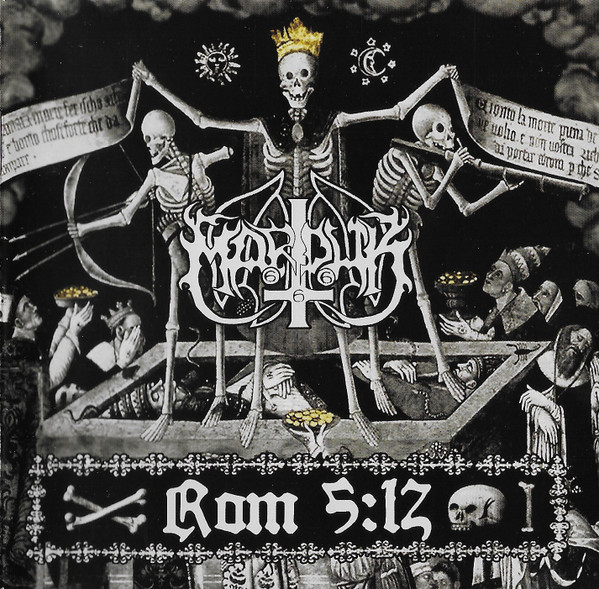
Before us lies a 44-page booklet, a nearly hour-long CD, and the fact that almost two and a half years have passed since the previous album — an unprecedentedly long gap between studio releases for MARDUK, who regardless of lineup changes have always worked quite energetically; their first album came out in 1992, and "Rom 5:12" is already their 10th! Honestly, after just the first listen, one wants to say only this: if this break had its effect on the recorded material, then let the Swedes rest even longer, because such a comprehensively strong studio effort could hardly have been expected. There is no wall of sound that was present on the last two releases, no competitions in speed and aggression. Finally, there are virtually no death metal elements here — Morgan composed magnificent material and kept it within black metal traditions. Above all, this stylistic direction is reflected in the darkest atmosphere permeating the entire disc, while at the same time the music turned out quite memorable and melodic. There is something special about this album — it is like a solemn procession of evil, chaos, and darkness; precisely solemn, not chaotically rushing and overtaking itself. Even the uptempo tracks on the album are extremely restrained and never for a second create the impression of mindless pounding. Particular mention should be made of the long tracks, as they give the disc its unique character. "Imago Mortis" and "Accuser / Opposer" are possibly the best compositions ever created by the band. Slow black metal with an expressive and quite varied vocal line — the second of these compositions is truly unique, its echoes carrying us back to the work of MARDUK's great countryman Quorthon. In conclusion, let us say that this album has truly revealed Mortuus's talent as a vocalist. His vocals have acquired an entirely new timbral quality, becoming rougher, more expressive, deeper, and perfectly suited to the music we hear. Whoever figures out the concept behind the booklet deserves a special prize — what the alternation of clergymen, monks, and nobles in 15th-16th century costumes with skeletons means is apparently understood only by the artist who designed the album and possibly Morgan. Whether these are yet another variation on the theme of the plague epidemic or something else entirely remains unclear.
A brief note on the title: it refers to verse 12 of chapter 5 of the Apostle Paul's Epistle to the Romans. In modern translation, these lines read: "Therefore, just as sin entered the world through one man, and death through sin, and in this way death came to all people, because all sinned" — referring to how Adam's original sin has consequences for all of humanity.