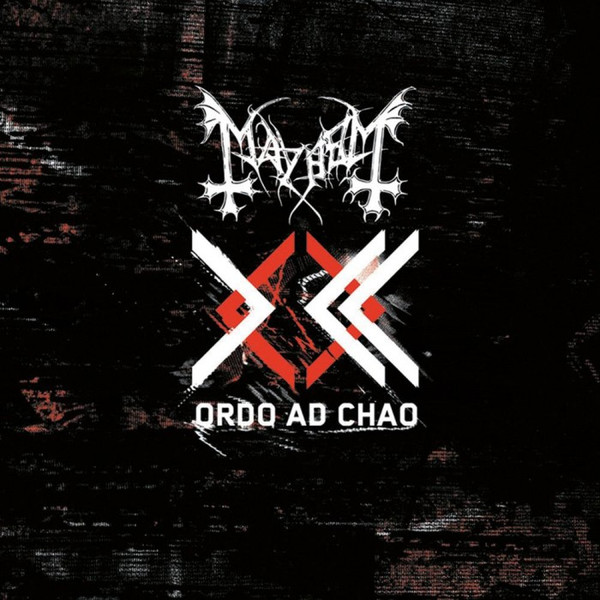
This band is now in its third decade, their new album came out this year, and it is only their fourth. Yet such rare studio releases do not prevent MAYHEM from remaining one of the most famous and, without exaggeration, cult bands in the world of extreme metal. Almost immediately after the release of the previous album in 2004, the band literally stunned fans with the news: Maniac was leaving the group, and Attila Csihar was taking over vocal duties. Attila, who had been working intensively with the Italian act Aborym in recent years, left that project in 2005 and fully concentrated on his work with MAYHEM. Needless to say, fans of the band's debut album were in true ecstasy over this replacement, for it is Attila's vocals we hear on "De Mysteriis Dom Sathanas," and it was there we first encountered his absolutely unique vocal style. Already in October 2005, information about the forthcoming album appeared; a little over a year later, the band entered the studio where, over three weeks, they recorded their fourth album — "Ordo Ad Chao." Ultimately, the album was released on April 16, 2007. So, let us look in more detail at what awaits us across 8 tracks totaling 41 minutes.
What we hear on this album is staggering from the very first minute. The largely instrumental intro, stretching over three and a half minutes, already makes it clear that we are about to hear something utterly unlike the material of the previous "Chimera." A deliberately raw, dirty sound has been created; the musicians' intent is quite clear — to approach the sound that was characteristic of black metal in the early '90s. The riffs are mostly mid-paced, the drums sound very muffled, guitar tremolo is present throughout, so speaking of the album's genre — this is true black metal in every sense. The music is more terrifying than ever; there is not even aggression in it, only darkness and chaos. And here it is time to speak of the band's "new old" vocalist: he shifts from screaming to sinister rasping, sometimes his voice transitions into an obsessive wailing and immediately he is solemnly declaiming the lyrics. Attila's vocals have become even more diverse and multifaceted compared to the 1993 release. It is difficult to single out individual compositions on this album — nearly impossible, in fact — it must be listened to strictly from start to finish. Truly, it is worth it.