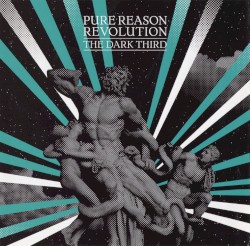
The album "The Dark Third" is PURE REASON REVOLUTION's debut. What the future holds for the band is hard to say, but one thing is certain — they won't be filling stadiums, as they work in an entirely non-commercial genre. Before us is a blend of progressive rock, grunge, and post-rock; in addition to the traditional guitars, bass, and drums, there's a violin, and it's on this instrument along with piano that we hear most of the solos. The main vocals are female, belonging to Chloe Alper, who also plays bass guitar. James Mayall plays just about everything, including violin. Jon Sheridan and his brother Andrew are the band's founders — the former is a guitarist, keyboardist, and vocalist, while the latter focuses on drums. It is in this lineup that the musicians' debut was recorded. The male voices form an excellent choral accompaniment to the female lead; moments when all instruments are engaged are interrupted by solo keyboard passages. There are quite a few electronic samples of a psychedelic nature. The disc runs just over an hour. The last track contains a hidden song.
Analyzing this work is extremely difficult. First and foremost, because it is so unconventional and unlike everything else happening on the contemporary scene. Elements of metal are present but in small doses, while associations with JETHRO TULL and PINK FLOYD are constant. Yet it still can't be called neo-prog — although instrumentally we hear quite technically accomplished parts, they aren't oriented toward showcasing each instrument in a solo spotlight, even when interacting with others. The vocal construction and structuring, however, deserve special mention. The interplay of voices is truly astonishing — they sound like a canon but never dissolve into cacophony. The situation we frequently encounter in prog-rock, where vocals become secondary accompaniment to the instrumental palette, is completely reversed here — the voice takes center stage!
One thing can be said with certainty: in experimental rock, this is one of the most serious works in recent years. Without competing in flamboyance or outlandish sonics, the band achieves its own unique effect — a peculiar sense of extraordinary relaxation comes over you while listening to this record.