When you see releases like this before you, you involuntarily ask yourself what to expect this time. The only thing you can be sure of is that the disc won't be trivial. Progressive rock legend ROINE STOLT — acclaimed vocalist and guitarist, member of the famous retro-prog outfit FLOWER KINGS as well as a whole series of unique projects including TRANSATLANTIC (Mike Portnoy, NEAL MORSE, Pete Trewavas) — releases his third solo album, with NEAL MORSE among the musicians. This means that in addition to extraordinary music and magnificent vocals, we'll also be able to enjoy splendid keyboards. The disc is a double album with a total running time of 1 hour 55 minutes. However, the disc simply must be listened to in its entirety. At first it may seem somewhat dull, but by the third composition you can sense the full artistic richness of this music. A few words about genre: this is not retro-prog, as one might have expected. Art-rock elements are certainly present here but are not the sole defining force. Stylistically, this is closer to blues rock, laced with a vast array of other elements. In many compositions we hear jazz-rock and fusion, elsewhere echoes of classic rock'n'roll, and in a number of endings there is magnificent and technically complex art-rock. On the other hand, all of this constitutes the structural components of the music we call progressive — the merging of various genres, formats, and possibilities, and as a result, the achievement of a unique effect. In short, Mr. Stolt continues his glorious work in creating "music for intellectuals," for which one can only extend enormous gratitude.
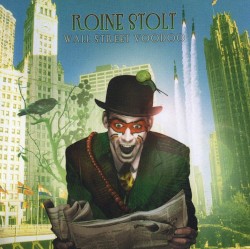
Track Listing
- Disk 1
- The Observer Stolt 11:10
- Head Above Water Stolt 5:27
- Dirt Stolt 8:14
- Everyone Wants to Rule the World Stolt 4:07
- Spirit of the Rebel Stolt 6:10
- Unforgiven Stolt 2:57
- Dog with a Million Bones Stolt 8:17
- Sex Kills 7:25
- Outcast Stolt 7:50
- Disk 2
- The Unwanted Stolt 8:57
- Remember Stolt 6:57
- It's All About Money Stolt 7:51
- Everybody Is Trying to Sell You Something Stolt 6:55
- Hotrod (The Atomic Wrestler) Stolt 9:02
- Mercy Stolt 2:40
- 07 . People That Have the Power to Shape the Future Stolt 11:00