
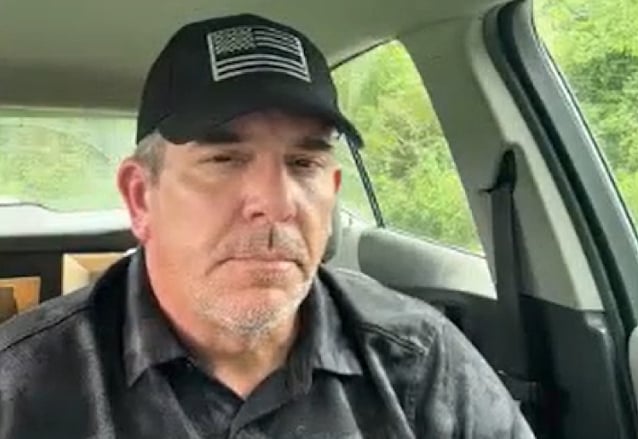
James Niggemeyer, the former Columbus, Ohio police officer who ended the December 2004 shooting at the Alrosa Villa, has given a long interview to Bill Bailey of Today's Boondoggle Podcast about the night that killed four people — including PANTERA and DAMAGEPLAN guitarist "Dimebag" Darrell Abbott — and eventually ended his own career.
The call went out shortly before 10:15 p.m. on December 8, 2004. Niggemeyer had just left roll call and was already in his cruiser, and his district was the farthest from the substation, so he was first out and first on scene, less than three minutes after the initial 911 call.
He was also one of only two officers in the precinct carrying a Remington 870 shotgun, because his district was rural enough that deer struck by cars had to be put down. "The Remington 870 was the same shotgun that I hunted with since I was 12 years old. I knew that gun inside and out," he said. "A lot of people ask me, 'Why'd you use a shotgun instead of your pistol?' Well, one, I'm more familiar with the shotgun, and two, I'm better shot with the shotgun."
Fans outside directed him to the back door. He had never set foot in the venue. Inside, the gunman had a hostage in a headlock with a gun to the man's temple — something that had not come over the radio. "I just felt like I couldn't sit and wait on backup," Niggemeyer said. From roughly twenty feet he fired a single shot. The gunman still had 35 rounds of ammunition on him.
"You hear the words 'tunnel vision', but it was true," he said. "Literally, everything was black except for the suspect and the hostage. I literally didn't hear or see anything else. I can't even tell you what people were screaming."
He was escorted off the scene within about two minutes and did not learn who had been killed until roughly half an hour later, through radio chatter. He had never been a metal fan — country and classic rock, he said — though he knew who PANTERA were.
The aftermath is the part he is candid about. "I was hospitalized for panic attacks. That was the thing that got me the most, was the panic attacks, and then the constant nightmares," he said. "I'd just be here on a normal day, like talking to you, and I'd just go into a full-blown panic attack, and I couldn't breathe."
He stayed on patrol for three years before the city, on medical advice, moved him to the robbery section as a detective; he was eventually retired medically. "So, yeah, it ended my career," he said. "But I don't regret it for a minute. I'm glad I was able to stop him before a lot more people were hurt."