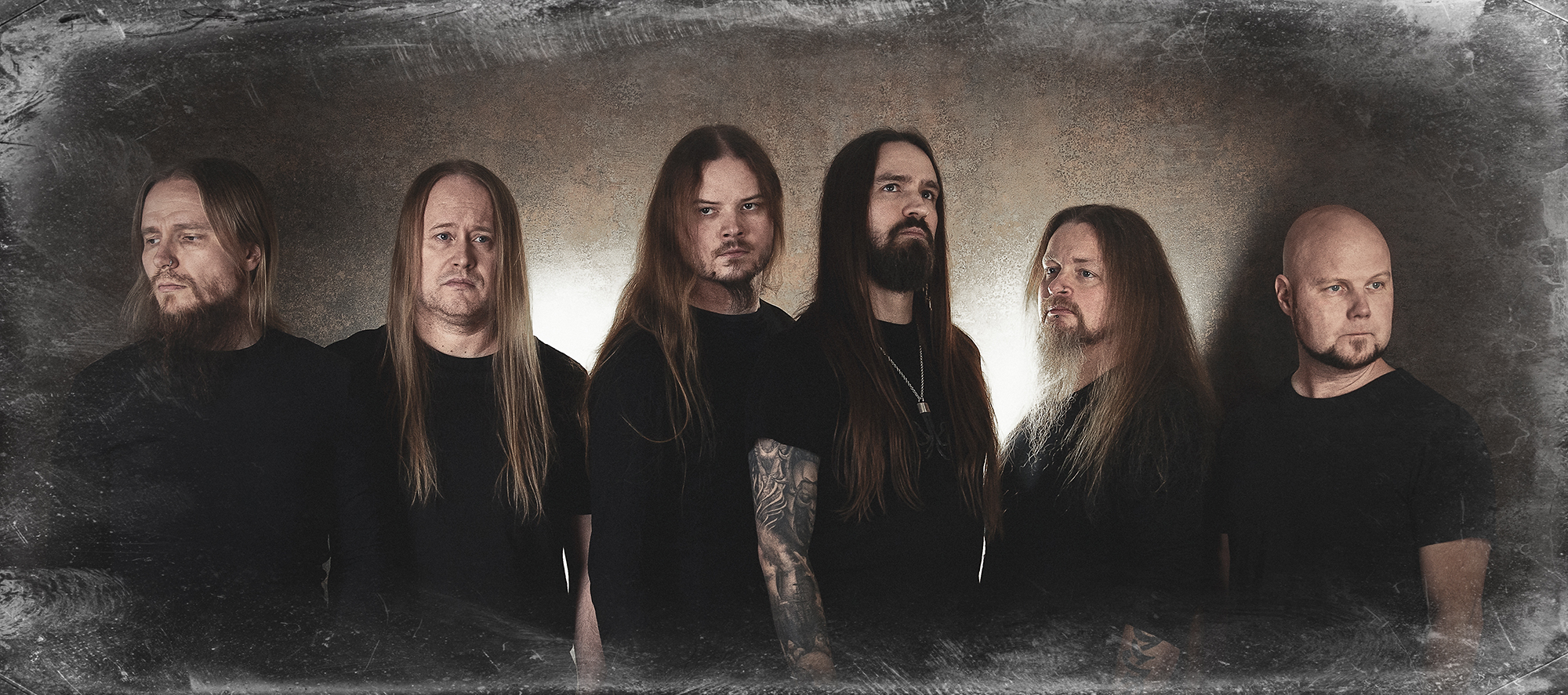
Scorpio: You’re heading to Maryland Deathfest in a couple of days. If I’m right, this is …AND OCEANS’ first official performance in the United States.
Mathias: Yes, it is — and not just the first official one. It’s the first show ever for us over there.
MDF has a famously diverse lineup — thrash with KREATOR, then NAPALM DEATH, ROTTING CHRIST, and a lot more across the genre spectrum. Your music is pretty diverse too. How do you approach a setlist for a show like this, and for festivals in general, where many people may be hearing you for the first time?
Mathias: Since it’s our first time over there, we decided to play something from all the albums — the whole discography. It won’t be equal representation, but at least a few songs from every record, to give both the old fans and the new fans a good show.
Kauko: It’s pretty much the same when we go to a country we’ve never played before. We want to give something to everyone, not just concentrate on the latest album.
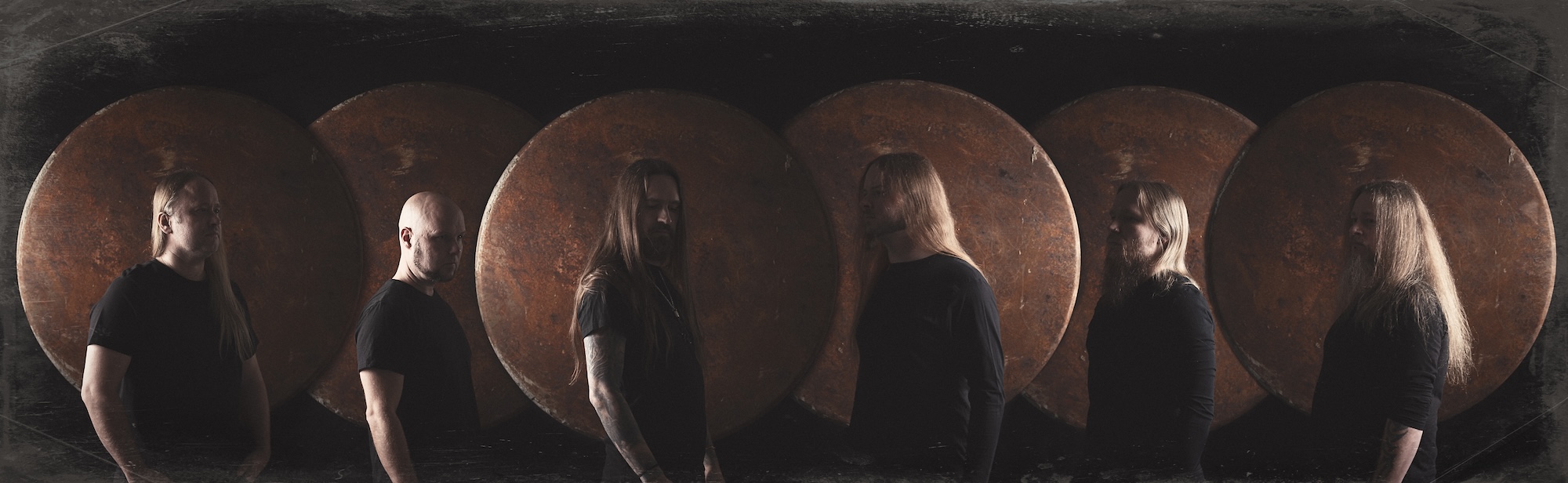 …AND OCEANS
Let’s talk about the latest album. It came out in May 2025, and in previous interviews you’ve called it a synthesis of the whole discography — the different eras of …AND OCEANS. How did that actually work during the writing process? Were you conscious about which song leaned which way — more symphonic black, more electronic?
Mathias: We didn’t really concentrate on that — usually it’s just what comes out in the moment. The writing process itself has been the same for all three comeback albums now. Three of the guys write riffs and melodies and make pre-production demos, then we get together and turn them into proper demos. We pass everything around the group — Kauko adds the drums, then keyboards or guitars, then bass, and lastly the vocals. So it’s a lot of sending material back and forth between everyone in the band.
Kauko: A lot of remote work, yeah, because there’s quite a distance between us. Pyry, our bass player, and I live in the capital area, and Mathias, Timo and Teemu — the guitar players — live in Pietarsaari. That’s almost 500 kilometers.
Mathias: Yeah, 550 or so.
Kauko: Something like that. So obviously we’re not getting together at the rehearsal space all the time. We send files and projects back and forth, and everyone puts in their input. Then at some point we get together and actually try playing them.
How does preparing for a concert and rehearsing work with that kind of distance — 500 kilometers between you?
Mathias: We get together a couple of times a year to rehearse, and we’ve made what we call rehearsal demos — backtracks with a click track that we can each practice with individually. Kauko can rehearse with them, and I can mute the vocals and sing along here at home. Making those really made the whole process easier for everyone. So it’s a lot of practicing on your own, then meeting up a few times a year — especially when we’re bringing new songs into the setlist.
Mathias, you mentioned in an earlier interview that your keyboard player, Antti, pushed the keyboards toward a more electronic sound on this album, and that it forced you to rewrite some parts and rethink some vocal takes. Can you take us through that — what was working, and what did you have to change?
Mathias: The second comeback album, As in Gardens, So in Tombs, was more of a melodic, atmospheric black metal record, and I did a lot of high-pitched screaming on it. On the new one the guitar riffs went a bit more aggressive, but I was still in that As in Gardens mindset, so a lot of my early demos were high-pitched black metal vocals. Once the material started coming together, it needed something else — suddenly there were a lot of sounds we hadn’t used in a while, and it made my vocals feel too symphonic black metal, too high up. So I had to rethink a lot of it. In the end I took the pitch down quite a bit and started experimenting with vocoders and even some clean vocals. It just needed to fit the album, fit the music.
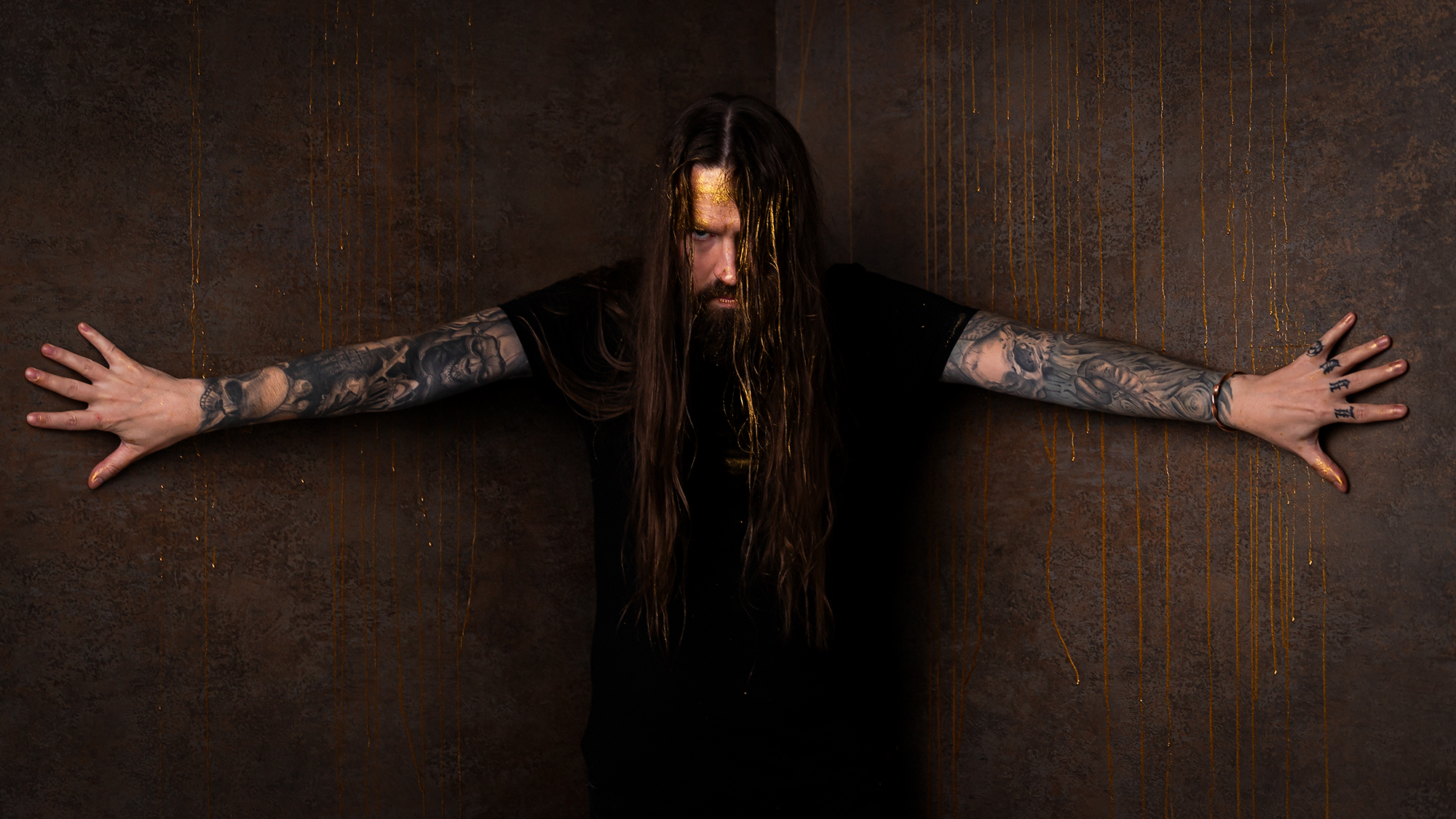 Mathias Lillmåns
Kauko, in terms of drums there are songs with three or four different feels — an intro that’s almost trip-hop before it turns into faster black metal. What was the main challenge on the new songs? Stitching it all together and keeping the transitions smooth, or even knowing when to hold back?
Kauko: The easy answer for the most difficult part is “The Ways of Sulphur.” That song took more takes in the studio than just about anything — easily the hardest thing I’ve ever had to record, mostly because I was so focused on fast playing for too long. Combining really slow and really fast parts is difficult for me, and that song sits totally outside my comfort zone. It demands that you play far more restrained than I did in the studio. And even though the guys always give me totally free hands, this was the album — of the three I’ve done with …AND OCEANS — where I got the most comments from the others. Not that anyone said “your playing sucks” or “that doesn’t fit,” but the songwriters’ original idea was sometimes different from what I’d played on the first demos. So it took the most musical effort. It’s always hard when it’s that fast — it’s physically demanding — but playing fast is actually the easy part. This is probably the most complex album from my perspective. Not progressive in musical terms, but there’s a lot more variety of feel in the drumming compared to the previous two.
How do you translate that to the shows? For the EBM-style rhythmic parts, do you use backing tracks, or do you play those yourself?
Kauko: There’s a techno kick in a few of the songs that comes from backing tracks, because there’s already a drum beat on top of it the whole time — so I obviously can’t play all of it at once, and I don’t even want to. They’re electronic beats; they’re not supposed to sound human-played or live, they’re supposed to sound like a machine. So it’s better to use backing tracks for those.
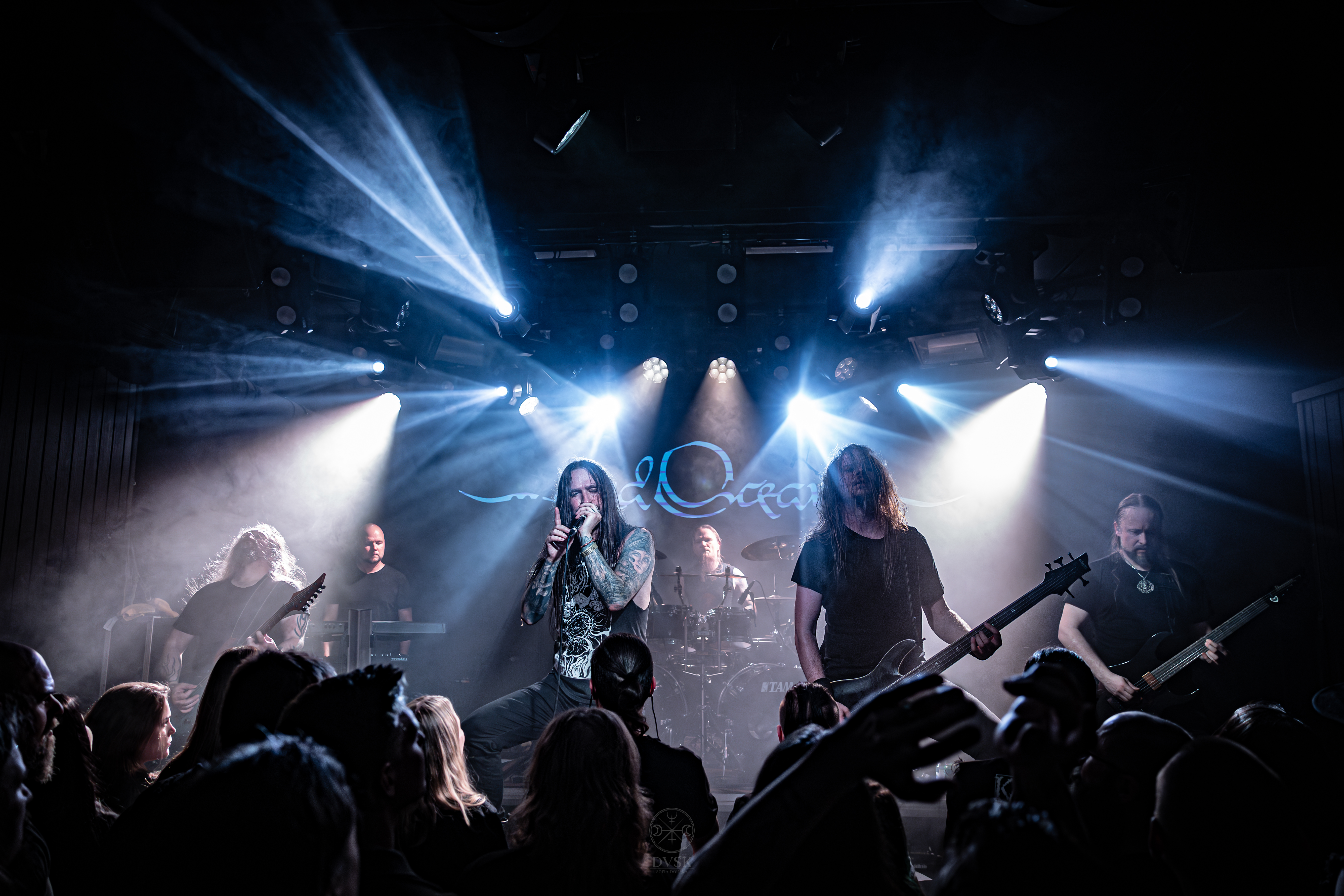 …AND OCEANS live, 2025
Thinking about the band’s whole discography — you’ve also changed names over the years. I won’t ask about the name change itself; I know that was before your time. But if you look at …AND OCEANS, the only constant seems to be change. Do you think the band has found its sound now, or is the door still open to completely new experiments?
Mathias: Like you said, the change is the constant. That’s something we’re going to keep spinning further — we’re not going to settle into some kind of …AND OCEANS box. That would be a bad decision, to start making the same album over and over just because this one was a big, successful record. There’ll be a constant metamorphosis of …AND OCEANS. I don’t think we’ll ever land on one sound.
Kauko: I totally agree. When you asked earlier whether anything was different writing this album — again, not really, but I personally felt we couldn’t keep doing the same thing. I’m not saying Cosmic World Mother and As in Gardens, So in Tombs are identical — they’re quite different — but the overall soundscape was fairly close, and we didn’t change much between them. As someone who listened to the band as a teenager, when the guys put out the first albums and then the third and fourth, I was honestly quite shocked at what was happening. That’s something worth looking at — not that we have to do it, but we should check whether there’s something we can change. The baseline is good riffs and good songs, but like Mathias said, there’s no box you can put this band in — not unless you break it completely and turn it into something else entirely.
The opening track on the new album, “Inertiae,” sounds almost like a teaser for the whole record — those rapid stops, the way it completely shifts. Was it your intention to make it the intro and immediately tell people, “Okay, this is what’s going to happen”?
Mathias: We didn’t write it with that in mind, but once the album was done, it really did start to feel like a teaser for the whole thing. It’s got the fast tempo — the black metal side — but also the electronic stuff and the atmospheric, ambient parts. It kind of describes the album, which is why we released it as the first single and used it as the intro track. It was also partly to throw people off guard a little — “what are these guys doing this time?” — to spark a bit of a conversation. I think it was the right call, because there were a lot of comments, in a very good way. And the second single, the next track on the album, is more of what you’d expect from the new …AND OCEANS. So it was a great decision.
Let’s talk about the visual side. The last two albums — maybe three — don’t have the band name or album title on the cover, which is unusual; most bands want their logo as visible as possible. For me, the last couple of covers might be the best in your whole discography. What did you want to achieve by leaving the logo and title off? I assume it was a conscious decision.
Mathias: It was conscious, and it was mostly the decision of our graphic designer, Adrien, who did all three of these covers. When he explained why, I agreed — putting the logo on as big as possible, plus the album title, would break the whole thing. It’s like a painting. It would be as if Picasso had signed “Picasso” right across it. It would take away from the artwork. Let’s not destroy it — it’s a painting.
Kauko: Definitely. It’s been really nice to see how easily someone who isn’t in the band can translate that art into different formats. I don’t even remember us having any real discussion about whether to put the logo on — after seeing the artwork, for me it was obviously no.
Mathias: I think it was only before Cosmic World Mother that we actually discussed it, and after that it was more a question of whether to keep the same approach, no logo, on this one. And I was like, “Yep, let’s do that.”
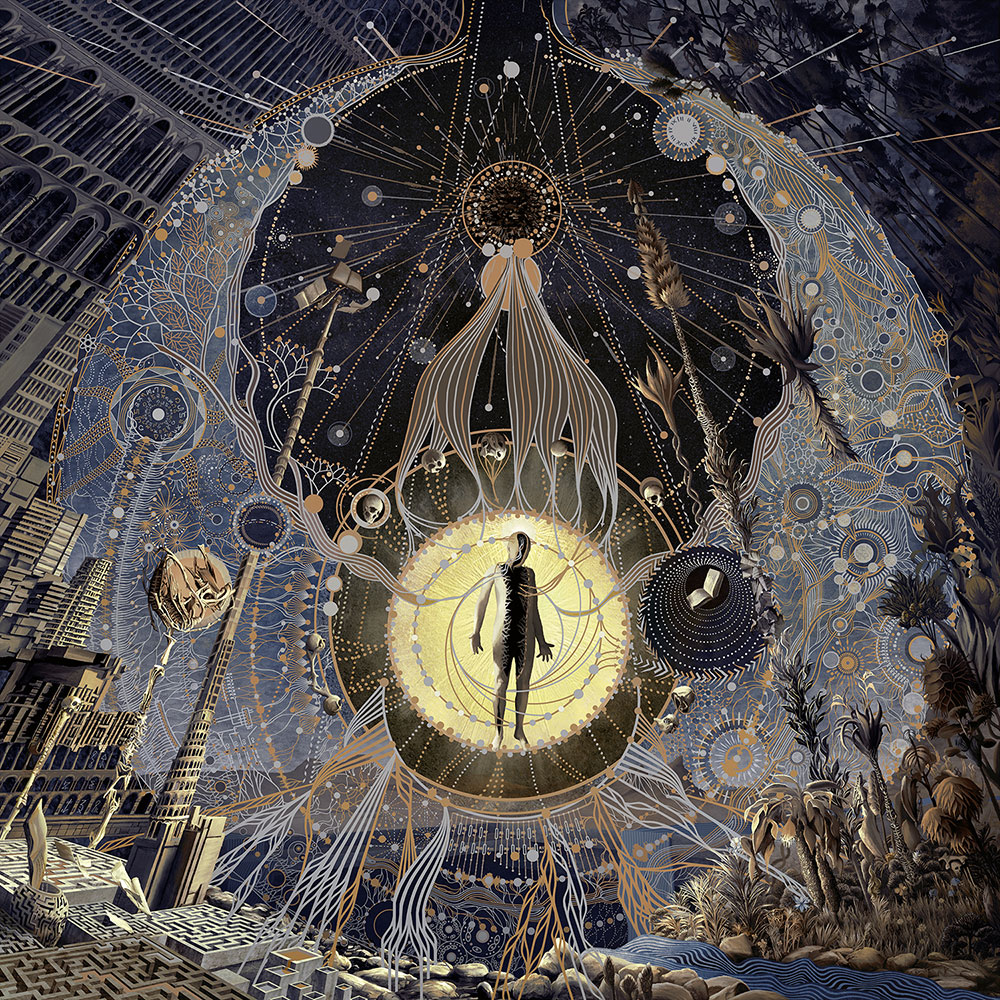 The Regeneration Itinerary (Season of Mist, 2025)
You’re on Season of Mist now — …AND OCEANS were on the label from the very beginning, then moved to Century Media, and now you’re back. I won’t ask you to compare two eras you weren’t around for, but how does it feel to be on Season of Mist today, now that they’re a more established label than when they started?
Mathias: I don’t think we could get a better label for this right now. They have the more artistic bands, and one thing I really appreciate — I’ve been on a lot of labels in my time — is that they answer fast. If you ask something, you get an answer within 24 hours, which most labels don’t do. We’re also fairly high on their roster, so we don’t drown in a flood of bigger bands, and that’s really important. When we looked at the album sales, especially early on, it was like, “Whoa, can they really get us out there this well?” They took a chance signing …AND OCEANS after 18 years of no new music, did a really good job, and we sold a lot of albums. So I’m really happy.
Kauko: I agree completely — not even a small reason to complain. The communication is very fluent and direct. It feels like the label that suits us: they promote us really well and handle everything very professionally, while never saying anything about the artistic side. We can basically do whatever we want. That’s a rare combination, and exactly what we need as a band. A huge thank you to Season of Mist once again.
You also mentioned sales — and it’s interesting how the label connects everything. I found the Season of Mist shop through Spotify links while listening to the band, and the same on YouTube. They get all those small details right in a way I don’t see other labels doing.
Mathias: Definitely. I really liked working with them on the last album because they wanted to take the album’s concept and put it into the products too — not just “let’s put out a CD and maybe a digipak.” They wanted the packaging to be something extra, with a real hands-on approach. They even gave me their personal numbers so we could talk on WhatsApp about the concept and how to work it into the packaging, which is pretty rare.
Kauko: Since physical sales aren’t exactly growing these days, having a label that wants to come up with something special really stands out. This special edition of As in Gardens, So in Tombs — which we also did for the latest album — isn’t something you expect. As Mathias said, sales have been good, but we’re not LADY GAGA or METALLICA. So it was a real surprise that the label wanted to make a genuine special version of the CD, with actual special items rather than just dropping a digipak in a bigger box and charging more. Really nice.
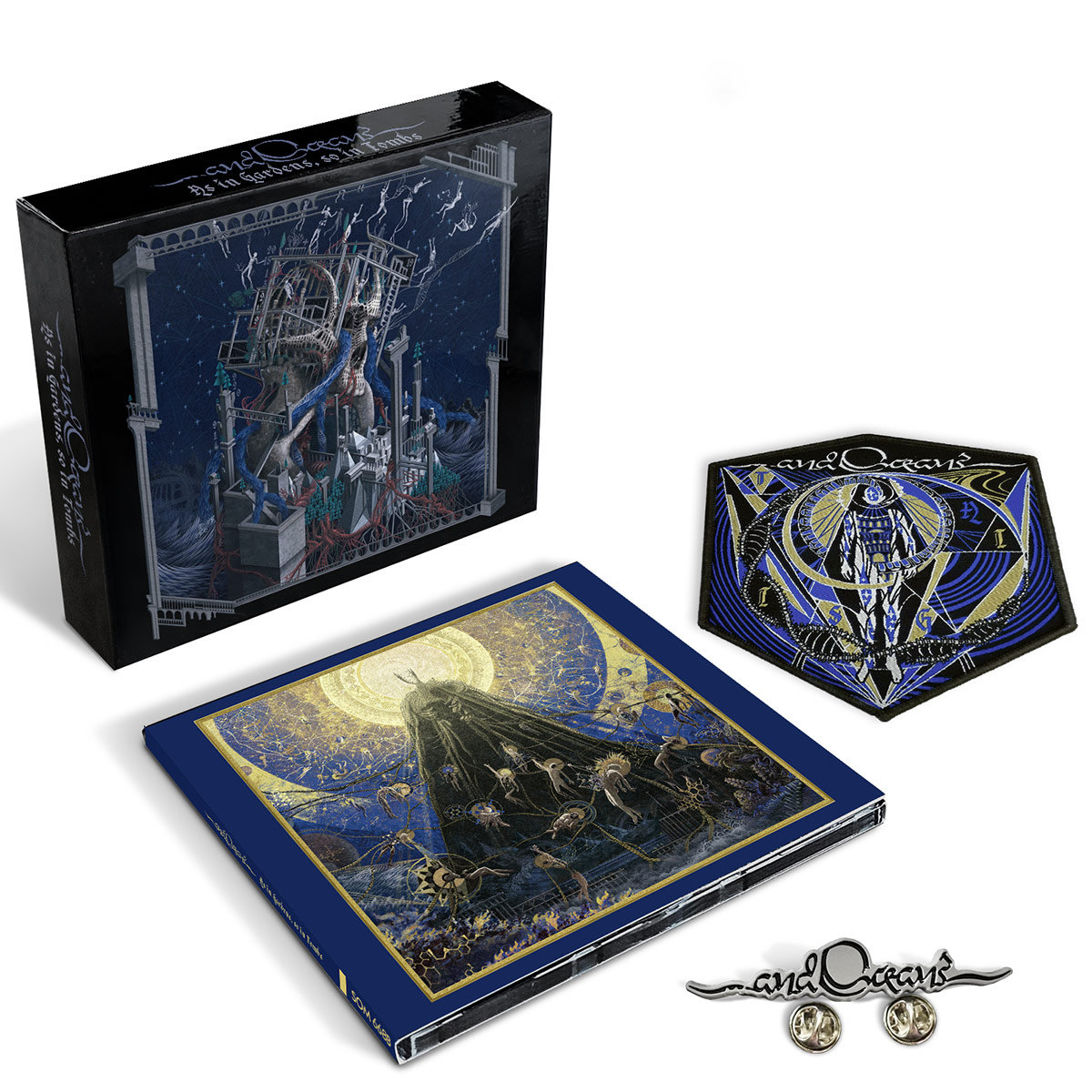 As in Gardens, So in Tombs — limited edition (Season of Mist)
Physical sales are actually ticking up a little — I saw that for the first time since the ’70s or ’80s, vinyl sales in the US passed a billion dollars. Vinyl is coming back, as we can see behind Kauko, and even tapes are returning, with a lot of bands releasing new albums on cassette.
Kauko: Yeah, I’ve got a shitload of tapes somewhere too — they’re just not in the shot.
You all have multiple bands — Kauko plays in several, and Mathias, you’re also the vocalist in FINNTROLL. How do you work around the scheduling, especially touring, across all these bands? Is there a priority order? How does it all work?
Mathias: Oof. That’s a long answer — it’s been a jigsaw puzzle, I can’t lie. But I’m taking it kind of easy on the gigging front right now, taking a bit of personal time off, so I’m not touring that much at the moment. Right now it’s pretty easy to fit gigs in. But it has definitely been a puzzle.
Kauko: …AND OCEANS is the only band I’m in that has quite a lot of shows every year — not a lot compared to bands touring constantly, but for me personally it’s a lot. I couldn’t have another band with as many shows; my day job limits my time. So it needs scheduling, but luckily not many shows have been cancelled, and I haven’t had many cases where I had to turn down a gig because of another show on the same date. It happens sometimes, and usually whatever was agreed first is the priority. If there were, say, one random …AND OCEANS show in Finland and a tour with one of my other bands at the same time, we’d obviously discuss whether we could agree to cancel it. But luckily there hasn’t been a need for that so far.
Looking ahead — the last album came out a year ago. Do you already have something in the works? Are you actively writing new material?
Mathias: Oh, yeah. As Timo said in another interview the other day, it’s a constant process. We’ve made a couple of what you’d call pre-pre-demos, really in their first basic form — some have only keyboards and machine drums, some have guitars, riffs and melodies. It’s a bit scattered right now, and I think I’ve got two sets of lyrics down. We’ll probably get together this summer to put the first real pre-demos together. So we’re far from really focusing on writing, but the ideas are there.
Kauko: Personally, I haven’t had time to record any actual demo drums yet. I’ll listen to the keyboard tracks with a drum machine, and as Mathias said, some have guitars too. Some of them sound strange to me, and I’ve tried to focus on those, because I don’t want to end up in the same situation I had with “The Ways of Sulphur” — style-wise the most difficult one for me. Hopefully I’ve learned to focus on that kind of song really early. There were keyboard demos I first thought, “this is not going to happen,” but after listening many times I got the idea, and now I’ve got them in my head — we’ll see if they work. It’s a lot of remote work, but things usually progress quickly once at least part of the group gets together on the demos. I’m sure it’ll happen, and it’ll probably be fairly fluid — we’ve practiced this for three albums already. We just need to find the time.
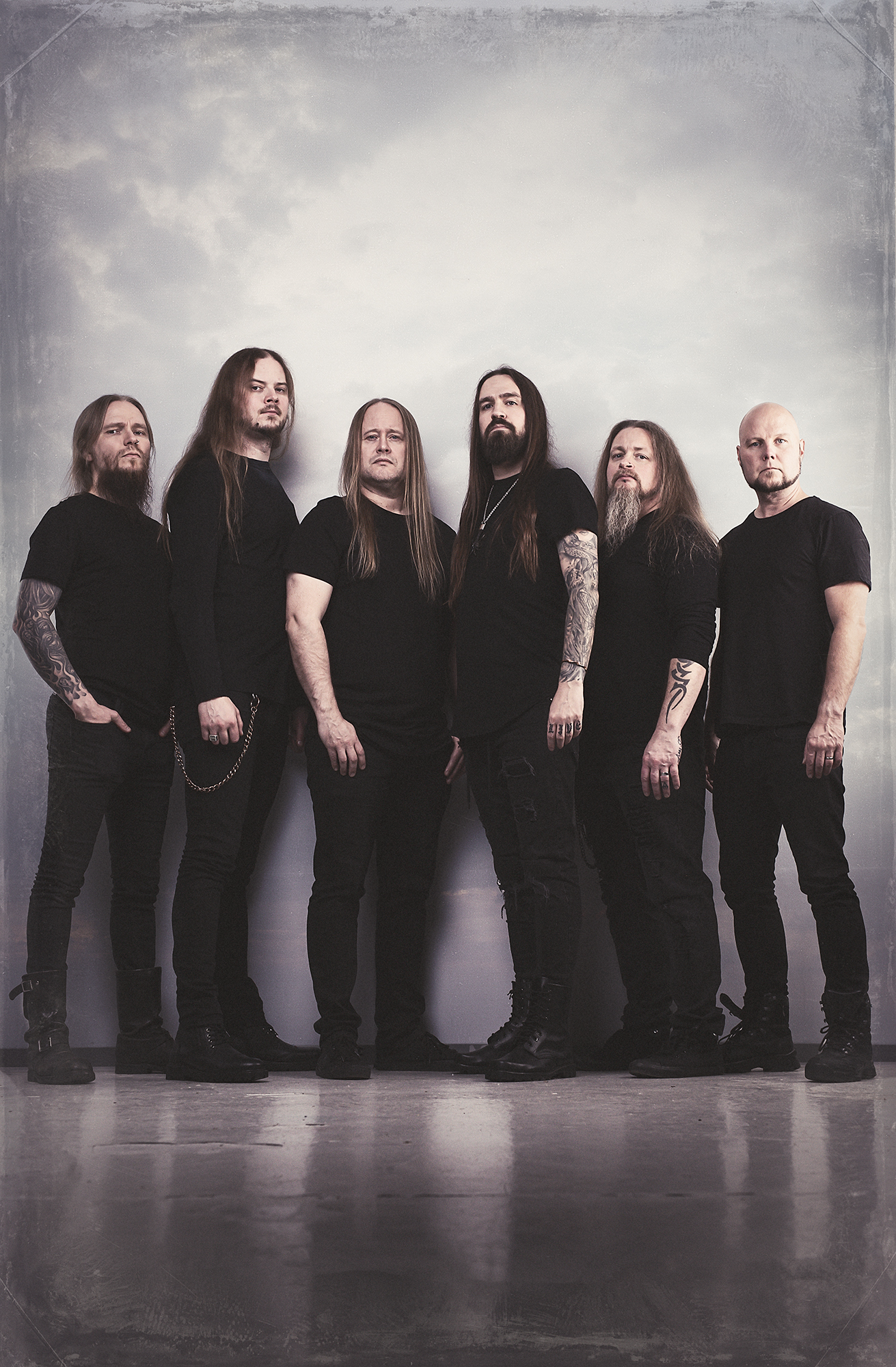 …AND OCEANS
We’re recording this on Monday, May 18th, and in a few days you fly to the U.S. for Maryland Deathfest. Assuming most of the crowd will be seeing you for the first time, what do you want them to take away from the show?
Mathias: I really hope they’ll feel they actually heard the songs they came for. Like we said, we’re playing something from every album, so hopefully most people will be happy with the setlist we put together.
Kauko: I hope most of the people who come to see us get what they want. With seven albums, there will probably be people who don’t hear the one song they’re hoping for, because time is limited — but let’s hope they still get something they wanted.
Kauko, I can see the big vinyl collection behind you. What’s your most valuable one — not necessarily in price, but in emotional value?
Kauko: There are a lot of them. As someone who started listening to METALLICA as a small kid, the Black Album on vinyl — the original pressing — is maybe the first vinyl I ever bought. That one’s really important to me. Then there are a lot of others — the first FUNERAL MIST full-length, the first DEATHSPELL OMEGA. A lot of them.
Mathias, do you listen on physical formats or mostly streaming?
Mathias: Oh yeah, I do — mine are downstairs in the living room. If we’re talking price, it’s probably the first FINNTROLL album from ’99: I have the first vinyl pressing, hand-numbered, and I’ve got number two. That’s the most valuable in money. But a couple of years ago I got my dad’s old record collection — he was about to sell it at a flea market for next to nothing, and I told him, “No, I’ll take it.” He was like, “What? You really want these old ones?” and I said, “Yep.” So there are some childhood-memory things in there, like a really early pressing of PINK FLOYD’s The Wall. That’s probably one of the most emotionally valuable to me.
Thank you both for your time today. Have a great show at Maryland Deathfest.
Mathias: We will. Thank you so much.
Kauko: Thank you very much.
Thanks to Will Yarbrough at Season of Mist for arranging this interview.
…AND OCEANS on Season of Mist.
The Regeneration Itinerary is out now on Season of Mist.
Video version: