Scorpio: Innern came out last September to great reviews — a number of metal outlets even named it Black Metal Album of the Year, and the initial pressing of the vinyl sold out. I wasn't able to get one, so thankfully the second pressing is coming later this year, and I've already pre-ordered. In your own words, what made this album so successful?
Nikita Kamprad: Oh, that's tricky. First of all, we're very happy that it got so many good reviews and was so well received by both the press and the fans. But what's most important — and this is a pretty selfish perspective — is that we ourselves are very, very happy and very proud. It's an album that's important to us on a personal level, especially for me as the main songwriter. Having a work where the whole process and the outcome fulfill you one hundred percent is the best success you can have.
I have the feeling that this album, from start to finish — the whole production, starting from the songwriting and the demos, all the way through to the final release, including the reviews and everything from the outside — was the best we could do. That's why I think the whole journey from start to finish is what made the album this successful. First of all for us, but also seeing pressings sold out, many shows and tours sold out, and all the reviews really, really good. There were only a tiny few that weren't as good [chuckles], but it's not everyone's cup of tea, so to say. That's totally fine.
Compared to your previous album, Noktvrn, what would you say is the biggest change for you?
It's difficult to talk about change, actually. We took the good experiences we had with Noktvrn — especially the production process with the whole band, which on Noktvrn was the first time we'd included the entire band in the production and recording — and we evolved it on the new album. So you could say we took the best parts of Noktvrn and improved on them with Innern.
I don't think we changed many things. Like the saying goes, never change a running system, and it already felt very, very good on Noktvrn — even though we have a new bassist now on Innern. But the approaches to recording, songwriting, and communication within the band — everything that's so integral and important to the band — we improved on, because we know it's important. Talking about the songs, talking about more personal things within the band as well, because that builds a strong connection between the musicians, and that's the foundation for the music. So, again, nothing really changed. The good things just got better.
You mentioned that on Noktvrn you included the whole band in the writing process for the first time. I'd guess that was the big change for you as the sole songwriter and composer. How did you come to that decision, and how easy was it to let go of the control?
You said it — it's not so easy for me, being the main songwriter right from the beginning. I think there were two turning points.
One was the production of Finisterre, the 2017 album, where I took over the whole production process and the recording of all the instruments except the drums, of course — that was done by Tobias. Everything else I did myself, and I reached a point during the production where it was just too overwhelming. You lose focus if you're doing it all by yourself — playing all the instruments, both guitars, bass, the vocals, everything, and the mixing — and I thought, well, next time, on the next album, I definitely want to change something. That was the reason I then included the whole band in the process.
The second point was the recording of our live album, Live in Berlin, which we released in 2019 and which was actually recorded by accident. We had an in-ear system running through a digital mixer, and all you had to do was connect a laptop and press record. We did that on the last show of our release tour in 2017, and then we realized the whole concert — eighty minutes, with all its flaws and imperfections — actually made the music even better. This time, I think we all realized: hey, let's try it on Noktvrn, let's try recording live with the whole band and not record each instrument piece by piece, every part piece by piece, which is actually a very common technique. Many bands do it, and for many bands it works fine. But we'd reached a point where something needed to change, and that was exactly the thing we changed, and it made everything better in the end.
For us — not for everyone. Every band has their own workflow, but we found this one for us, and it works very well. It was difficult for me at first to let go of all that control — to hand over the guitar and the bass to the other guys. But it was just as important for me to finally make that decision and find musicians and friends who share the same vision and respect my music, because I still write almost everything. They share the same vision and respect me as the songwriter, and I respect their performance on the album and live, of course. That brought the whole band to another level.
Recording the album live is rare. Most bands just go into the studio and record piece by piece. When you record live, do you record the whole song in one take? You can't just say, "Okay, let's redo this part" — you have to do the whole song.
Yeah, for Noktvrn and Innern, we really did record every song in one piece. That was the priority — not to focus on the smaller parts, but rather on the full songs. You play with a different dynamic. You play parts less hard, for example, because you know that at the end of the song there's an even louder part that needs more energy, so you play with a totally different dynamic, and that fits the new songs very well. But it also means you have to record everything in a full take, because otherwise it wouldn't make sense.
That also means you have to prepare yourself very well — rehearse, practice your parts thoroughly, and we took that very seriously. Once you press record, there's no way around it. You have to know what you're doing — basically every note, every part, every break and fill. So the preparations were immense. But the recording process itself was very tight, very compressed into just one or two weeks, and that was it. After that, the mix was also very easy, because the sounds and the dynamics were already there in the recordings. That made the whole process very pleasant.
I know that a lot of bands record the album, and then, before going on tour, that's when they actually learn to play the whole song.
Yeah. [chuckles] All the work many bands do after the recordings, we did before. You have to be very disciplined to do that, but in the end, it's very rewarding. I can only encourage everyone to at least try it. [chuckles]
How hard was it to set up all the microphones to get the right sound when you have everybody together — and the drums are the loudest instrument?
For Noktvrn we had a studio with a big live room where every instrument had its place, and every one of us was in the same room with the drums. But we recorded the guitars and bass through DI, with Kemper amps, so they can be silent. You can also connect them to a cabinet, but for us it doesn't make so much sense. We still use cabinets on stage for the extra stage ambience. But in the studio it's perfect — everyone can sit in the same place, but you don't have any bleed coming from a guitar speaker into the drum microphones. So you still get a very clean drum recording.
We took the same approach on Innern, although we recorded the drums in a session prior to the guitar and bass. We still recorded all the drums in full takes per song, but then I pre-mixed the drums and we moved to a new session — here in my studio, what you see behind me — where we sat down and recorded the guitars and bass at the same time over the pre-recorded drums. That gives it a kind of hybrid live feeling. It didn't work otherwise, because we didn't have the huge space we had on Noktvrn to record all the instruments in one place, so we had to separate them. But it turned out very well too.
Let's go to some of the lyrical themes on the new album. "Eos," on the surface, is a song about a war prisoner, and I read it was inspired by a diary that your father gave you — and that diary also inspired more than just this song. Could you elaborate on that story?
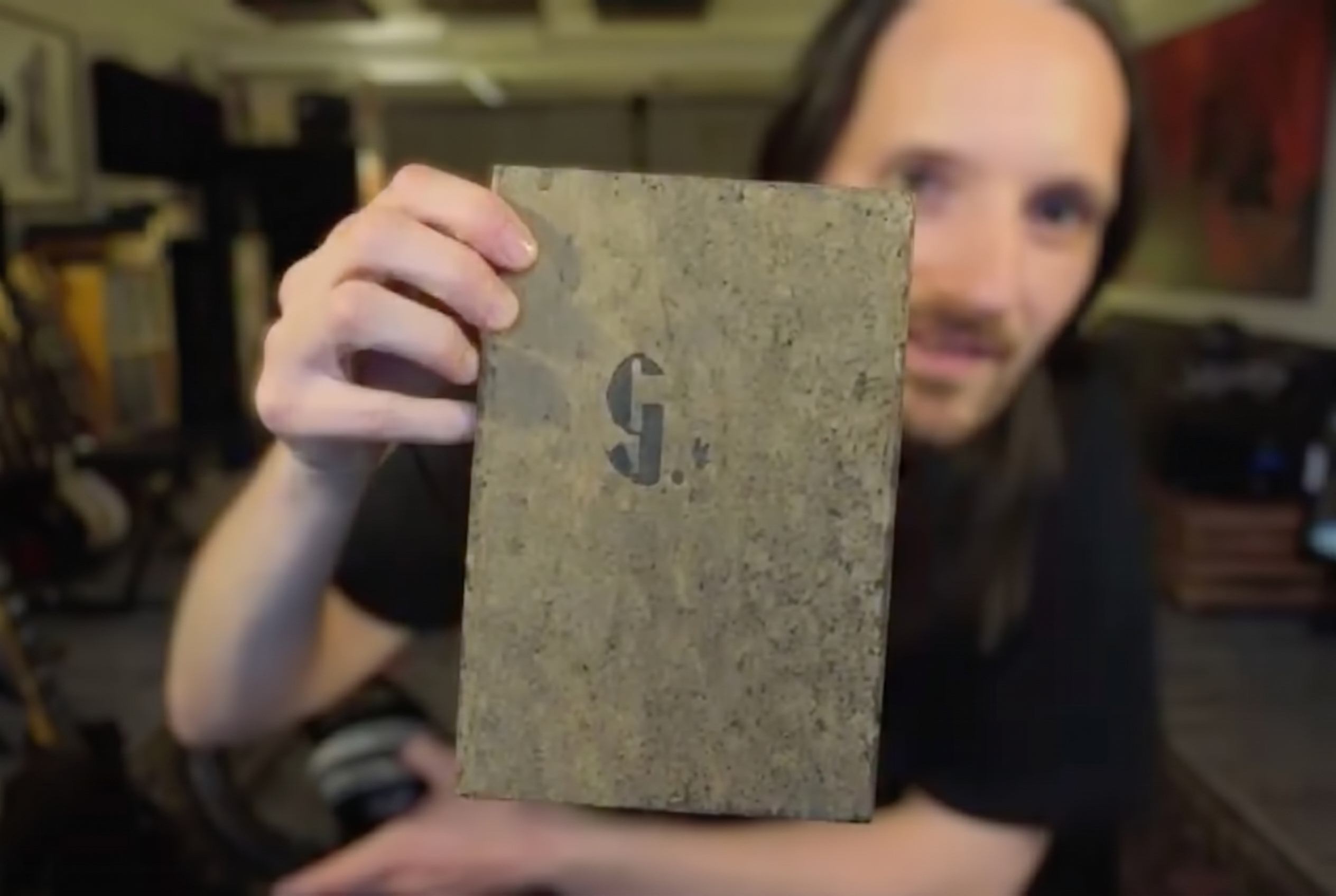
Yeah, that's right. It's not my father's diary, but rather an anonymous diary from the family archive. My father had this box full of old photos, books, and notebooks, and there was this one very small notebook in it. He told me he was pretty sure it wasn't from anyone in our family, but that it might have been picked up by his father, who was in war captivity in France. So maybe his father picked it up from another soldier, or found it somewhere in a prison or wherever.
This small notebook contains short fragments — stories, poems, descriptions of being in war captivity in France. There were small notes about the time, which said 1945, the end of the war, and Le Mans, a city in France. The reason my father showed me this notebook was that the poems and descriptions in it reminded him of my own lyrics. My parents are big supporters of my music and of the lyrics — I'm very grateful for that support, and they're keen to find out what I'm writing about and to listen to the music. He said, "Just have a look at this book. It might resonate with you." And it did, definitely.
For this new album, it actually served as a main inspiration for the lyrics. There were a few words and phrases I took and put into my own language, my own interpretation, and they made up three of the songs on the album — "Xibalba," "Eos," and "Fragment." The other lyrics were built from scratch, but for those three songs I drew plenty of inspiration from that book.
You said it's anonymous — have you tried to track it back to the owner, or maybe to the owner's family?
That's very difficult. It's so old. Most of the people from back then aren't alive anymore. My grandfather, of course, is also no longer alive — he died in the nineties. So it's very difficult to track it. And by the handwriting, it's basically impossible. But I can say that the dates and the places written in the book do show you where this soldier — or whoever it was — was, and who he was. He was definitely a German soldier, because the writing is in German. So we assume it's someone from war captivity in France.
Do you keep it in your studio? Do you reread it often?
Yeah, actually, I can show it to you. [retrieves notebook] So this is it. It's not a huge book. There's just this G on the front and another G on the back. And you can see the handwriting there. It's only a few pages — most of them are blank. From time to time, I revisit them and use them for inspiration.
Very cool. Thank you for sharing. On "Eos" you also use a new technique for the band, in terms of singing — you use throat singing. How did you learn to do that, and why did you decide to use it on this song?
Over the past three or four years, at live shows — or at the soundchecks, actually — I've always tried singing in different styles, just to know how it feels and how it sounds in a big venue over a big PA. Because in the studio, or wearing headphones, it's not the same as your vocals over a big PA. And then I realized — well, I'm not even sure what I'm actually doing, [chuckles] because I haven't learned the technique or anything. But I tried to make my throat resonate at a certain pitch, which makes it very effortless to create this standing note of [vocalizing]. Not sure if you can hear that, but I can do it for a very long time without putting too much energy into it. It creates a very warm, very nice feeling, even though it sounds rough.
I only did it at soundchecks, and then the other guys told me, "Well, that actually doesn't sound too bad. Let's try it on a song." And when I wrote "Eos," I thought, well, let's try it there. [laughs] I just wanted to do it somewhere — it didn't really matter where — but I think that part in "Eos" worked very well for the technique.
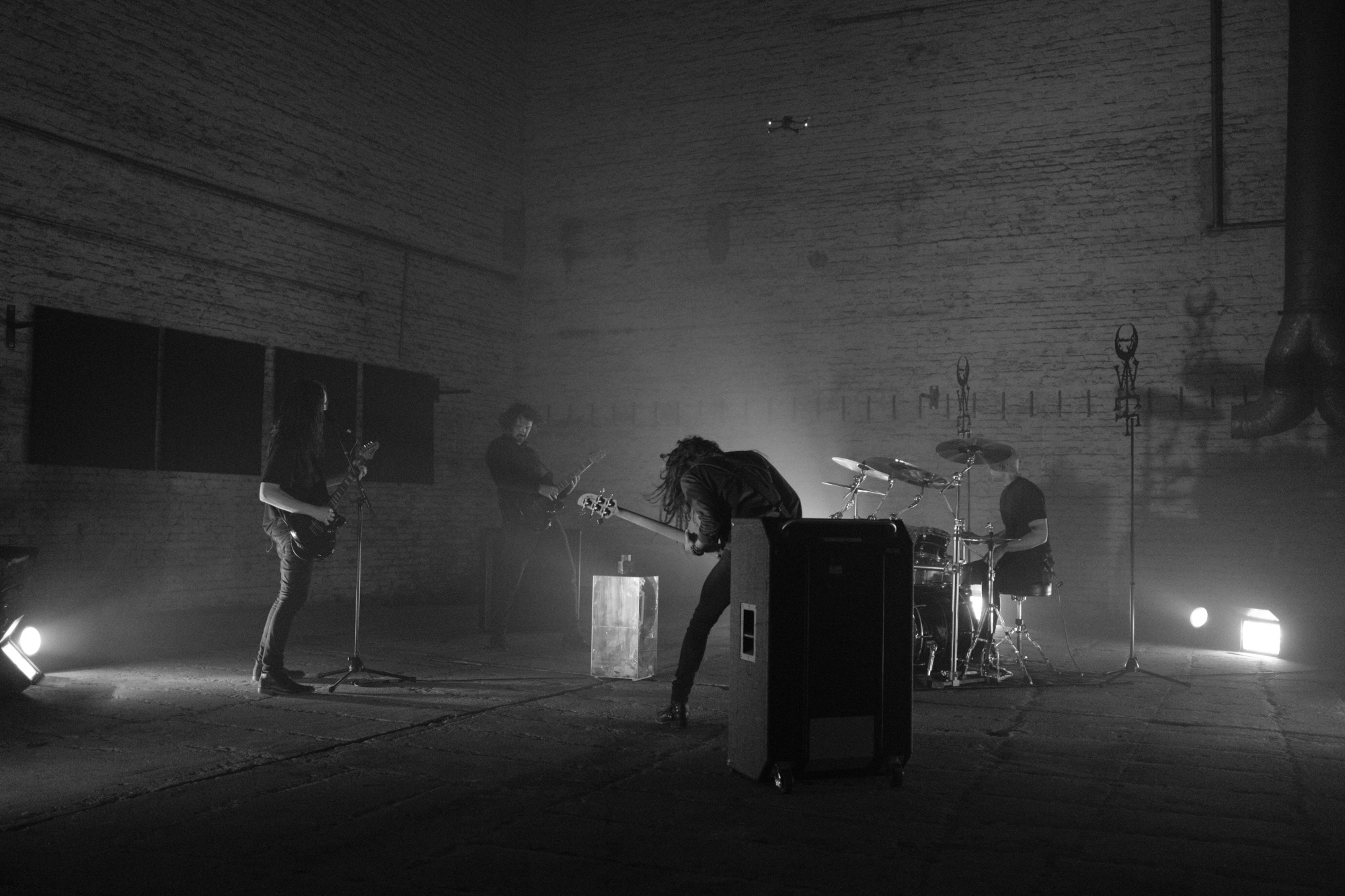
Over the last three albums, we've had the "Finisterre" series — three completely different songs. The first was a full black metal song. The second I initially thought was piano, but actually it had acoustic guitars — it was an acoustic version. And then the third is a piano outro. Could you take us through the whole series — the meaning of it, and the differences between the compositions?
There was no master plan when I wrote the first "Finisterre" song. But I have the impression that Finisterre — the album — is very, very important to many people, and many fans got into the band through that album. So just the title "Finisterre" is an important title in the band's history. That's one reason I wanted to keep the tradition going and use the title more often — as a second part, a third part. Maybe there'll be a fourth part, or more parts, in the future. I could imagine that.
But the musical content differs a lot, as you said. The first is a black metal song. The second part is the intro to the Noktvrn album, and the third part is just a piano piece. It was important to me to follow that tradition — to keep the name alive — so that if you look at the discography in twenty years' time, you see a common thread running through all the albums. I think that's a nice idea.
I read that the piano version was recorded on a very old 1920s instrument.
Yeah, definitely. I would have loved to bring it here to the new studio, but it wouldn't have survived another move — it was very old. You can hear it on the recording, actually. The pedal squeaks. The notes are slightly out of tune if you listen closely. But it had this very special vibe, and I really love it. I recorded that piece back in the old studio, which I had for five years, and I have fond memories of that studio as well. So that song will always remind me of it. And yeah, now it's gone. [laughs]
Those imperfections you mentioned bring character. With so many tools and so much automation in music now, things are getting more and more perfect, but I think fans are starting to hear them as unnatural. Your recording has a very natural vibe — you don't get that "oh, these guitars sound copy-pasted" feeling, especially with the drums. Drums are usually the worst — they sound like a machine gun, especially in black metal.
Yeah. Metal productions are going more and more in the polished, clinical direction, which we absolutely don't like. None of the notes or parts on the new album are copy-pasted, or anything like that — you won't find it. Everything is originally played.
And for the piano, I actually recorded it as a demo version, thinking, well, when I have the opportunity to get a really good-sounding piano or a good VST plugin, I'll re-record the piece. But then I realized: it won't sound the same, and it won't have the same character I love about the piece I just recorded. So I just left it. What you hear on the album is basically the demo version, and I love it — I think it fits perfectly. With this approach in mind, we also want to approach the new music in general the same way: just leave the imperfections, leave the spontaneous coincidences that make the music special — more special than if you tried to re-record everything and make it perfect. But there is no perfect in music. It's a representation of what you feel and what you're capable of in the very moment, I think.
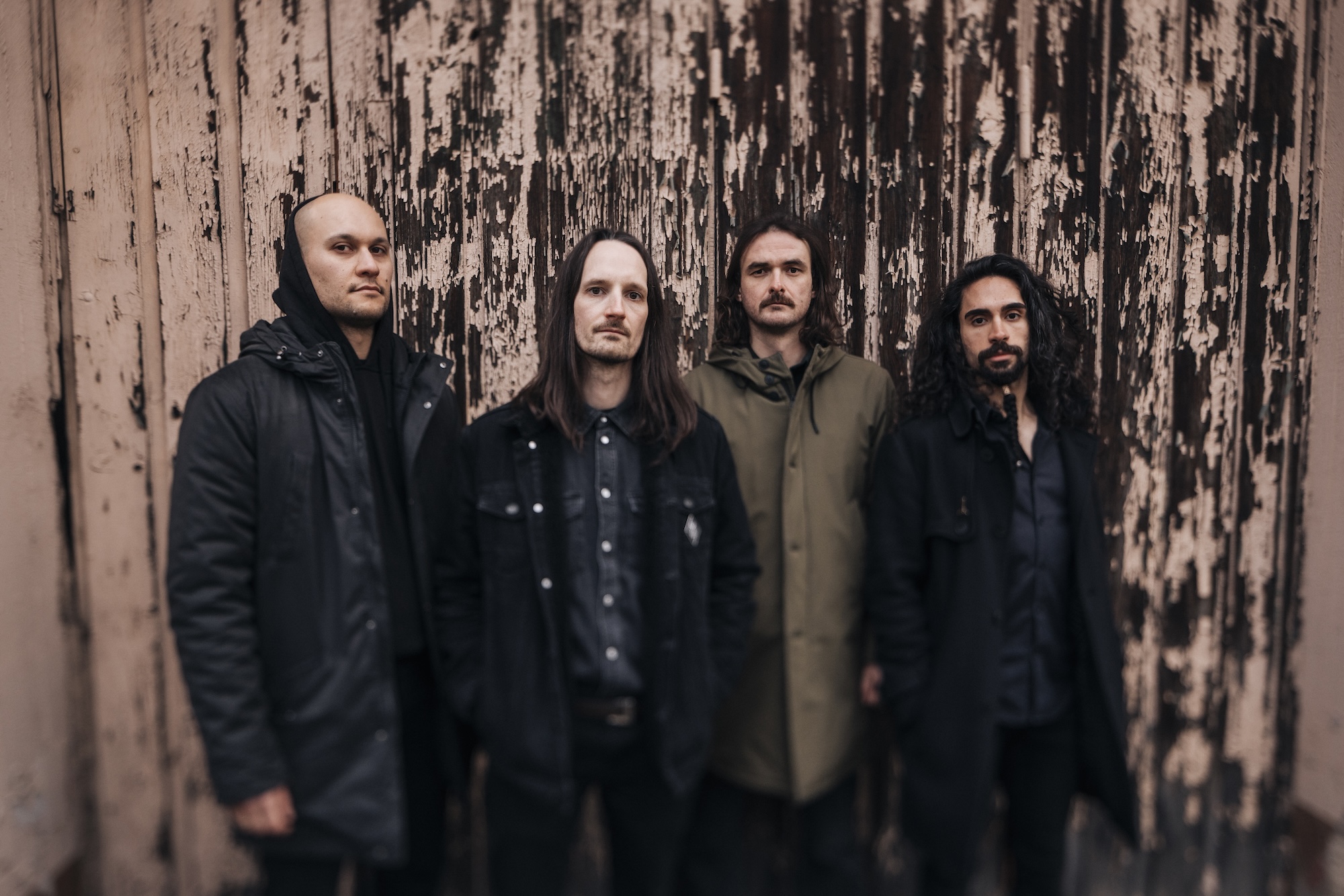
Your lyrics are mostly in German, but on the last album, your closing track is in English. What made you change your mind, or use English lyrics?
We'd already tried English lyrics on Noktvrn, on the songs "Immortal" and "Haven," and that was an experiment, especially for me. I'd only written German lyrics and sung in German, and then I wanted to try English just to find out how it would work for me. Because it's a different language, of course, you sing differently. I just wanted to find out how it felt, and it felt really good.
And from the fan perspective, there was no one saying, "Well, you're a sellout now, you've commercialized the band because you've started singing in English." That wasn't the case at all. So we thought, okay, let's do another English song on the new album. The lyrics were actually written by our guitarist, Nico, who also co-wrote the whole song. It wasn't a song written by me — it came first from Nico. He provided the basic structure, the melodies, the parts, and then he sent it to me and I worked it out together with him. We sent the ideas back and forth, and then he put on lyrics he'd written a few months earlier that were very important to him. We put them on the song, and it worked perfectly. I think this song became something very special. We always close our shows with it, and I think people really appreciate it, which makes us very happy — because releasing it was a huge experiment.
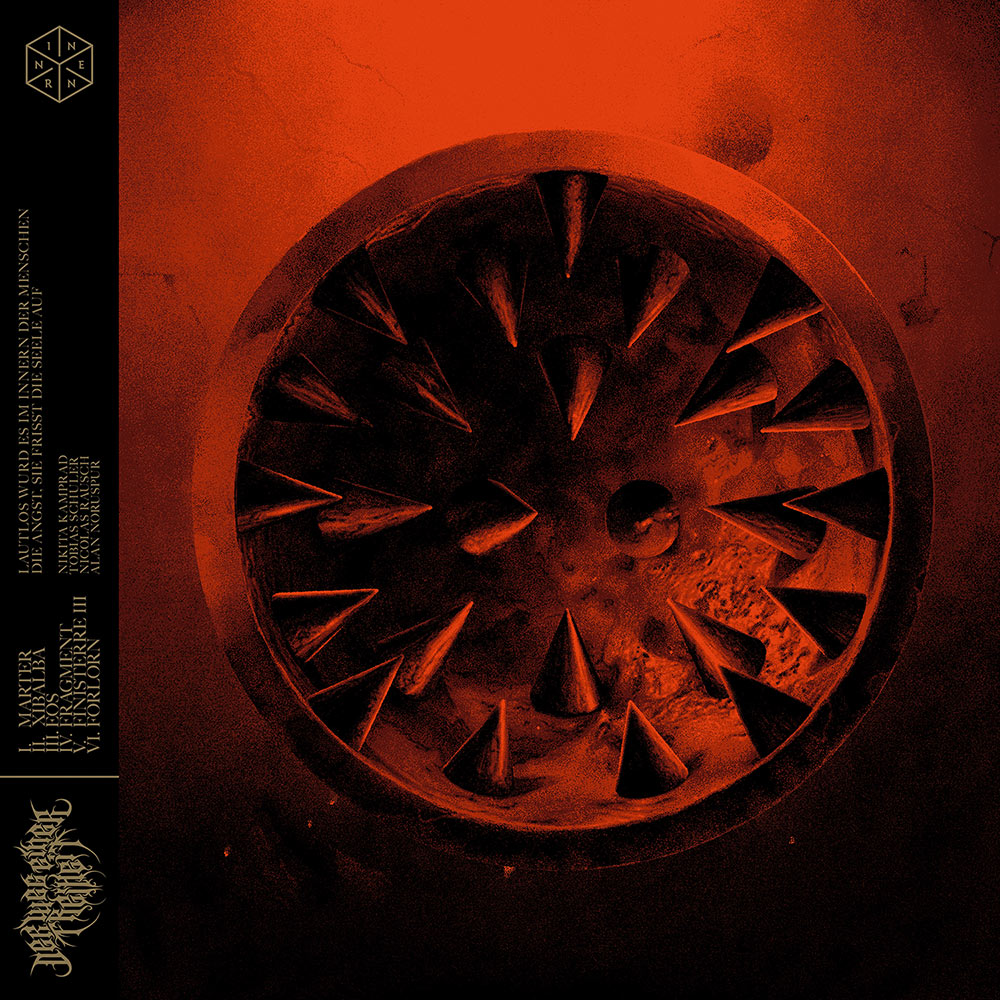
Let's talk about the album artwork. I know that maybe nowadays with streaming services it's different, but in the past, when you bought music, the cover was how you met an album for the first time. When I saw the cover of your album, my first impression was a sandworm from the Dune sci-fi movie. But what does it actually mean? And could you also talk about your collaboration with Max Löffler, the artist you've worked with on past albums?
As you said — just imagine going into a record shop, and there's a pile of LPs, and you browse through them, and you can only pick one record. Which one would you pick? I think it's the one whose artwork stands out the most. We always try to aim for cover artwork that just stands out. If you have hundreds of covers on your phone screen, like nowadays, maybe this is the one that jumps out at you. That was actually the big aim we had with this cover.
And yes, you're right — we've been working with Max Löffler since the Stellar album, since 2015. He also does a lot of T-shirt designs for us. He's a very close friend, also living nearby, and he's a very communicative, nice person to talk to and exchange ideas with. Very easygoing. So it worked very well with him in the past, and that's why we decided to work with him again on the new album.
We never really have a concept. Maybe we have a colour or something like that — this time, obviously, it was red — and that's what we approach him with: "We want this colour and this kind of general feeling for the album artwork." Then he comes up with different drafts, and we usually pick the one that resonates most with us. He elaborates on it, and it's a very natural process. There's no master plan behind it, mostly.
I actually have no clue how he came up with this one [chuckles] — the thing you see, the sandworm. But I think there was one sentence he dropped very early in the process. He said he'd always wanted to draw a morning star that has the spikes not on the outside but on the inside. And I was like, "How could that look? Tell me more." The next week, he came up with this, and I was like, "All right. Okay. That looks really nice." It immediately caught my attention, and I thought, yeah, we're onto something. And that's the story, basically.
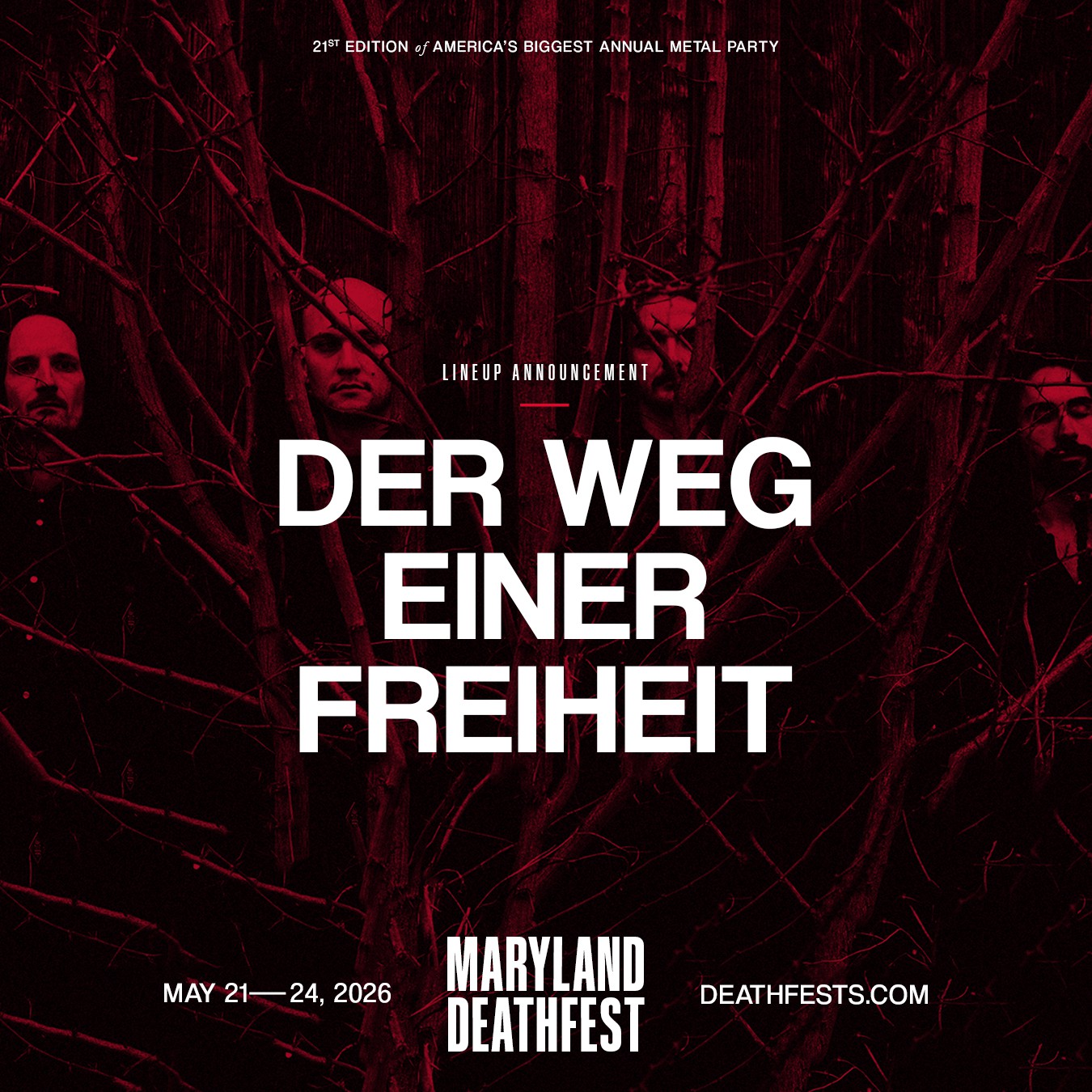
We're doing this interview in early May, and at the end of this month you're going to Maryland Deathfest — you'll be performing in the United States for the first time. It's been a long journey, and you have a history of not getting visas in the past. Could you tell us about that?
Yeah, it was 2015. We'd scheduled a US tour, I think fourteen days, just the eastern part — to Chicago and then down south and back to the East Coast. So not a huge tour. And I think — it's still not certain — but I think the visa agency was just a fraud. They fucked us over and we lost a lot of money. Everything you have to pay for the visas you pay upfront, then they do the work, and then you can be lucky if you get the visas. Back in 2015, we weren't lucky. We hadn't even been denied the visas — we just didn't hear anything back at some point. And it was two weeks before the flights. The flights had already been booked, and we tried everything in our control to make it happen, but no chance. You can't just call someone in the States and say, "Well, where are the visas?" It doesn't work like that.
From that time on, we were very delicate about the topic. If we were going to do it again, we wanted it to be a hundred percent bulletproof — to really work. And the first promoter to get in touch and be willing to pay for the visas, the flights, and everything — so the risk was on the promoter's side rather than ours — was Maryland Deathfest. We're so grateful that they took the risk, and took on the effort and the money, to bring us over again. The whole process of getting the visas is extremely huge. Very long, almost like a gamble at some point. It took a lot of effort in the end. But now we have the visas in our passports and the flights are booked, so I don't think anything can go wrong now. I think it's going to be a milestone, definitely. It's something we've been looking forward to for a long time, and people want to see us there. So yeah, we're very much looking forward to it.
Do you have anything else in the works, or would you like something beyond just one concert in the US — a tour or a mini tour?
We would have loved to do a full tour, of course. But that would again mean we'd have to pay most of the expenses for the visas and flights ourselves, and that's a risk we don't want to take a second time. After getting there once and playing a successful show, I think it'll be easier for us to book a tour and get the visas confirmed again. At some point — maybe next year — we hope to make a full US run possible. But time will tell. I can't say anything about it at the moment.
Hopefully it will all work out and we'll see you on a full tour in the US, in multiple cities. On your European tour, you played in a church — in Bochum. Black metal is usually associated with Satanism, but your music, DER WEG EINER FREIHEIT, doesn't have religion as part of the lyrical component of your songs. What was it like for you personally to perform in a church, in a sacred place?
Well, first of all, it was overwhelming. When we got there, on the stage, we were looking out at the huge organ in the place, and there was a balcony, and down there were the people sitting. The stage was actually the altar — the drums were set up in front of the altar, with a big cross. It was forbidden to touch it, or to remove it — not possible, of course. And that's something we respect. If we get invited to a place that's open-minded enough to let a black metal band play there, we are the last ones who'd say, "Remove this or that" — because it belongs there. We're very respectful and grateful to have that kind of opportunity to play in such a great place.
The acoustics were also a challenge for our sound guy to control. It's a huge reverb — ten seconds or something — so the PA had to be tuned in a very specific way, especially for the bass frequencies, to make everything work, because we have so many blast beats and double bass hits. It can overlap a lot and then build up into a massive pile of bass frequencies, so it's very difficult to control. But I think our sound engineer, Cedric, did a really, really good job there. I think it was a highlight in our band's career. We'd never done that before, and I hope we can do it again at some point, somewhere else, in another church. We really enjoyed it.
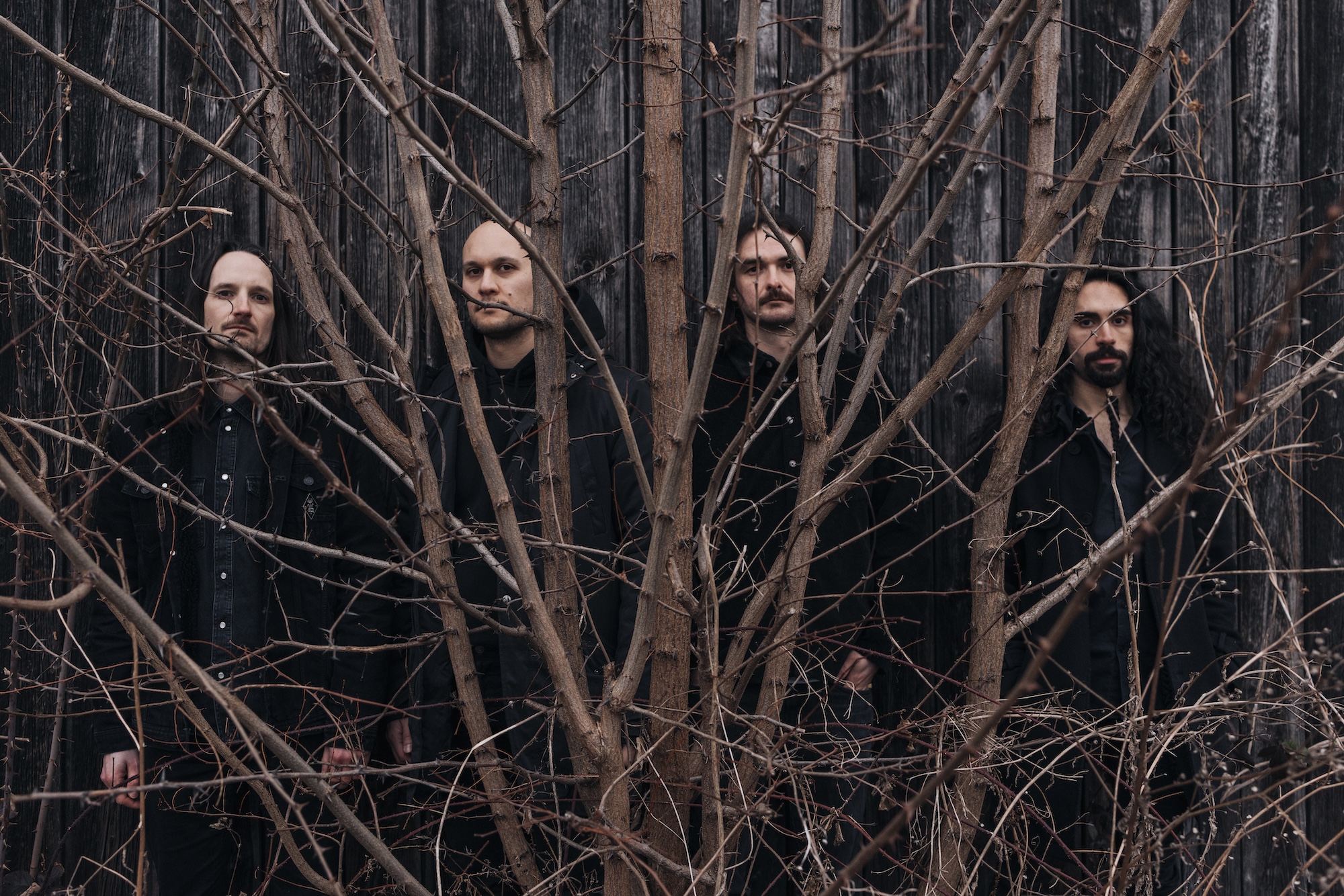
The name of the band, "The Path to Freedom" — in all these years, what's the path to freedom for you personally?
I think the band showed me that if you have a certain aim, a certain feeling of who you are and what you want to be, don't hide yourself. Just be the person you are. Don't let everyone else tell you how you should act, how you should be, how you should feel. The band, the music I write, showed me that.
Although it's my own music, there's always something coming through music and art that provides a language for things you don't know. Even listening to other bands, or other music, gives me a certain information, a language for things — for answers to things I can't just ask a person about and have them tell me the answer. That's the magic of music and art in general, I think: it provides a language for the unspoken things.
That's the magical thing the band showed me — that it's so important to believe in yourself, to trust yourself. If you want to follow a path — and for me, this is the path that provides me my own personal freedom — don't give up. Take your time, work on it, and eventually, if you believe in it, it will happen.
I'm eternally grateful that I can call this band the biggest part of my life, and that I can also make a living from it — which in art and music is very rare nowadays. So, to everyone who supports the band — thank you very much, of course, for making that happen. But first of all, the band showed me how important art and music can be in a person's life.
Thank you. And thank you to everyone who supports the band and supports metal. It's really cool to hear that you're able to live from the music, because then it leaves you all the time to put into creativity, into that process — instead of being tired after work and still trying to push your music.
To be transparent, not everyone in the band makes a living from it, and that's also something we don't actually want to do, because it would mean a lot of pressure — touring constantly, or working as hard as you can on the band to make it happen for everyone. So everyone else besides me has a full-time job or is self-employed. I do studio work here too — mixing, mastering for other bands. But since the album release last September, I've actually been working full time for the band, and it's a very fulfilling process. It means a lot of emails and office [chuckles] things, but it also gives me time, as you said, to be creative when I want to, when I can. If I feel like picking up the guitar and just recording something, I can do that and not have to wait until I finish some stupid job or whatever. So I'm very grateful for that.
Thank you a lot for your time today, Nikita — and fingers crossed that everything goes smoothly, and that you come and perform at the end of this month at Maryland Deathfest.
Thank you too. I'm so much looking forward to it.
DER WEG EINER FREIHEIT on the web: derwegeinerfreiheit.de
Thanks to Will Yarbrough at Season of Mist for arranging this interview.