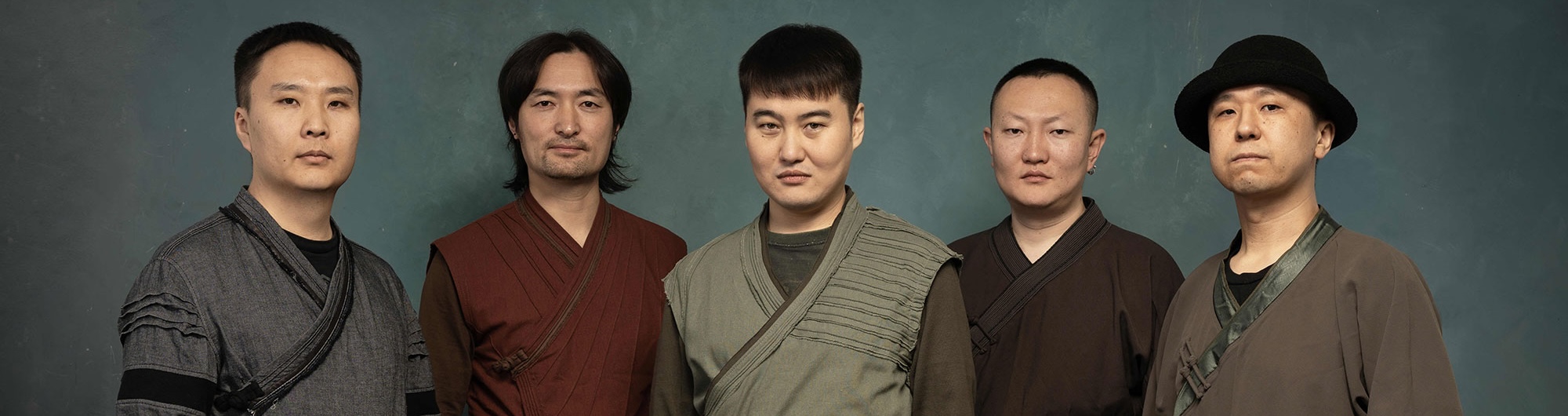
Scorpio: Today with us is a band that's probably exotic for Western listeners: a folk metal band from China, specifically from Inner Mongolia, who sing in their native Mongolian language. Our guest is Askhan. Could you introduce yourself and tell us what you do in the band?
Askhan: I'm Askhan, the vocalist and guitarist of NINE TREASURES, and thank you for having me.
Thank you. If I'm right, this is your first ever tour in the US. How's it going?
It's been great. We get a huge reaction from the crowd in every city, a lot of love and support, and the merch sells really well. It's really awesome.
What's the biggest difference between this tour and the tours you've done in China and across Asia?
As far as I can tell, the audience here is a little different. Maybe every headliner's fans are a little different. On this tour people are calmer and really focused on the music. They enjoy the details we put into the instrumentation, and that's really good. It's a completely different crowd from China. Chinese audiences are mostly young people, a lot of them college students, and they go a little bit crazy down in the mosh pits from the beginning to the end. The American audience this time is different, but they still give us a huge reaction after every song, and it's really awesome.
How do you choose a setlist for a tour like this? You can't bring too many songs — you're the opener, not the headliner, so you can't play for an hour and a half, even though you have, I think, four albums by now. What did you pick, considering that a lot of people are seeing you for the first time?
Exactly. And thanks to MUSHROOMHEAD and FEAR FACTORY for giving us around 50 minutes of stage time. For an opener, I think that's a really, really good opportunity to put our songs out there. Our setlist changes every night, because we want to try something different each night and experiment with combinations of songs. Sometimes we play mostly old songs, sometimes newer ones, and it's really fun to experiment. We're completely new to this crowd and they don't know much about us, so it's safe to play anything we want. It's real freedom — an opportunity you don't often get at home, because there people have such expectations of the setlist.

Do you see people in the crowd who actually know your songs? I first heard you a few years ago, and it was very catchy, very great, so when I got the chance to talk to you, Askhan, I definitely jumped on it. I'm based in California, and I know this tour doesn't reach that part of the country, unfortunately. But do you meet fans who already know you?
Oh, yeah. We've met fans who have listened to our music for years and finally got the chance to see us live, and that's really great. On the other hand, we only have 50 minutes, which is crazy for an opener, but we'd like to do our own headline show in the future to give them more of what they want. It's great to meet fans who have been listening to your music for such a long time. I'd love to talk to them a little more, but the bus call is pretty early every night — we have to get to the next city and set up again.
Do Mongolian fans who live in the US come to the shows?
Yes. We had two or three shows where a lot of native Mongolians from China came to support us, and they even brought us traditional food, which was really awesome. When you're on tour and you can eat your own food on the tour bus — that's priceless.
Cool. I know there are a few Mongolian barbecue places in the US, but I don't know how authentic they are.
I went to a Mongolian barbecue in Los Angeles once. I'd say that one was pretty on point. That's legit.
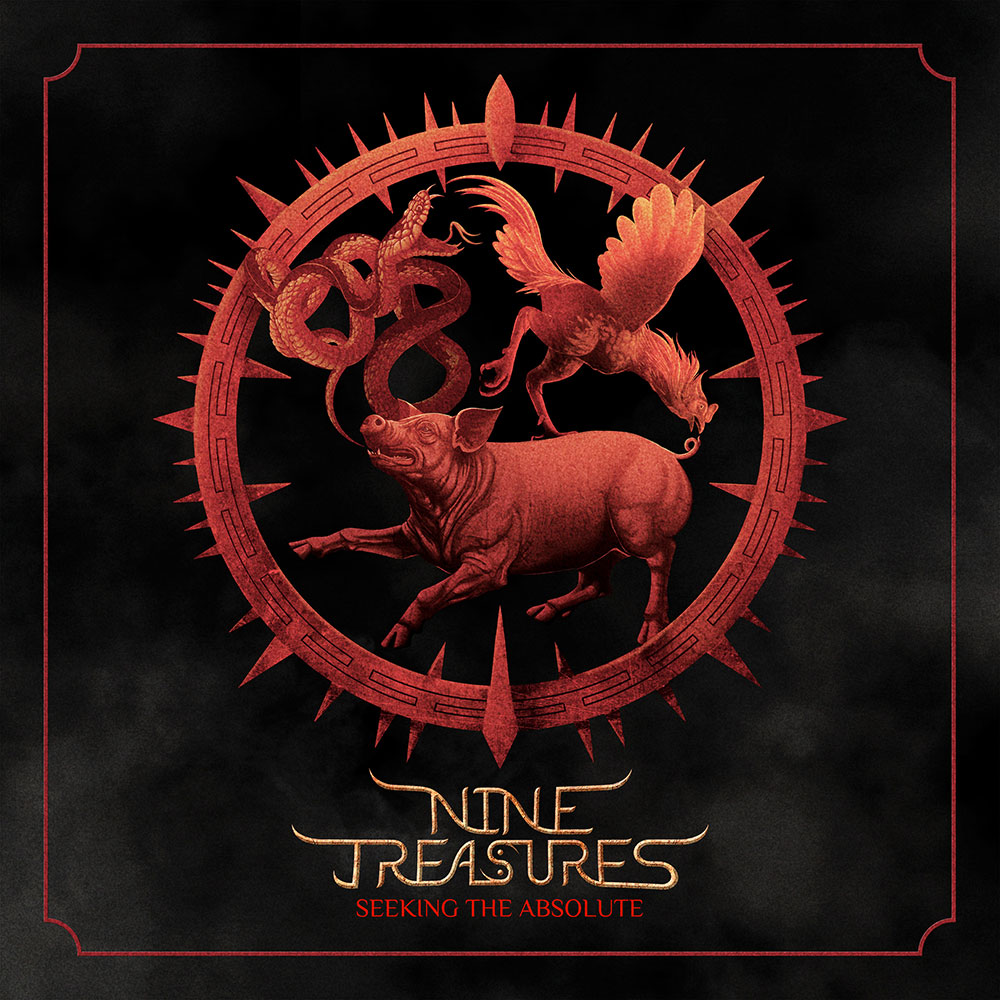
Good to hear. Askhan, a year ago you also released a new album, Seeking The Absolute. What would you say are the biggest differences and the evolution? I read some reviews and listened to it myself. To me, it's less loaded with heavy riffs than the previous albums and goes more into progressive territory.
Oh, yeah. We grow — I turned 40 now — so I just want to be real, follow my heart and make something I've truly been enjoying in recent years. That's why I decided to put out an album like that. I know some of our old fans like the aggressive side of NINE TREASURES, but I'm giving myself a chance to explore more of the music world. I still love our old stuff, but I really wanted to have a unique album, and maybe we can do it both ways: the next album will be more aggressive, and then another one will be more atmospheric. I only have one band, which is NINE TREASURES, and I just wanted to explore more of the music world.
At least to my ear, there's less traditional Mongolian Tuvan throat singing, and there are parts where you sing with a harsher voice — not even growling, just harsher vocals, somewhere between growling and throat singing.
Yes. I always thought traditional throat singing is a little bit flat dynamics-wise. If you want to make it punchier, you need to blend it with a little bit of growling, and that's how I came to my own style of singing. I think it works, at least for NINE TREASURES.
You also use traditional instruments, and you brought them on tour — I think I saw them in photos. Audiences always appreciate it when musicians play real instruments. Sometimes it's probably safer to just run a backing track, but it's always great to see people playing real instruments. And it must be hard to travel with them: if a guitar breaks on a plane, you can at least borrow another one. With these instruments it's much harder.
Yes. We ordered great custom-made cases for them from England. We've worked with a brand called Scott Dixon for years, and they did a really great job. We've shipped the instruments many, many times without a single issue. Our idea is to play with zero backing tracks: everything you hear on stage, you play with your own hands. That's our main goal, because that way you can play without a click track, so your performance flows more and isn't stuck at one speed the whole time. That's really killing the soul of music, I would say, because once you play with backing tracks and a click track, everyone is playing with the click and not with each other anymore. You get the idea? It's a little bit sad. As musicians, you've got to have a good time on stage together, not with a click track. I have zero joy playing with a click track. A click is also a note — it has a pitch, right? It's static and non-musical. It has nothing to do with music. To be honest, I hated it.
Are you planning to add more traditional instruments to your songs? How did you choose the ones you play now? Maybe you could briefly introduce them for people who don't know much about traditional Mongolian instruments.
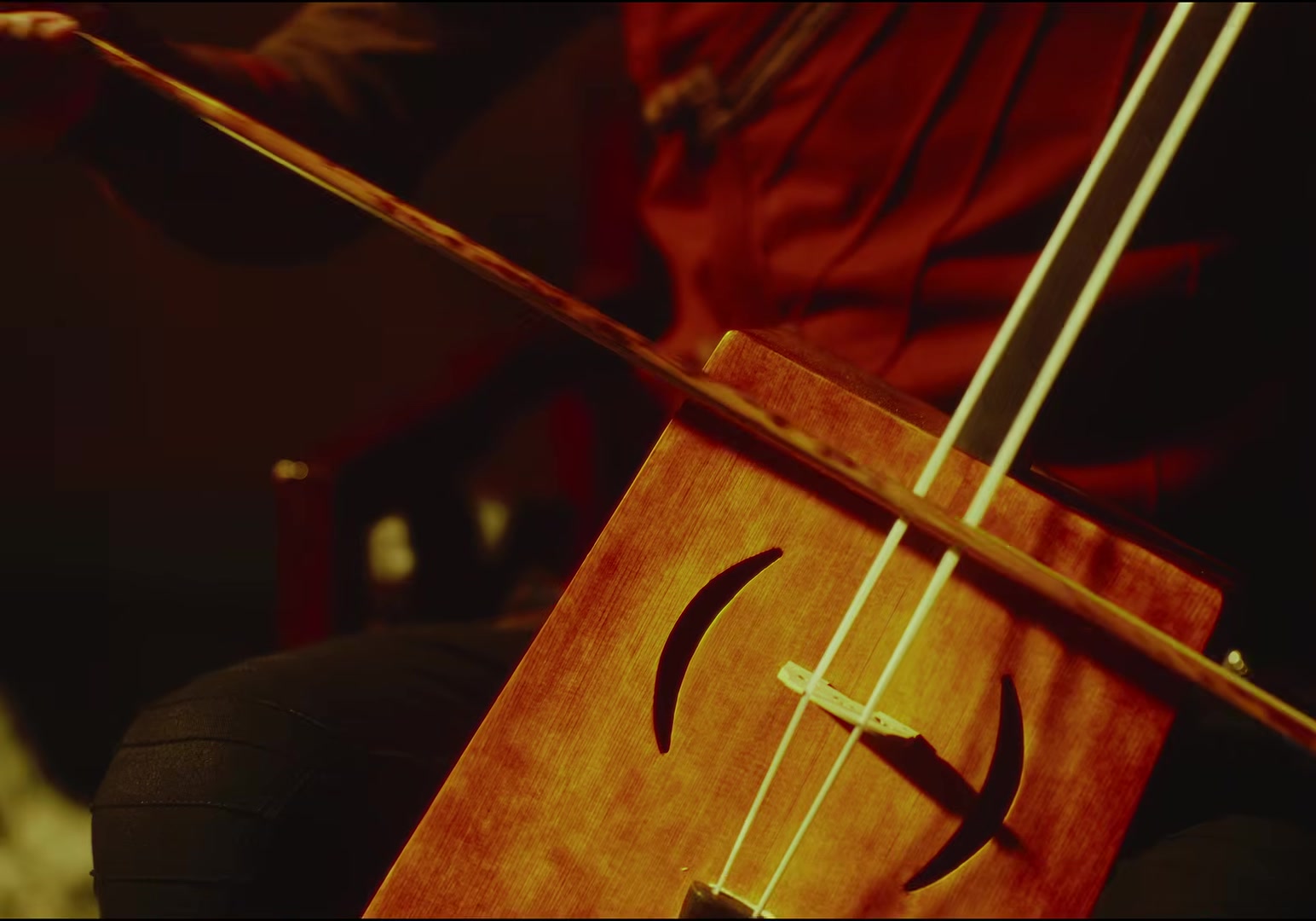
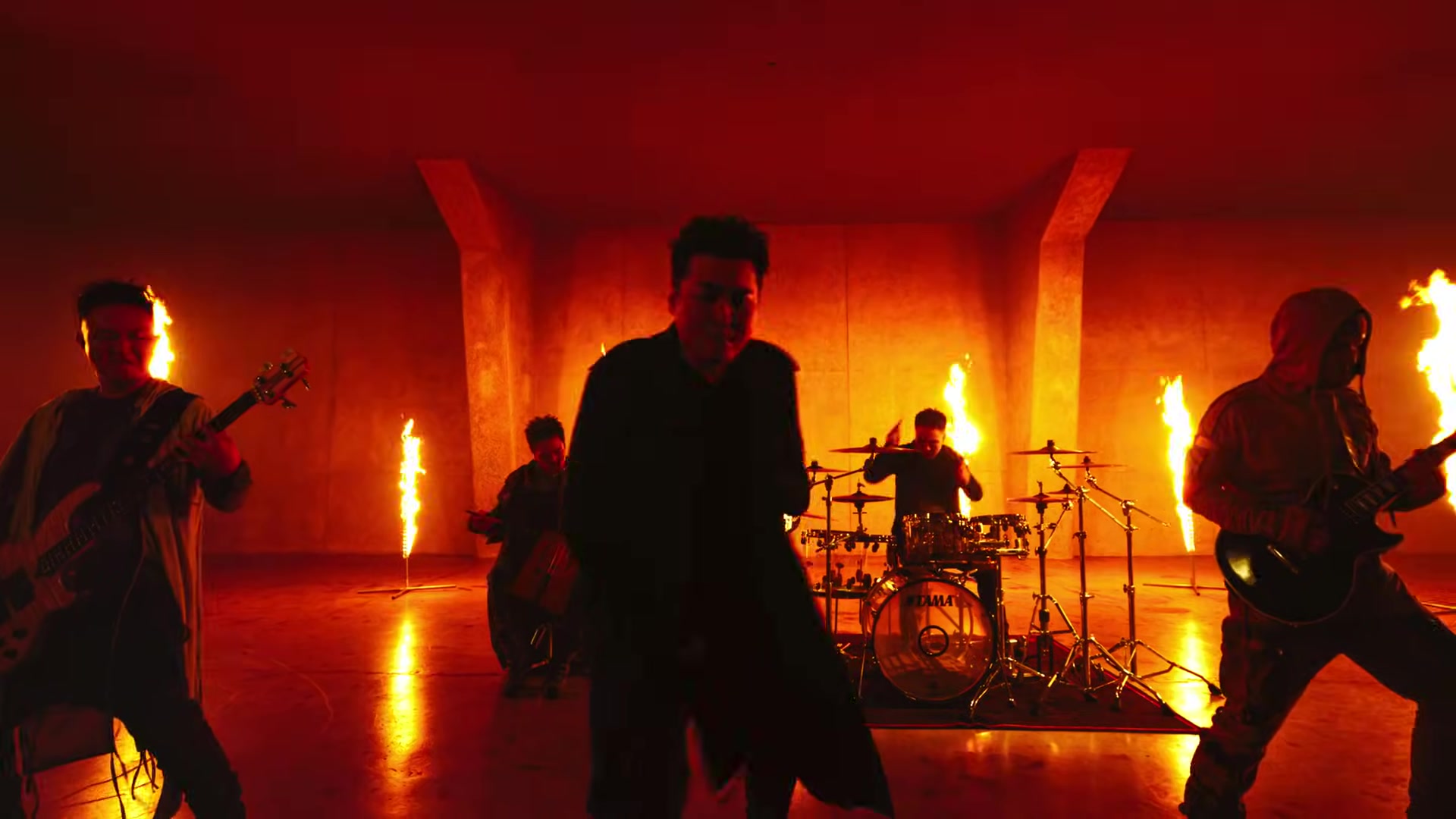
Yes. We have the horsehead fiddle, which is called the morin khuur. That's the main one. We have three morin khuurs on the road because they have different tunings, so we switch between them very often during the set. We also have the tovshuur, a three-string traditional Mongolian instrument. And we have a balalaika, which is a russian instrument. There's an interesting story behind why we have a balalaika in the band: I got it from a friend's house back in 2009. It was broken, I fixed it and asked him, "Can I have this, please?" And he said, "Yeah, of course." I put it into the NINE TREASURES sound, and it worked perfectly.
Back to the sound of the latest album. A lot of reviewers compare your new sound to TOOL. Do you think that's a fair comparison?
Yes, it's fair, because we wanted to explore a lot of possibilities and new ideas, and we've been listening to TOOL for quite a long time, especially in recent years. As you get older, you focus more on detailed music, and TOOL are fantastic because they have aggression and detail at the same time. I listen to TOOL a lot, and what I was trying to do was make a progressive folk metal album and put as much of the traditional way of playing into it as I could. I put in a lot of sliding techniques from traditional Mongolian instruments, and it worked really well. So if people say they hear TOOL — yes, that influence is definitely there. But because people aren't so familiar with the traditional sound on this album, they'll need a little more time to explore it, because it's full of detail. Every note, every beat — we thought it through and processed it many, many times. So yes, it's quite an interesting album.
Are you already working on new material, on a new album?
Yes, we've already finished one single, and it's being mixed right now. It's almost done, but it depends on the label's release schedule. I think it will come out very soon, maybe even in January next year. The next one will be a little heavier. We were tuned to drop D the whole time, but this time we're trying drop C, which is lower, more aggressive, more straight headbanging. Like I said, we're heading back to the old-school NINE TREASURES style.
Sounds great. You were blending Mongolian folk and heavy music long before THE HU, who are probably now the world's best-known band mixing Mongolian folk with heavy music. How did their success change things for you?
Their success taught me that, wow, there are such possibilities. It also showed me that the world is a crazy place and anything can happen. That's really awesome. After that I got so much confidence in myself. I reached out to an American team, an American management team, we also got the deal with Metal Blade, and now we're touring America. I'd say we will keep doing it, because from our experience, most of the fans we've earned came through live performance. Not 100%, but I'd say we met most of our fans face-to-face and played in front of them. We'll keep touring around the world. Thankfully, our American team is working really well. They will bring us to bigger stages, and it will get better and better.
Are you planning to play any big festivals? Probably not here — there aren't that many festivals in the US; I think most of them are in Europe.
Yes. We're working on a European festival tour next year, and also a headlining tour around it to fill in the dates. We're still working on that, and our management team is working really hard on it. Also, after this tour with MUSHROOMHEAD and FEAR FACTORY, we'll get some kind of feedback from the booking agent. So far we're getting a really positive reaction from the crowds as well as from both headliners. We're having a really great time on tour. So everything is moving, and we're really happy about that.
Your lyrics are in Mongolian, but your song titles are in English. Why did you choose to do it this way?
I just want to connect more with Western audiences. We also translated the lyrics for the first time on the new album. The older songs and albums don't have translated lyrics, but I think I can do that in the future, and then the audience will know what's going on in the lyrics.
How many shows do you have left?
Only seven, which is sad.
This is your first time in the US. What was the biggest culture shock?
Culture shock… Most Chinese people are actually pretty familiar with America, because a lot of American movies and TV series are shown in China. People already know what the streets look like and what the food is like, because it's all in the movies. But it's really cool to visit for real. As for culture shock, I don't think there was any. Interesting.
You mentioned that some American chains are in China, like McDonald's. To me, McDonald's in the US is horrible, but abroad they do pretty well. I went to a McDonald's in China, in Guizhou province, and it was much better.
Oh, yeah. They have a spicy version of McDonald's everywhere.
Thank you for being with us today, Askhan, and I wish you a great final seven shows of the tour. Any farewell words for your fans?
Thank you. Thanks for having me.
Seeking The Absolute is out now on Metal Blade Records.
NINE TREASURES: Website · Bandcamp · Facebook · Instagram · X
Thanks to Liz Ciavarella-Brenner at Earsplit PR for arranging this interview.
Video version: