The interview was conducted in Ukrainian and translated into English.
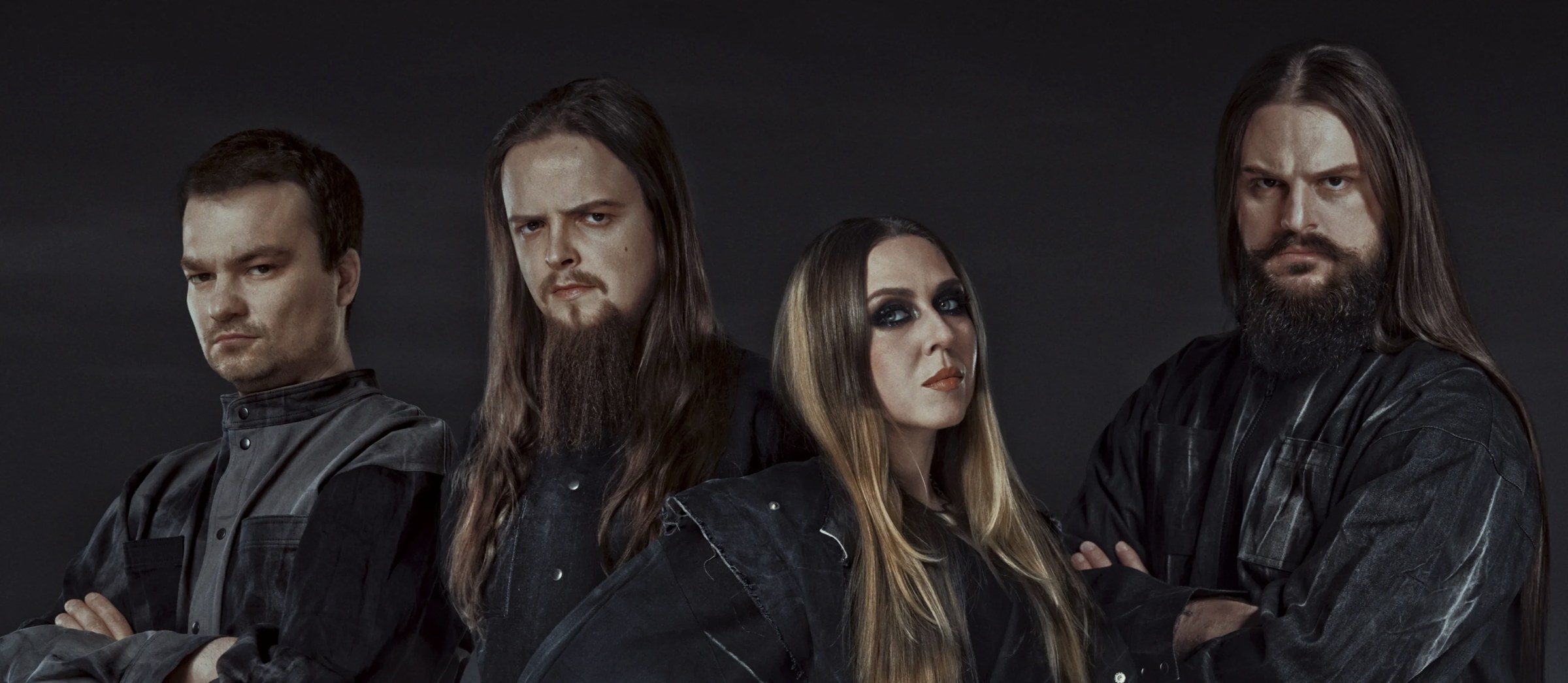
Scorpio: Today our guests are Kyiv's IGNEA and the band's vocalist, Helle Bohdanova. What's better — Helle or Olha?
Helle: Honestly, either works. My passport says Olha, and Helle is a pseudonym — Olha, Helga, Hel, it's just a short form. It somehow stuck, and that's the name the metal industry knows me by.
A lot has been happening lately, for you and for the band. You recently had your birthday — the same day as the album's pre-listening in Kyiv — and a little over a week ago the album came out. I waited until I got the vinyl before getting in touch. How did you celebrate your birthday?
Great! My birthday falls at a time when it's often hard to celebrate: first of all, everyone's getting ready for Halloween. It used to be school and college holidays, and now it's very often either a tour or getting ready for a tour. And for the first time in a long while it all just lined up: the album was coming out on the 23rd, my birthday is on the 22nd, and the pre-listening fell on it. I think it was one of my best birthdays in a very long time. And considering that the band is my life's work, it all lined up really nicely. I'm glad that even though it's very hard to hold events in Kyiv right now, we managed it. We were also supposed to play Kyiv on October 11, but because of new safety rules and heavier attacks we had to move it to the spring. At least the pre-listening happened — partly in a shelter, because there was a red alert during it. It was still great.
How many people came? How did people take the new album?
You have to understand that events like this are usually more for friends and the media. We did have registration, of course, so anyone could sign up and come. It's hard to say how many people there were, because it lasted about three hours: there was a part moderated by Suspilne, the public broadcaster, they asked me questions, then we signed records and so on. And I know a lot of people dropped in for, say, half an hour and then had to head home, because it was a period when getting between the left and right banks of Kyiv was a problem — and it still is. Plus it was a Thursday, plus the shelling. Honestly, not the best time to hold anything at all. So I'm really glad so many people came, at least for part of the presentation.
And I think it's an interesting format in general. We were probably one of the very first bands to do a pre-listening at all: we first did it with our first album in 2017 in Kyiv, back at the first location of the Khvylovyi bar. When we invited people, they had no idea what it was or why you'd do it. Now it's more common, and I think that's great. If it weren't for the current conditions, if it weren't for the war, I'd still love to hold a pre-listening like that somewhere in Europe, because that's where most of our audience is. I'm sure doing it somewhere in Germany would be really cool — we definitely have fans who'd come from other countries.
I recently talked with Igor Sydorenko of STONED JESUS, who heard your album early, when you were in Berlin shooting a video. He said STONED JESUS and IGNEA are among the bands far more popular abroad than in Ukraine, and many Ukrainian metalheads only later find out you're from Ukraine. Is that changing? Is your popularity in Ukraine growing?
It's changing slowly, but it's changing. And with this new album it's really interesting. Our previous album was dedicated to a Ukrainian woman, Sofiia Yablonska. Why did we decide to make it? Because I found out about her and was surprised I'd never heard of her — and nobody around me had either. It was very hard to get hold of Yablonska's books. Now, a few years after the album came out, she's at some kind of peak of popularity: new books are coming out, there are exhibitions, everyone knows about her. That's great. But many people don't know we dedicated a whole album to her — and that it had two full songs in Ukrainian. So I always have a lot of questions for people who think we're a foreign band, even though we have songs in Ukrainian. Then there are Ukrainians who don't like that we sing in English, and when we say, "Well, actually, we have some in Ukrainian too," they're very surprised as well.
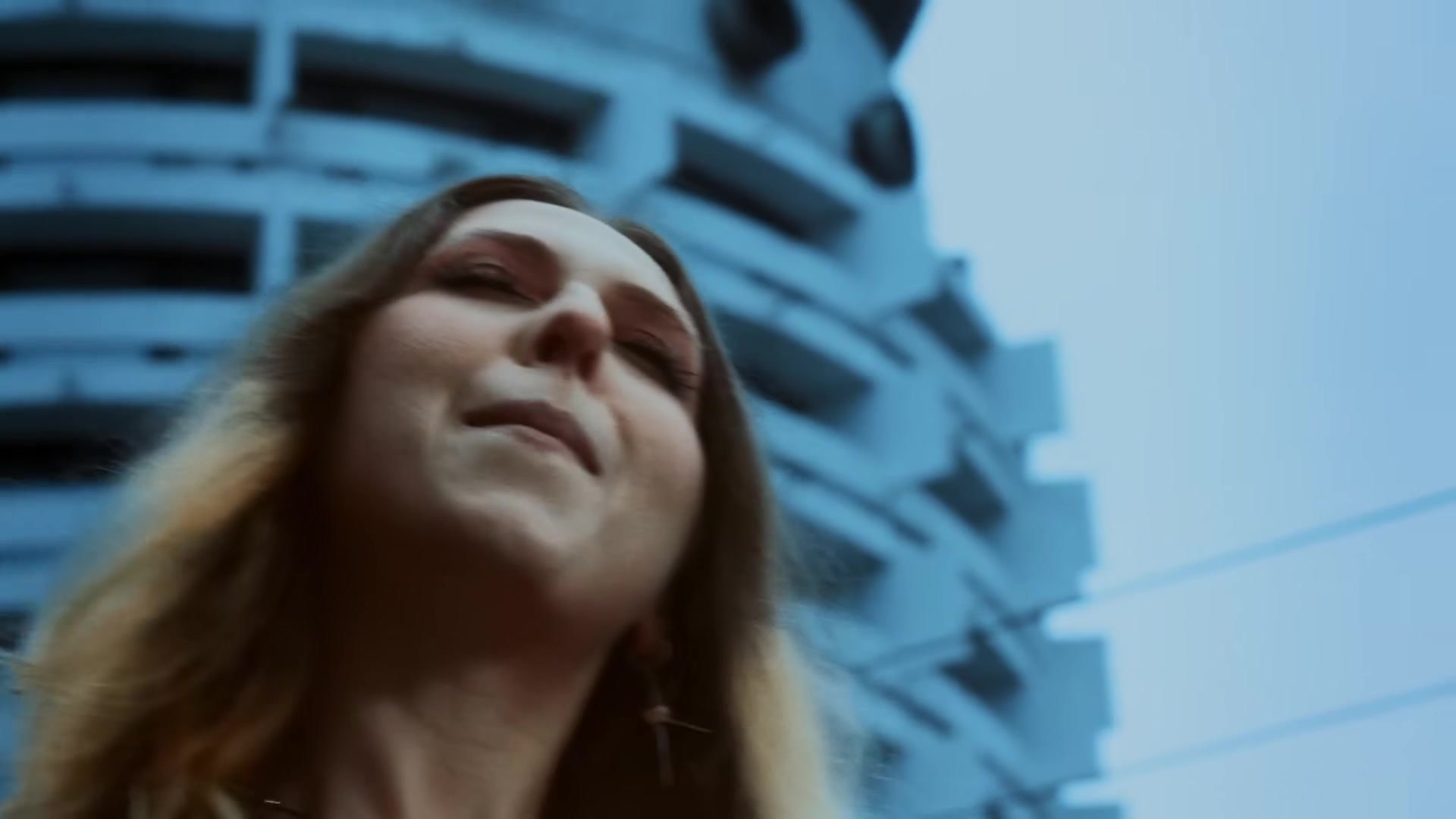
But what surprised me most is that from this new album — where all the songs are in English, with just a few small bits in Ukrainian — it was the song and video for "Darkness" that interested Ukrainians and the Ukrainian media more than anything we've ever done. Because the video shows Kyiv. I think Kyiv is actually the main character there: it's not me walking around Kyiv, it's Kyiv. I was really surprised how much the media picked up on it. People wrote about how much it resonated with them, even though the song is in English and there was nothing new on our side. It was very nice.
Of course things are changing, but we also announced a show, ticket sales took off — and we had to postpone it. Every Ukrainian band is dealing with this right now. Just yesterday our friends ANTAITLD were supposed to go to Dnipro to play, which in itself is already very risky. Their train was cancelled ten minutes before departure, and it was impossible even to get to Dnipro, let alone play. In 2023, for example, we played in both Kharkiv and Dnipro. Now it's getting harder and harder. Although this year, for example, the Faine Misto festival had a truly legendary year. We love it, and I hope we'll play there next year.
To put it briefly, I always say that metal in Ukraine is still underground. I understand that Artem Pivovarov is trying to change that story a bit, but for now that's how it is. The audience is growing, but it takes years. And I also always say that metal isn't hugely popular in every country, even in Europe — it depends on the country. In Germany, yes; in France, yes. But take Spain, for example: there aren't that many metalheads and not that many well-known Spanish metal bands — it's hard to even name a really famous one. So it is what it is. Maybe it'll change.
For me personally, Monumental is your strongest album, both for the songs and the production. Like Dreams of Lands Unseen, dedicated to Sofiia Yablonska, it's a concept album. Reading the lyrics, I saw brutalism and Bauhaus and thought it was purely about architecture, but the release notes say it's about nostalgia. So what's the concept for you?
Hard to say. When we started writing this album, it all began with a demo of the song that later became "What Buildings Dream Of". And I started thinking about what the album as a whole could be about. Originally we wanted to call it Space. It could be personal space, liminal space, geographic space. But from the very start, for some reason, it sounded more urban and architectural to me. I also started reading certain books, and the main one that really inspired this album is Ghosts of My Life by Mark Fisher. He writes a lot about hauntology and about nostalgia, and it all strongly echoes both culture and architecture. It was really hard for me to bring it all together, but in fact this album is about nostalgia in general, as a phenomenon and a feeling.
The thing is, nostalgia is triggered by different things in each person. It can be objects, even furniture: if we walk into some old apartment, a single armchair like the one that stood at our grandmother's can make us nostalgic. That doesn't mean it's a super bright feeling, because nostalgia is dual. Roughly speaking, in the post-Soviet space many things make us nostalgic, but maybe in an unpleasant way. That's part of it too, and we wanted to show it on this album.
On the album we look at modernist architecture, because these are very unique buildings in themselves — brutal, huge, monumental. When they were being built, they looked very futuristic. They still look futuristic today, but because so many of them are falling apart, there's this feeling of a future that never came. So this album is about nostalgia in a certain space, with certain objects.
I find it interesting to see how people react to the album, journalists included. Everyone reads something of their own into it, as it should be, because nostalgia is triggered by different things for everyone. Some journalists say, "Oh, this album is so slow, slow pace, everything so measured, so dark." Others say, "It's so energetic, it's almost power metal." It's dual, just like nostalgia. We wanted to show the swing that nostalgia creates. You can hear it very clearly on "Darkness": a person slides into nostalgia, remembers something, there's this elevated state, with a choir, with blast beats. Then it swings them back, and in the end they realize it's all just memories and they can't really return to that elevated state.
As for architecture, we also see it through the prism of our own nostalgia. And now, especially with the war, when you see how quickly buildings can be destroyed — along with the memory they carry — I think that's how it resonated on the album. As a Kyivan, when I walk around the city now, I try as hard as I can to fix in my memory what Kyiv looks like, because I don't know what tomorrow will bring. I've really grown fond of all kinds of Kyiv architecture, including the modernist kind. I think I never noticed it before, because it was always all around me. We're all used to it — the KPI buildings, Hotel Salut, Ukrainian House. They're just there. But look closer and these are super unique buildings with their own character and memory. That's how it all came together in my head, and that's how this album came out. And I think people pick up on why it's like this, but on some subconscious level.
For example, we have the track "Prefab", which is about panel blocks. I thought probably only people in the post-Soviet space would get it. Not at all: even people in Sweden have these identical buildings. I read a book about Le Corbusier, the architect who basically started all these apartment blocks — France has them too. Anyway, it's really interesting, and people really understood it.
For me, "Prefab" connects strongly with the US, where I've lived for quite a while. The school next to my previous apartment needed to expand, so they just brought in four ready-made buildings, like barracks: plug them in, connect some pipes, and they're ready to use.
See, that's interesting. That's why it resonates with different people on very different levels. We got a lot of messages from the Baltic countries and East Germany in particular — they understand all of it completely.
Hotel Salut, which you mentioned, is very personal for you — you even have a tattoo of it.
I do now, yes. I think it's a very interesting building and basically one of the symbols of Kyiv. When I walk past it, I can't just walk by — I always stop and look at it and think of all those stories. The thing is, there's a lot of modernist architecture in Ukraine, and it was built during the Soviet Union. And interestingly, many architects realized very ambitious visions of their own and hid very anti-Soviet things in these buildings. It's mind-blowing, because many people think it's Soviet propaganda, but very often it's exactly the opposite. Architects did such interesting things just to get their projects approved at all. And even in the monumental-art mosaics made during the Soviet Union, you can very often see pro-Ukrainian things. I find that very interesting.
By the way, a friend gave me a book called Soviet Bus Stops. Many of the brutalist ones are in Abkhazia, while the Ukrainian ones are mostly mosaics with warm Ukrainian motifs.
Yes. And what I find interesting is that brutalism and modernism, even though they're usually very big buildings with giant halls and seem cold, very often have huge windows that let in a lot of light — inside them it really is bright. And mosaics are very often part of them, and I think they look even brighter against that grey concrete. Right now I walk around and really get inspired by these buildings. By the way, we're about to go on a European tour — I hope, because we're still waiting for our documents. This time I want to set myself a kind of quest: in every city, look for brutalist buildings, modernist ones or prefab buildings. We'll see what comes of it.
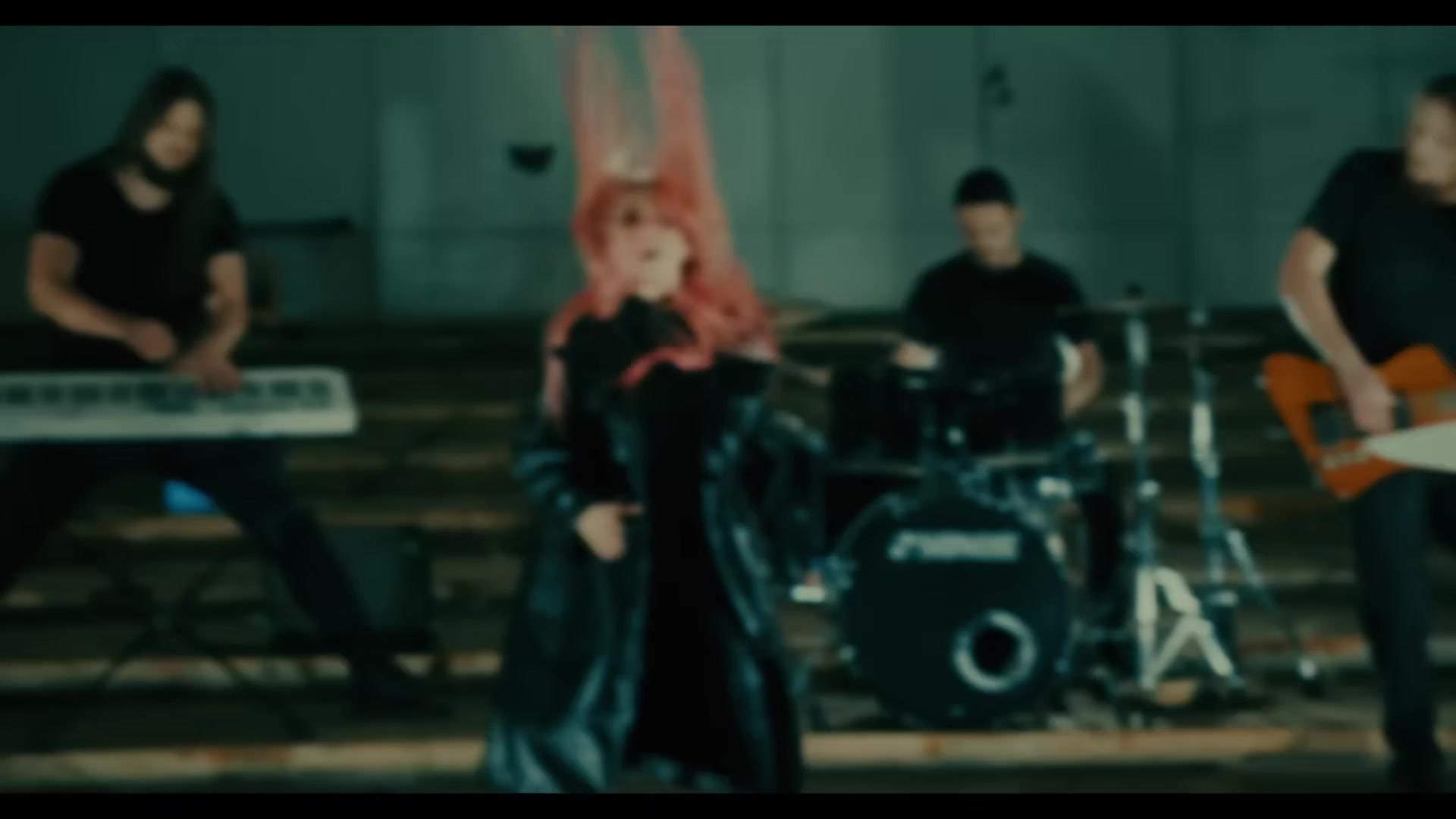
Another Kyiv building: when I came from Chernivtsi for weekends as a student, a friend of mine worked near Lybidska metro station, in the building with the "Saucer". For me it's in the top three buildings in Kyiv. How do you feel about it?
A lot is connected to it for us too. On our second album, The Realms of Fire and Death, there's the song "Jinnslammer", and we filmed its video right inside the "Saucer". I liked the building back then too, but I don't think we fully realized how unique and important a historic building it is. Even then it was in very bad shape inside, to put it mildly. And now it's just painful that it's been handed over to become part of a shopping mall. They've already started replacing the windows, and of course they're not trying to keep it historically accurate, or at least to modernize it while preserving its historic character. By the way, we've just printed merch for the new album, and the "Saucer" from Lybidska is on our long-sleeve. In general we tried to squeeze as many architectural elements into the merch as possible — modernist ones, panel blocks, bits from the videos — but the "Saucer" is there too.

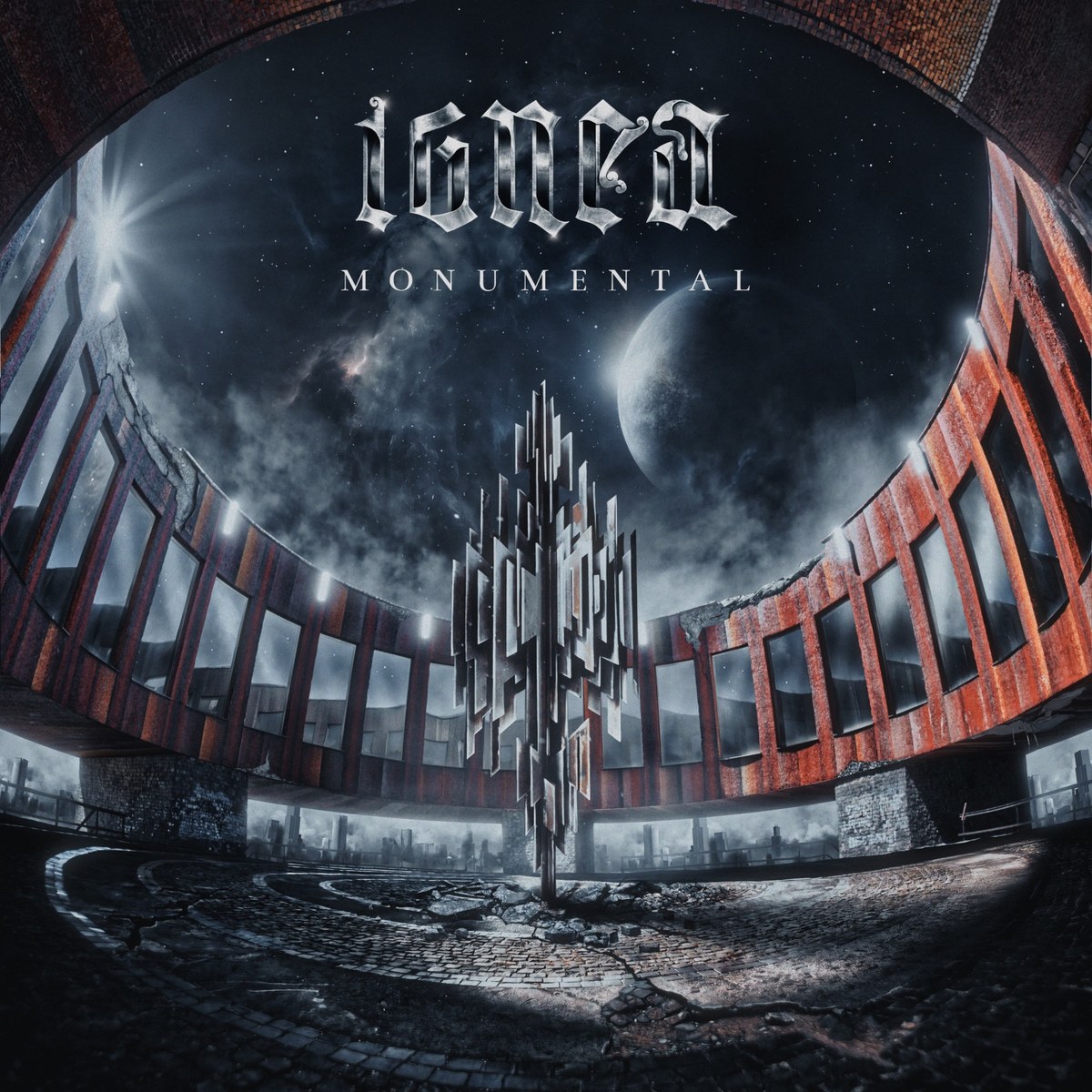
Part of any album is the visual side, and here it's the building on your cover. Were you inspired by a specific real building?
Yes, and it's also a building I found out about while we were making the album, because I have a few books on Ukraine's modernist buildings. It's the Museum of Propaganda in Shepetivka, in the Khmelnytskyi region. Of course there were ideas to put the Vernadsky Library or Hotel Salut on the cover, but they're not as unique, and we already talk about those buildings in social media posts and show them in our videos. This building is somehow very strange. I can't say I like it — it doesn't delight me the way the "Saucer" does. It's quite creepy. And actually, that eerie, uncanny quality is also part of nostalgia. So we wanted it on the cover.
It's also quite unique: it has this shape, it's completely covered in a smalt mosaic, and 80 different artists from all over the USSR worked on it. It was commissioned by the Party, but many of the artists put something of their own into it. Back then it wasn't called the Museum of Propaganda; now it literally shows how it all worked in the Soviet Union. We went to Shepetivka to photograph the building, and that photo was then turned into the cover. We gave it a more dystopian look — as if it's falling apart a bit. But when we got there, it turned out it really is like that: the mosaic is slowly crumbling, and, as far as I understand, there's no funding to restore it.
Interestingly, a couple of days ago we saw that the official Shepetivka website had published a news story saying the building had made it onto the cover of world rock music. Of course we were very pleased. By the way, we went there officially, got permission and paid for the hours of shooting — so we tried to contribute to preserving this architecture too.
And in the middle of the cover you can see a metal element that until recently was on the facade of the Kosmos cinema in Zhytomyr. Literally a few days after we decided to use it, they took it down — I have a video of them dismantling it. As far as I understand, the building was privatized and there's a new owner. Activists tried to fight to preserve the mosaic panel too, and the element was taken down to save it somehow. It's usually all very complicated with these renovations and modernizations.
That's why part of the album is about how we treat memory in general, because nostalgia is built on memory, personal or collective. Memory very often does interesting things to us: we remember only the good and forget the bad. That's why people are sometimes nostalgic for times that were actually pretty dark — but now it seems to us that back then everything was great, and now everything is bad. On architecture and memory there's the song "Presence of the Past". It's also about how much cities change. For Kyiv that's very relevant, because Kyiv is a monster of a city. Buildings here are very often torn down to make way for skyscrapers, new housing complexes, new malls. This song is about cherishing the past while we still have it, because tomorrow a missile could hit and it'll be gone. I still think we need to make an effort to rebuild or renovate buildings instead of just tearing them down, setting them on fire and so on. And this isn't only about Ukraine: I know there are many modernist buildings in the US too — universities, pools, schools, libraries. And often, if there's no funding for renovation, they just get torn down. So it's a global topic.
Let's move on to the music on the new album — it's an interview about music, and for half an hour we've talked about everything else.
Let's do it!
One of the first things that caught my ear: the oriental elements are almost gone. The first album is very Eastern, and the previous one, about Yablonska's travels, had motifs from the Middle East to China. On the new album only "Between No Longer and Not Yet" has them. Was that a conscious decision?
Actually, our main composer is our keyboard player, Yevhenii, and he's a big fan of Eastern motifs. He thinks they sound more unique in metal than the usual A minor–D minor, so to speak. He used to write most of the songs, and this time I was more involved. And partly it was a conscious choice, because it's a really urban album that just has nothing to do with those melodies. On the previous album Sofiia Yablonska traveled to those places — the Sahara, China, Australia — and we literally wanted to create a soundtrack to her travels, so it really fit there. There's almost none of it on this album. There's only one track, which is about what we feel when we listen to our favorite vinyl record. When the present seems very dark and we can't really see the past, we just want to escape. So we put on our favorite record and drift off to some nostalgic time. There are Eastern motifs there, not deliberately, but I read it as if it could be a record of one of our earlier albums. And a lot of our fans read it the same way.

And one of the tracks on the new album has the same name as the previous album.
That just happened. I was writing the lyrics for that song, and if the previous album was more about geographic travel on planet Earth, this one is more about space exploration and unseen lands somewhere out in the galaxy. So I put in the line "velvet sky belongs to those who dream of lands unseen", and Yevhenii said, let's call the song "Dreams of Lands Unseen". For some reason it caused a huge stir among our fans. It's a very proggy kind of hit. By the way, Igor from STONED JESUS really liked that too. I think it's like a little bridge between the previous album and the new one — especially since it was the first single.
Among the other proggy elements on the album, for me it's the keyboards. They've changed a bit and become proggier — more of that "brrr" kind of thing.
Yes, that's basically an arpeggiator, and there are a lot of analog synths on this album, because the theme of the album is nostalgia. We wanted to convey the vibe of the past not only through the lyrics and visuals, but through the sound too. The keyboard sounds we used are the kind you'd hear in old sci-fi films or in commercials — say, a commercial from the 1960s inserted as a clip. So that was quite deliberate. Just like the theremin, for example, in "Dreams of Lands Unseen" — it's really something associated with aliens in old films, so we decided to use it. But since our keyboard player is the main composer, we always have a lot of keys. They just have different sounds and different shapes.
For all the sadness on the album, there's some positivity. The chorus of "Darkness" is very bright, and "I Am in Hell", despite its title, is calm and without distortion.
That's my song. I wrote it back in 2020, during covid, the first lockdown. I wrote the first part, and back then I didn't even understand what it was about. With this album I felt it really fit. Although I never thought it would be part of IGNEA at all, because it's not a metal song. Here it sounds more like an interlude, like some old commercial. And even though it sounds very calm and positive, almost like a lullaby, the lyrics are actually very creepy and apocalyptic, so to speak. It literally reminds me of films where some apocalypse is happening and something very light is playing in the background, clashing with the picture. Here it clashes with the lyrics.
It also relates to that feeling of liminal space. For example, walking into a shopping mall after closing time is pretty creepy. Or in the US there are lots of abandoned malls, and you get this feeling that people were just here, all that energy is still here, but they're gone, and something's wrong. That feeling of creepiness and nostalgia. Sometimes it feels like a person who's nostalgic is neither in the past nor in the present — they're somewhere in between, in that liminal space. And maybe partly because of that I had such a clear link to architecture and architectural space, because you can feel it there too.
The songs are very different, but the album is very cohesive. Progressive bands often want to cram everything onto an album. You probably had material that didn't make it. How do you avoid repeating yourselves?
If you read the reviews, there are completely polar opinions about this album. Some journalists say we mixed in way too much and it isn't cohesive at all. Others say it is. So I think it's quite subjective. For us it's cohesive. What's more, the last song, the outro "Nadir", has melodies that the choir sings on the first track. So there's a link — again, some arpeggiators and so on. Words sometimes repeat so that at some point on the album you might feel an echo of an earlier track.
We actually had a lot that didn't make it, but only because it didn't fit this album. If it's conceptual, it's conceptual. Yevhenii definitely has a folder right now with shelved songs that have a lot of folk motifs, but they just didn't fit here at all. I think all those songs will wait for their time, until they fit, because — at least in my eyes — our music is often a soundtrack to the stories we tell.
On Monumental you also have collaborations with two other artists, from HIRAES and COMBICHRIST. How did those contacts and collaborations come about?
We don't do collaborations just for the sake of it — the song has to fit first of all. When we finished the demo for "Prefab", a very industrial song, honestly, I could already hear the voice of Andy from COMBICHRIST. He's an industrial metal icon. It so happened that before covid, in 2019, they played Kyiv, at the Bingo club, which no longer exists. It turned out we had the same booking agent, we were lucky to meet and had dinner together in Kyiv, and that's how we got the band's contacts. When this song came along, I thought, "If not now, when?" I wrote to Andy on Facebook and explained, and I'm very glad it happened, because, as far as I understand, he doesn't guest on other people's songs that often. I think it's just the perfect track to invite him on.
Britta and I know each other through our label, Napalm Records. We're on the same label and have played the same festivals abroad several times, and for me she's just a unique woman, because she has incredible extreme vocals. She also teaches them; she has a huge range and a variety of extreme vocal techniques. This song is about technical aesthetics and, roughly speaking, the mass production of objects that can later make people nostalgic — about the Bauhaus school. It's a very technical track, and we wanted to push that technicality even further. Britta agreed, and I'm very glad. And interestingly, the track is dedicated to the Bauhaus, a school that was in Germany. Britta is from Germany, and when we were shooting part of the video with her and talking, I explained more to her about the track. It turned out she's an architect by training. So I think everything came together on some subconscious level.
One of my favorite artists is Paul Klee, who was part of the Bauhaus together with Kandinsky.
Yes. Last year I actually had the chance to go to the Bauhaus museum in Dessau and spend time in the school building. That was a very unique experience too. And it's connected to Ukraine as well, through Kandinsky first of all.
You've already released four videos for this album, a record for IGNEA if I'm right. The production and costumes are very well thought out, and you can see a lot of resources went into them.
That's true. It was very ambitious of us, of course. For the previous album we shot three videos, and bands usually release three singles and three videos. This album is cohesive, but for me it's very diverse, and I really wanted people to hear as many songs as possible before it came out. Although now I feel we gave too little attention to the songs that weren't singles — I'm trying to promote them more on social media now.
All these videos took a lot of resources, and you have to understand the conditions we shoot them in. The first video, "Dreams of Lands Unseen", still caught last year's blackouts. It was hard both to shoot and to edit: when there's power only a few hours a day, the crew can't edit properly, because they use powerful computers. Of course, we shot with generators. The "Darkness" video was shot after a very massive attack on Kyiv. It went on all night, and we had to leave for the set at 6:30 in the morning. At 6:20 the all-clear came, and we were driving through Kyiv, which was burning in different places. We got to the set — and another air raid alert. There was a strike right next to the building where we were filming. Another part of "Darkness" was shot on a different day at metro stations where we got permission to film: one on the left bank, the other Dnipro station, which is above ground. We barely squeezed into that window, because those stations close during air raid alerts. And we only just made the deadline with the last video too.
Right now, honestly, new blackouts have already started, and they're even worse than in previous years. I can at least breathe a sigh of relief that we don't have to record an album or shoot new videos in these conditions. Because that's exactly how we recorded this album. It was the coldest winter in a century in many countries. There was no power. Every time we wanted to record even a small part of the album, we had to heat our studio for three hours just so we could switch on our microphones without them dying on us. I don't recommend it to anyone. This is already the second album we've recorded during the full-scale war, and I thought the previous one was a challenge. No — with this album it was all much worse.
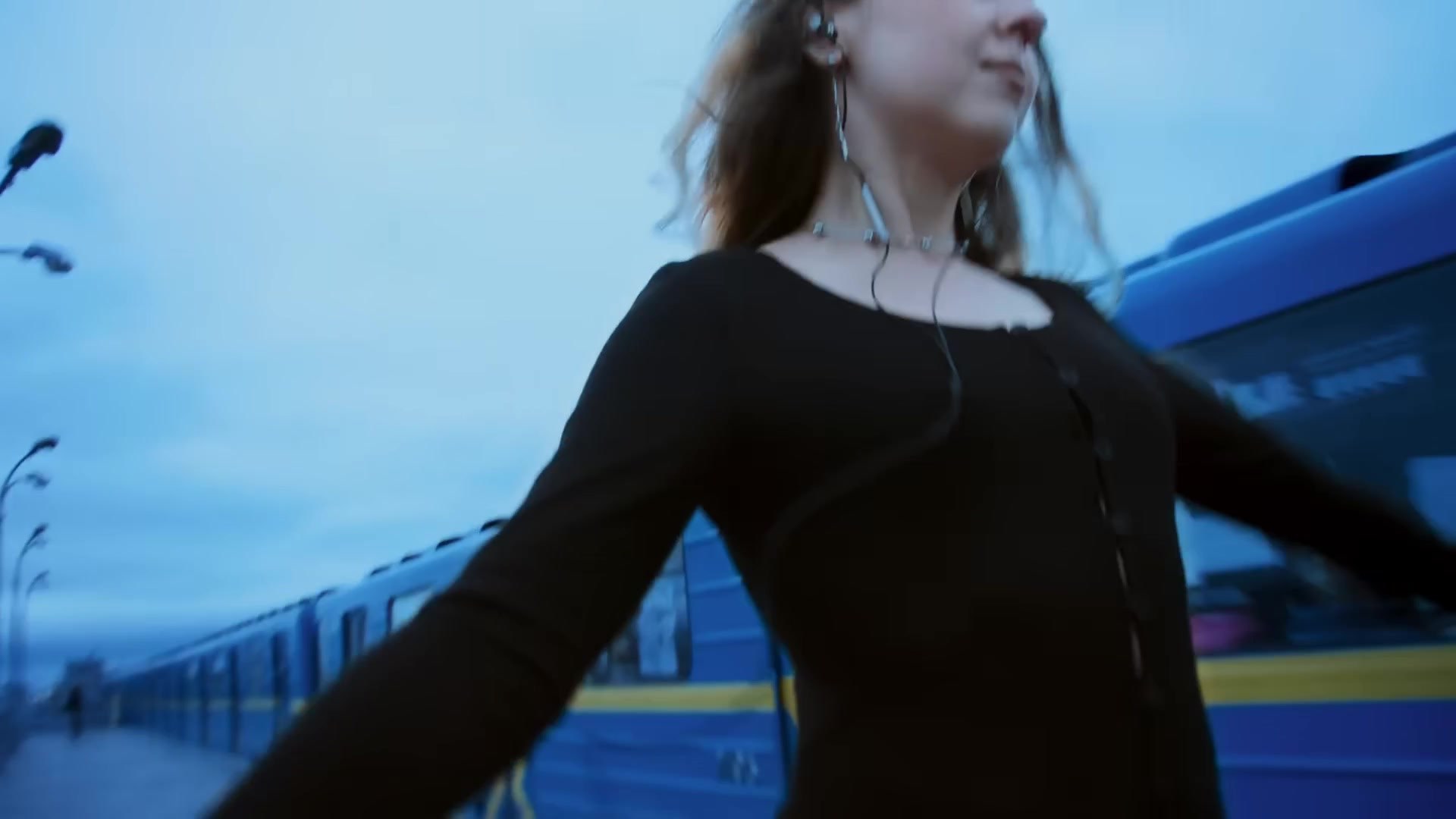
You're quite active on social media: during the "Darkness" shoot you posted photos from the set, and you record videos too. How do your fans react? Are most sympathetic, or are some tired of the war, even though they're not in Ukraine?
Actually, we post most of the behind-the-scenes material on our Patreon, because that's our main income. All the videos you see, and the album, are very often financed first and foremost by our patrons — fans from all over the world — and we post a lot there. Mostly people really support us. Even right now I'm doing this interview on a Bluetti power station that our fans gave us in 2022 — we use it during the blackouts. It still works.
Of course people are tired. The media most of all, because it's no longer news for them. When we go abroad, I see how little coverage there is of what's happening in Ukraine. We can't post about it on social media too often, because our reach drops. We've been banned a few times on Instagram and Facebook, even though we usually don't post any sensitive content. We're not trying to dump all of it on Western audiences; we try to package it so people understand what's happening, but without the posts getting hidden. Unfortunately, it's very hard. That's why for this album I gave a lot of interviews to foreign media — it's almost the only platform where I can properly talk about it. Same as from the stage on tour, where there's also a lot of one-on-one contact with fans, other artists and promoters. So it's super important for us. In 2022 you really could post anything — we published daily updates on what was happening — but now it's getting harder and harder.
You mentioned the tour, and you're heading out soon — I hope everything with the documents gets sorted. Have you already chosen the setlist, or will you still test which songs to play, and in what order, at the first shows?
We have. We're playing five songs from the new album and three from each of the previous ones. We're supporting EVERGREY, so it's not a headline show: we have 40 minutes, and in those 40 minutes we have to show everything. Also, as I said, at our shows we usually remind people about the war, so we have a segment where we thank people for their support, ask them to donate and so on. So it's all very tight, and we have to plan our set precisely. Everything is already planned.
I looked at the dates, and in early December you'll be in the UK — England and Scotland — and so will 1914, also on Napalm Records. I know they're playing Glasgow on December 4. Will you be able to cross paths?
I know for sure they play Manchester, at the Rebellion club, and we play there the next day. But for now we're all waiting for our documents first of all, and for the tour schedules, which very often don't depend on us either. If we manage to have a coffee in Manchester, that would be great, of course. And it's really nice that both we and they are able to keep touring — even with huge problems — because, as with us, most of their listeners are abroad. If you take Ukrainian metal bands that have a foreign audience and still live in Ukraine, I think it's only us and 1914. We literally go abroad, and people believe what we tell them on the ground. I think that's very important, because we literally come from a country at war, and only we can tell clearly what's really happening here.
Among this year's festivals there's a very interesting format: 70000 Tons of Metal, on a cruise liner at sea. How is it different from a standard festival, and what are the pros and cons?
It's a super unique festival, and I recommend it to anyone who has the chance to go, because I don't think there's anything else on that scale. There are various festivals on ships, but usually it's just two days and everything is very compact. Here it's a whole 14-deck liner: everyone, roughly speaking, boards it, sails for four days and comes back. What's unique is that every band plays twice, so people get to see as many bands as possible — there are 60 of them, on three stages. But the most unique thing is that all the artists are on the same ship the whole time, moving around it with everyone else. So people get to talk to all the artists. A meet and greet is mandatory for every artist, so it's a truly unique place for networking — artists with artists, artists with promoters, fans with artists.
As far as I understand, we were only the second Ukrainian band in the festival's whole history to play there. The first was JINJER, a couple of years ago, and the second was us. Things in our industry very often get decided backstage, and we've never made as many contacts as we did at this festival. It's also interesting that, despite the festival's entertainment format, we were worried we'd show up and nobody would care about us and our war, roughly speaking. But a lot of Americans expressed their support, came up to us, apologized for Trump. And they were surprisingly better informed about the news from Ukraine than some Europeans, I'll say that.
Helle, there are several languages on your albums: English, Ukrainian, and — I'm not sure — Turkish or Crimean Tatar. How many languages do you speak?
Fluently, Ukrainian and English. My German is at a good intermediate level, because I once lived in Germany for a year. Basic Norwegian — I hope someday I'll have time to improve it. And that's it. But, for example, we have a cover of a track by the Faroese artist Eivør, and on it I sing in Faroese. I really love languages, and sometimes a track just sounds in my head in a particular language. I'd still like to do a track in German someday. But I don't want to force it and do it just to have a song in German. If it's born, it's born. In the same way, people often ask us, "Why do you have so few songs in Ukrainian? You need more." Sometimes they're born in my head in English, and there's nothing you can do about it. Where Ukrainian fits, we use it.
It's funny, advice like that: "You need more." Who needs it?
Exactly — who needs it is unclear. And for some reason nobody asks foreign artists — Germans, say — "Why do you write your songs in English?"
I don't know if you ever saw it years ago — there was a site called Krashchegenerator. You'd go to it and it would randomly spit out phrases like "They'd better build the metro to Vynohradar".
Yes, that's for sure. That's true.
All this takes a lot of time: on top of the music and promo, you're basically the band's marketing director, and you run the Patreon. Is IGNEA your main job? Do the other members work outside the band?
It's my main job. Sometimes I have a part-time job, more for extra income, so to speak. But the band is my main job, and it takes a lot of time. I always say that, on the one hand, we're a band, but on the other, I'm also a content creator, because our main income is Patreon, and I've been creating content for it every week for eight years now. Plus all the band's social media, all the marketing, writing lyrics, choosing concepts. I also dress everyone in the band for the stage and for videos — all that styling. So it's a huge amount of work. But I don't think it's anything unique: every band usually has a person like that. In our band, Yevhenii is more on the technical side, because that takes a lot of time too, and he writes most of the music. And when we go on tour, for example, all the band members are involved absolutely equally. Recording the album, too — absolutely everyone is involved. It's just that content and marketing really are my side of things.
Yes, in today's world you have to do it, though I know far from all musicians enjoy it.
Me too... I like it, but not in the amounts it takes these days. Even with shooting videos — I love both the process and the preparation. But when it's very tight deadlines under shelling and with blackouts, it's exhausting. I can only hope there'll come a time when we can calmly prepare for half a year, calmly shoot a video, edit it and so on. But the world moves very fast, and the war goes on, so I don't know how it'll be. Right now I just want to breathe out. I hope we get to go on this tour, because we're musicians first of all, and I really want to be on stage, finally play these songs live and feel that connection with the audience, instead of sitting at the computer all day.
We're keeping our fingers crossed. The first show is planned for November 11, I think?
Yes.
May everything work out — may you go on tour, get lots of emotions and also get across the message we talked about today.
Thank you, thank you so much! I hope we'll make it to the States someday too, because 70000 Tons of Metal was just a small test. But a US tour is very expensive and very complicated. Getting US visas right now is a problem even for artists from EU countries. So I don't know yet — we'll try someday.
HYPOCRISY didn't make it over to us either.
Exactly, that's a big problem right now. Even EVERGREY, who we're touring with — they're from Sweden — recently had a US tour, and visas were issued to only half the band members; some parts were on backing tracks, some played by session members. And for us, honestly, with our travel out of Ukraine — for 70000 Tons of Metal it turned out that our guitarist couldn't get to Kraków to get a US visa, because these visas aren't even issued in Ukraine. So the guys need a separate trip abroad just to get the visa. We played as three original members, a guitarist from Greenland and a drummer from Poland.
Thank you for your time and for this wonderful, interesting conversation. And for everyone reading: the new album is out and available everywhere — on vinyl, probably on cassette, and on CD.
On CD. We didn't do cassettes this time — but we should have!
And some parting words from you, Helle.
I'd like people to find time to really slow down and listen to music the way people used to. Maybe it'll be part of the nostalgia — waiting for an album to come out, going to buy the vinyl or CD, and listening to it carefully. I hope people find the time to listen to Monumental exactly like that.
I just realized: I started collecting vinyl a year ago — I ordered a turntable on November 16. And I remember exactly those moments. As a student in Chernivtsi, I'd keep reminding the seller to hold that cassette for me, then listen to every song, flip through the booklet, smell the fresh print — and remember it all. Now, when a new album comes out on streaming, you're doing something else at the same time, and an hour later you don't remember what was on it.
See — a moment of nostalgia here too.
Exactly! Thank you. A quiet, peaceful night — as much as that's possible in Kyiv. And may you definitely go on tour.
Thank you so much! Thanks for the interview, I really enjoyed it. Great that you've revived your channel.
IGNEA online: Website · Bandcamp · Facebook · Instagram · YouTube · Patreon
Monumental is out now on Napalm Records.
Thanks to Helle for arranging this interview.
Video version: