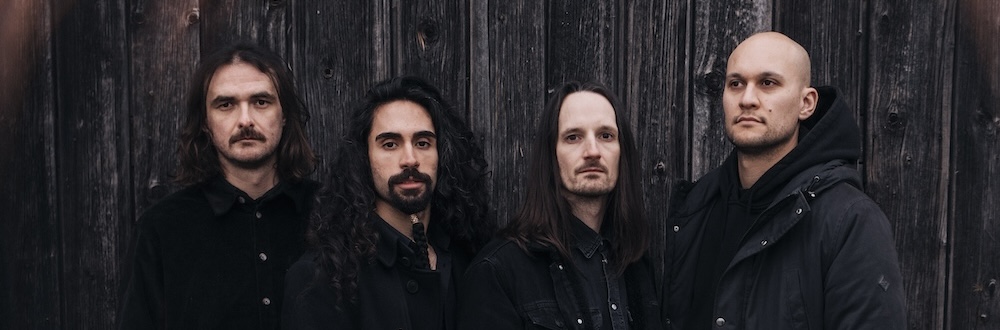
Scorpio: Let’s start with quick introductions for both of you.
Nikita: I’m glad to be back after our talk about half a year ago, roughly, just before we flew over to the US to have our first show there. I’m the vocalist and guitarist in the band and the founder. I founded this band in 2009 in Germany, here in my hometown in Würzburg.
Alan: I’m Alan. I play bass in the band and sometimes live guitars. The first time I worked with the band was in 2023. I played guitar on half of a tour, and then started playing bass in 2024, and also on the album Innern.
Alan, Innern was your first album with the band, but you had already played live with them. How was that switch, and what was it like joining after so many albums and all that history?
Alan: It was quite interesting to be playing on an album. The whole recording was my first recording to date, and I was also playing an instrument which is completely new to me, the bass. I only learned the bass for this album and to play in the band. So that was quite interesting, the switch from guitar to bass, and also the exciting process of recording an album.
Joining the band is certainly one of the best things that has happened in my entire life. I can say that frankly and directly, since the band is my favorite band. I have been a fan way longer than I have been involved and active as a musician. So this is a part that I will never forget, as a great reminder of this privilege that I have. It’s the best experience ever.
The label, Season of Mist, credits you, Alan, for the idea of the instrumental version of Innern. Is that correct, and how was the idea born?
Alan: Yes. Nikita was writing the songs and sending them to us regularly and asking for feedback. And there’s one song, “Xibalba,” the second song on the album. It was one of the songs which was done during the beginning, quite early on, in its instrumental version, but it was a song that received the lyrics last. So I had a lot of time with that song. I was listening to it regularly, and I had already built up this connection to the song and had my own associations.
So when Nikita told us that he had come up with lyrics, that he had recorded them and sent us that version, I was of course very excited to listen to the song in a different light, in a different version. But as soon as I started listening to it, it was so different. The whole experience was so different that I was a bit disappointed even at first. The song now with the vocals is my favorite song on the album. I love the lyrics, I love the singing and everything. But because of that association that I had, the connection that I already had to the song, and our history, so to say, I was a bit bothered that it sounds so different now.
So I told the guys, “Hey, I think we need to release this song in its instrumental version as well. If we’re not doing it for the fans, at least do this for me, because it sounds so different.” I feel like the song is very packed. It’s very layered. The synthesizers and everything, the soundscapes, it has its own universe and cosmos. So releasing it in its instrumental version would make it easier, I would assume, for a lot of people to hear all the nuances and the details which are there. It is a bit more difficult with the vocals on top. I love both versions, but I’m super glad that they are also releasing an instrumental version.
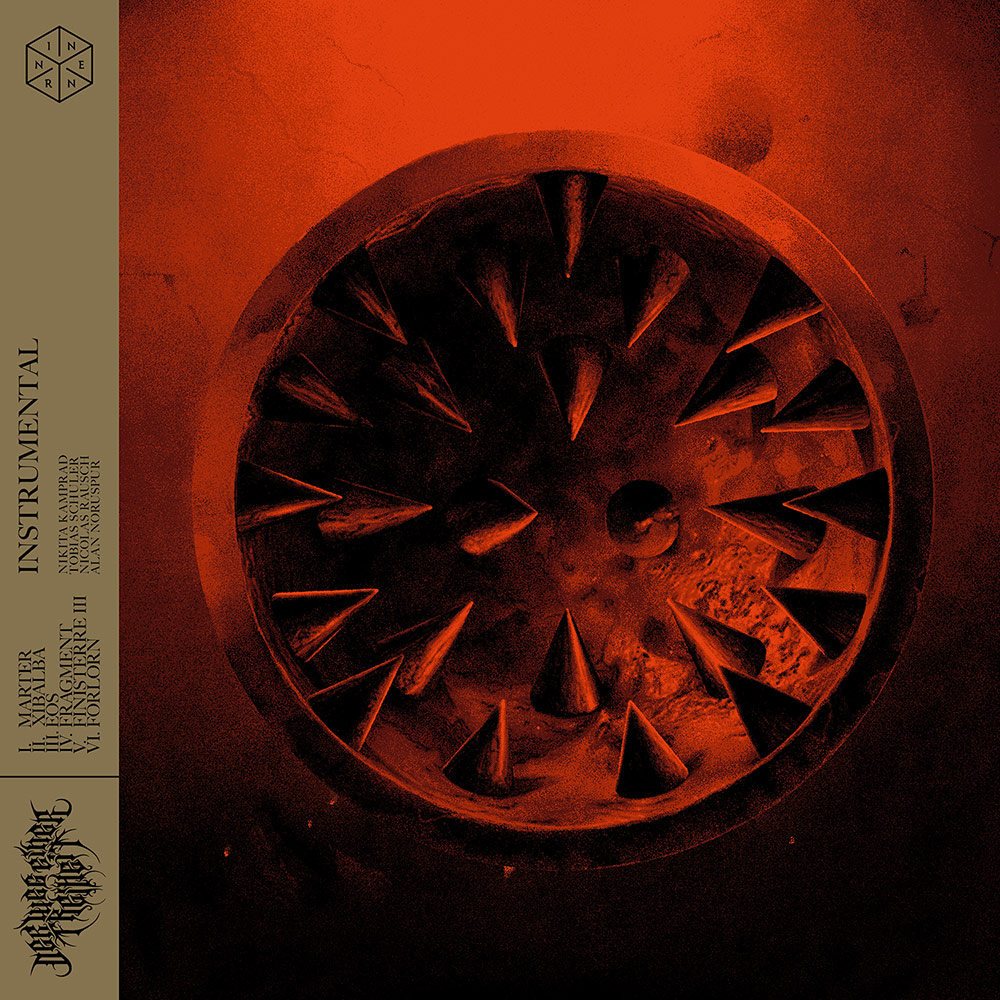
The instrumental edition of Innern, out now on Season of Mist
Nikita, what was your first reaction when you heard that Alan was maybe even disappointed with the version of “Xibalba” with vocals?
Nikita: I can’t remember him being so straight up with me or with us that he actually was disappointed. I don’t think you were, actually, Alan. But I totally get the feeling. On the production side of things, there’s always this magic of the demo, where you do a demo of a song and then you hit the studio, record it in its final version, and it doesn’t have the magic anymore. There’s something missing, and sometimes it can be disappointing.
Maybe it was kind of the same feeling for Alan. He was so used to the instrumental version that suddenly the vocals arrived and didn’t make the song worse, but different in a way that it needed time again to appreciate the song, because it was new. I can totally relate to that, because it happens to me, or it had happened to me in the past very often, where I went into the studio with a demo or the pre-production of a song, then we did the final recording, and it didn’t have the spark anymore. But that is something you have to get used to as a musician, as a producer, as a creative person. Maybe in everything you do creatively, sometimes it’s hard to maintain the initial spark of the thing you create. And that is also a challenge.
But with the instrumental album, as Alan said, we had this opportunity to actually present the songs in their original instrumental form to the people, and not only to the people, to ourselves as well. Because when I started working on the new mix for the instrumental album, I realized, and I really also appreciated, all the little details which were there in the music. They are always there, also on the vocal album, but they are buried beneath the vocals. The vocals give you that certain guideline and the focus. On music with vocals, the vocals are always kind of in the focus, and the other things get away a little bit, a bit buried. And that’s just the nature of music with vocals, I think.
This instrumental album just gave us the opportunity to show our music, actually the purest form of our music, to the people. And we’re very excited about this experiment. There are not so many bands who did that, I think, especially in the black metal genre. So let’s see how it will turn out, how people like it. I think we like it already.
I know you did not re-record anything, but you changed the mix. What was changed? Was anything added?
Nikita: There’s actually one completely new element that I added in the song “Fragment.” It’s just like a synth filter knob thing that I added throughout the whole passage where actually a long scream appears, which I kind of imitated with a synth noise, or at least I tried. And that is something people will hear that is new to them.
But apart from that, there’s not so much newly added. Rather I picked two or three main elements per song, like a special synth or a texture, like a sound effect or something like that, or something in the guitars, and just tried to emphasize this important element to make it more present in the song. I also, for example, added a new EQ setting to the bass or to the toms, because I think the bass has also been a bit buried in the mix by everything what’s going on. But with the vocals muted, I think the bass benefits from a little bit more presence, a little bit more attack in the picking, and you hear it more present. And same for the tom fills, for example, that Tobias is playing. He’s such a great drummer, and he thinks about every single hit he does, so why not give that the focus in that new instrumental mix? That was the approach. So people find out new things here and there. I’m pretty sure about that.
Alan, what was your reaction when you heard the new mix?
Alan: That song, I was actually about to tease that a little bit. I didn’t want to tell you which song it is. I wanted you to listen to the full album. But yeah, “Fragment,” the new version, it shocked me positively. It sounds quite different.
And there’s also another aspect to listening to an album which you’ve heard so many times with vocals on top. There are many passages, many parts. Now with the vocals gone, your brain is so used to it that you hallucinate some of the words and some of the sentences. You feel like he missed the part, but if you listen closely, there is no vocal. You’re just imagining it. I think that’s quite interesting.
I was maybe a bit concerned myself that it’s just going to be the album, but a lesser version of it, smaller, less of what we put on the original album. But after listening to it, I found out that it is a new experience. There are days you would like to listen to the original version, and there are other days you would like to listen to the instrumental version. It has its own value, and I’m quite pleased with that.
Do you plan to play any of these instrumental versions live? You go on tour in about a month.
Nikita: No, that’s actually not something we have on our minds. I think we haven’t talked about that, but it doesn’t make sense. Just playing an instrumental song for the sake of not singing doesn’t really make sense in a live show. It’s just for the personal listening experience, nothing for live, I think.
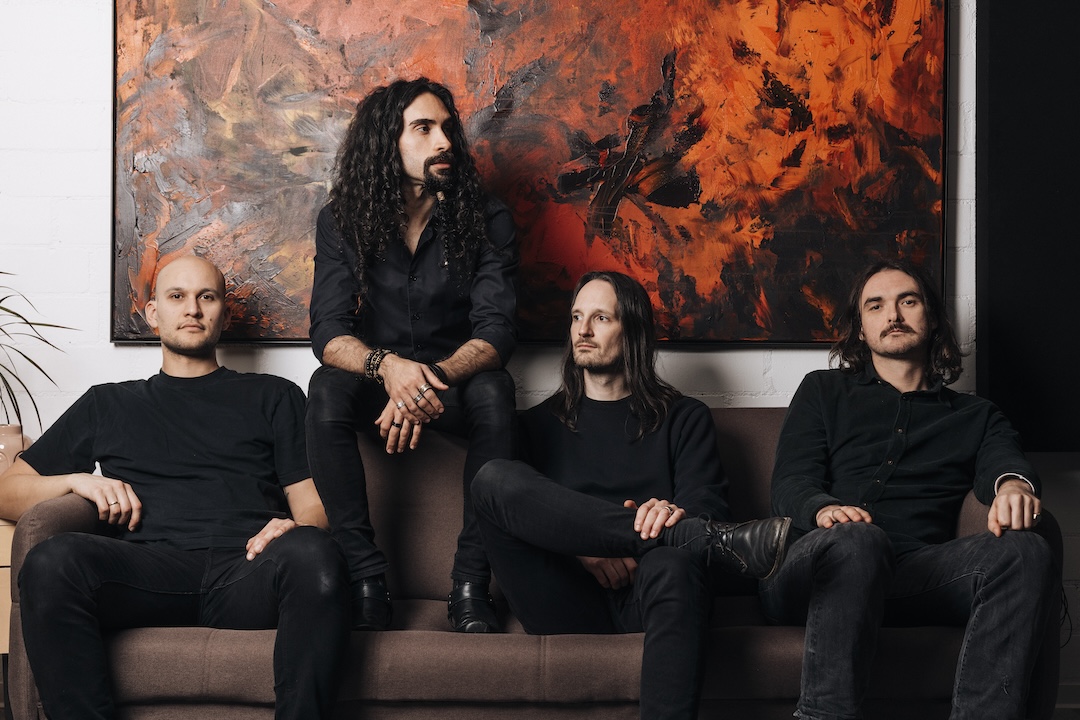
DER WEG EINER FREIHEIT. Photo: Mario Schmitt
Let’s continue where we ended last time. We talked about you going to the US, and at that time a few things were still up in the air. It thankfully happened, your first show at Maryland Deathfest. What was your impression?
Nikita: Just to sum it up, it was nothing short but amazing, really. One of the best shows I have ever played personally, but I think everyone agreed on that in the band. It was kind of a different energy that I haven’t felt in a long time after a show. And also on stage. People went out of themselves differently than on our shows we are used to here in Europe or Germany. Every country kind of has, or it’s a cultural thing maybe, people connect or get into the music and show themselves differently everywhere you go. And seeing that finally in person in the US, how those people react to our music, it was something really, really cool, and I appreciate that moment very much.
It made all the efforts we need to go through, like getting the visas, paying everything upfront, with the minor anxiety of going to the border or getting denied for whatever reason. You hear some horror stories here and there. All these efforts and anxiety, it was blown away when we played the show. We are very grateful for that opportunity, and it was just a total pleasure.
Alan: It was incredible. I think I’m still processing that experience till now. I was quite worried that since I’m Iranian, we might get denied entry because of my city of birth, although I do have the German nationality now. I was like, “Oh my God, what happens if that would be the reason for not allowing my bandmates to do this thing?” So there was a lot of anxiety around it. But after it worked out, after we saw that everything went smoothly at the airports, it was just pure joy.
It was a dream that I always had. I never thought that I would get to play in the US, but just traveling there, being there. And also, on a personal note, I have a cousin who has lived in the US ever since I was born, so I never had the chance to meet him in person, and I did that. Being 30, you meet a family member for the first time in your entire life. There are so many different reasons and different aspects which made this whole experience so special to me, and I’m very grateful for it, and stoked that I got to do this.
Did you fly just for your show, or were you able to stay a couple of days at the festival? What bands do you remember, and what did you discover?
Nikita: We stayed for three nights. We arrived one day before our performance. Festival show days are always kind of stressful, hectic in a way. You have to take care of many different things. And then you play the show, and then mostly you get picked up back to the hotel. But before we went back to the hotel, we had the chance to see ORANSSI PAZUZU, for me the first time I’ve seen them. They were on tour in the US, and they played right after our set. Going off stage after a great set, coming down, packing everything, and then having another half an hour seeing this band, which was really, really cool. I must stress that I’m a big fan of them, and this was a highlight for me musically.
The travel from Europe with a stop in Iceland and on to Baltimore, with the jet lag and everything, was also exhausting, of course. So after our show day we took basically a day off, just at the hotel or around, having enough sleep. And the next day we went to the National Aquarium, with a lot of fishes and everything, and that was cool. It’s nothing festival music related, but it was a cool experience, being somewhere totally different from what you know, and then just going into an aquarium like that. It was a cool day off.
Alan, how about you?
Alan: For me it was also ORANSSI PAZUZU. I invited my cousin and saw him for the first time a couple of minutes before the show, and then I got prepared for the show, played the show, and the plan was that I leave with him, go to his place, which was in Rockville, and meet his lovely family and spend two days with them. But after the show I asked him if it’s okay that we watch a song or two from ORANSSI PAZUZU, and then I found it difficult to leave because it was so enchanting and mesmerizing. Especially their guitar player, his stage presence and performance did inspire me. But then afterwards I was gone with my cousin, and I think I came back on the last day, and then we took a flight back to Iceland and then back to Germany. So I couldn’t see any other bands at the festival, but I had a great time. Went to Washington, DC, for example.
Nikita, you mentioned there are differences in the crowd between continents. Can you describe what is specific about the US? Maybe some hunger for European bands, because we don’t get a lot of them here, and in Europe the whole summer is festival season.
Nikita: Yeah, you can say that. I just wanted to add something regarding your last question, because I see your T-shirt with the 1914 band. They also played, I think, the day after us at Maryland Deathfest. We got to know them actually at breakfast and had a little conversation, and that was also a band I saw the next day.
Regarding the actual question, whenever there’s scarcity in a country or a continent or a market, if you say it like that, it reflects in the energy.
Alan: Receptiveness.
Nikita: Receptiveness, reactions of people, right. And you’re kind of right. There’s no value judgement in what I’m saying now, but as you have all the huge festivals and the huge metal scene in general in Europe, especially in Germany, I think it’s the second largest or third largest market in metal, you kind of have that reflected in the reactions of the people as well. And I don’t mean it in a bad way, of course. If we play a German show, for example, people tend to stand there and enjoy the music with all their feelings, with the eyes closed maybe, and for themselves. And that’s totally fine. That’s what I would do as well. But maybe that’s also the reason, because they have seen their favorite bands already 10 times or something like that, so they can enjoy the music.
Which doesn’t mean, for example, the audience in the US didn’t enjoy it, but they showed it in a different way. They were so energetic. Some of the guys took a hammer, an inflatable hammer with him, and there was a mosh pit, and he hammered the fellow fans while we were playing blast beats and screaming. That was just a few I will never forget, the mosh pit, they’re going crazy, and this guy with a hammer. That’s really cool. Something I have never seen before, and it just showed another energy in a way.
Maybe it’s because it’s not an everyday thing for them to see a band like us, like 1914 or any other European band, because it’s so hard for us to get there, to be honest with you. It means a lot of money involved, a lot of pre-planning, a lot of free time, a lot of energy you have to put in before you come there. And that’s the same for countries in Latin America, for example. Latin America is famous for the fan reactions. We’ve never been there, but you hear it everywhere that every band that plays there comes back and just says, “Whoa, what the fuck is going on there? What’s wrong with those people?” But the reality is that they really enjoy the very moment, because they don’t know if the band is coming back in 10 years or something like that.
So is Latin America, South America your next planned destination?
Nikita: Yeah, definitely. It’s on the list. We as a band have to prioritize a little bit, what we want to do or what we can do, because we’re not doing that full-time. Every one of us has their private life, job, things like that. And that’s also important, that everyone has the freedom to pursue his own private life in the way he wants to. That means we’re a bit more limited timing-wise, and that also means we have to pick what we can do every year. But I would say a full US tour and a full Latin America, Southern America tour is very high on the list. And every year we try to make that happen again, find new contacts, reliable contacts that can get us there and where it makes sense with the band. We’re not quite there, but I think we’re on a good way, and it will happen sooner or later. I’m very sure.
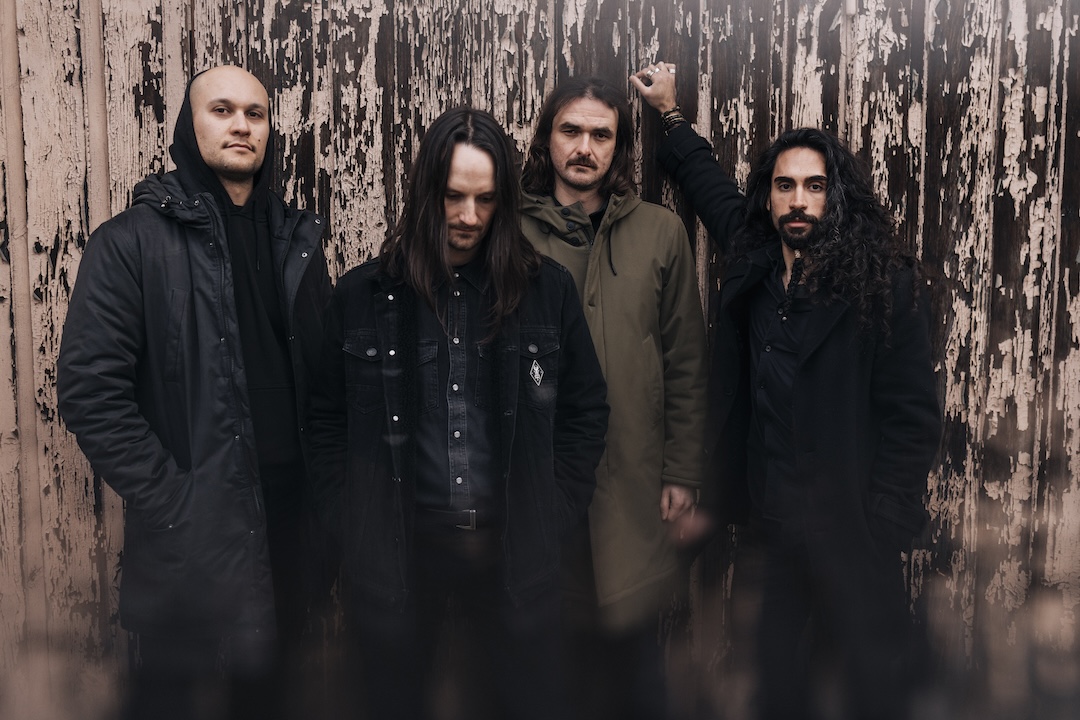
DER WEG EINER FREIHEIT, 2025. Photo: Mario Schmitt
Now that you have played your first show in the US, does it make it easier to organize a US tour, maybe next year?
Nikita: We hope so, really. We hope that a few more industry people have us on their radar now. We just recently received an opportunity from Canada, for example, which is the first time we received something like that, which maybe is a result of playing Maryland Deathfest. We just hope that we can reach new people with this appearance and make it happen.
A lot of bands are having issues with visas to the US specifically this year. I just saw DIMMU BORGIR here, but they were supposed to play together with HYPOCRISY, and HYPOCRISY did not get their visas in time and did not travel. Now ELVENKING have announced that they are also not coming because they did not get their papers in time. You did get your visas. Do you have any tips for bands?
Nikita: That’s so difficult. I’ve been through all the process from start to finish, gathering all the information. First of all, finding reliable resources to get all the information. I think one of the most important things is working with a visa agent who has a name, or an agency who has a name in the music industry over there, who knows exactly what paperwork you have to provide, who can check if it proves your band to be the new super successful band in the US. That’s what the officers want to see, basically.
You have to provide all those resources, and they do their part in the US, this agency, and you have to do your part in wherever you live, we’re in Germany, applying for interviews, meeting all the deadlines. And although you might have one year of time of doing all this, it can be very, very tight in the end if you don’t do everything as fast as possible. So I think having reliable contacts and doing everything as fast as possible, and applying in the end for this extra fast processing where you get an answer by the US Embassy within a 10 day timeframe if you pay extra. I would suggest that after doing it now, because then you have the guarantee that at least you can apply for the interviews in Germany. That’s a huge process, very difficult. That’s just on the surface what I said now, but just make everything absolutely bulletproof, and then you might be lucky.
On your YouTube channel you have playthrough videos and vocal one-take videos, and you have all your tabs available for purchase. How important is that additional content and those additional ways to connect with your fan base, next to just releasing music and playing shows?
Nikita: Nowadays as a band, simply put, you can’t make a living out of just your music. It is how it is. And you always have to find new ways to connect with people. Our band is mainly about providing quality music, in our perception. Quality music also means showing people how it is built, how it works, how the music works. And the best way to show it is actually providing tabs, so people can see how the guitars are played, how the bass sits underneath the guitars, how the harmonic structure works.
That was the main reason why we wanted to provide the tabs. On the one side, to provide a new kind of income for the band, which is small, but still a little bit. But also to engage with people who play instruments themselves and show them how we do it, to make an interaction with them. And that also brings us new ideas, for example how to approach new songs, or how people like this or that part. That’s just a new way of interacting, and that’s a cool thing, I think.
Innern is now a year old, and you just put out the instrumental version. Is there a next album coming, the seventh album? Maybe that one will have “Finisterre IV” on it.
Nikita: That can definitely be. And pretty sure there is a new album coming. When, I can’t tell. Songwriting hasn’t started yet, but we are planning already, and I’m keen to start working on new things by the end of this year. So maybe have a pre-production ready sometime next year, to be ready to be rehearsed and then go to the studio.
It’s a long process. For a band like us it’s always not a process of a few months, but rather two or three years. Also to prepare ourselves in a way that we can hit the final recording session knowing exactly everything about the songs. We know exactly every fill, every note, every part needs maybe another picking style or something like that. So everything needs to be very well rehearsed before we do the final recordings. Whenever they’re done, it takes another half a year until it gets to the pressing plants and everything scheduled with the label.
Don’t expect new music. Well, maybe next year a new version of already existing songs. Maybe I can tease that here already. But original new songs, I don’t think before ’28. So some patience needed.
Alan, do you have any music ideas? Do you share them with Nikita? How open is he to that? We talked in the past with Nikita that he could be a control freak, so to speak.
Alan: I don’t know how it was in the past, but I can say that Nikita’s quite open, surprisingly open. Considering how good he is at what he does, one might think any change would make the result a bit worse. But still, he is open to ideas. I don’t have much experience when it comes to songwriting. And I remember that for Innern I shyly suggested an outro for the last song on the album, “Forlorn.” And I did struggle with myself, like, “Who am I to suggest something to the grand maestro, Nikita?” But I did, and he accepted it, and it landed on the album, and it was crazy for me.
So he is quite open, but he’s also extremely good. I wouldn’t think that he needs any help from us, songwriting input or whatever. Maybe feedback. Feedback is always good, but he can do everything on his own. But of course, if I feel moved, if I have another silly, crazy suggestion next time, I will surely bring it to him, because I know that he will really give it a thought, listen to it, and that’s quite exciting.
Nikita: And the best example that it’s actually working is the song “Forlorn,” which not only Alan put his outro on, but it’s a song in collaboration with our guitarist Nico, which was a new thing, and I think one of the most popular songs on the album, actually. Although it’s the last song, and last songs on albums are always suffering from the attention span of the listeners. They always fall off the wagon. But I think with “Forlorn,” against the odds, it became one of the most popular songs on the new album. And that just showed us that this kind of collaboration works. Maybe not for every new song we will come up with on the next album, but maybe again one, two songs where we try out a collab. It can elevate the band’s sound into new directions, and that’s always a good thing.
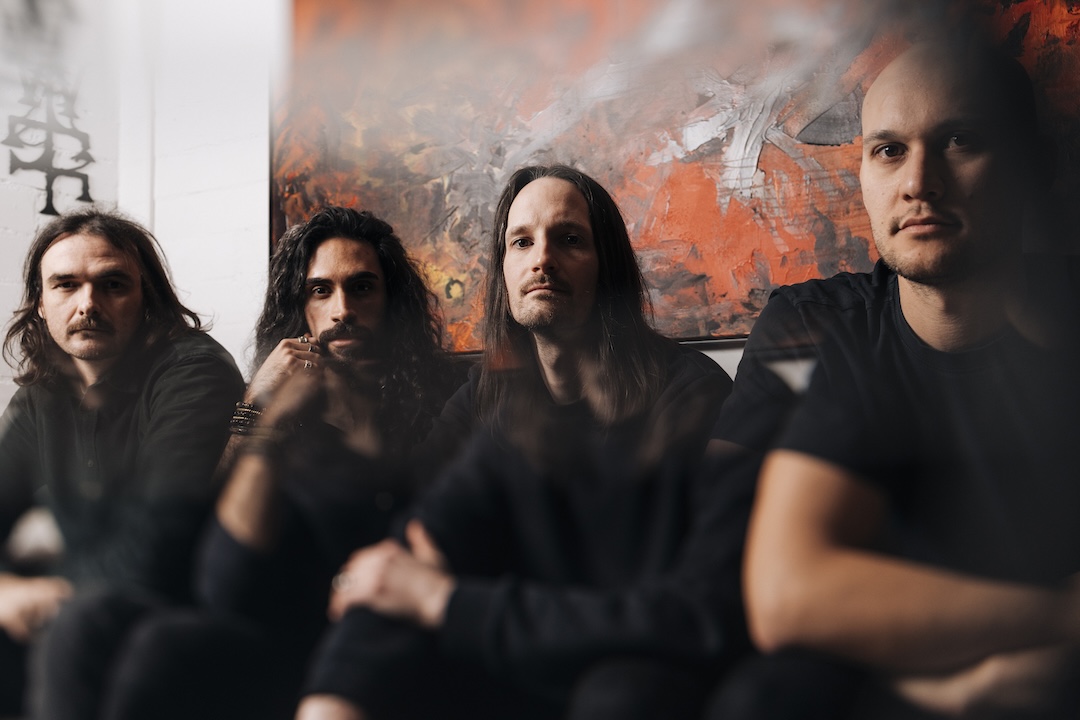
DER WEG EINER FREIHEIT in the studio. Photo: Mario Schmitt
Some closing thoughts. A year on from Innern, with the instrumental version out and the road ahead of you, where does DER WEG EINER FREIHEIT stand right now?
Nikita: Also after the festivals now, especially after Summer Breeze with the big livestream and great time slot we played, I think the band is on the peak level of the history so far. But that doesn’t mean that we can chill now and not move on, because I think it’s always about the journey. It’s not about a goal you really achieve. It’s important to have goals and to achieve them, but achieving the goals always should enable you to move forward and to take on a new journey, which of course always is a new album, basically. But for us, also next year, as I already said, there will be kind of a, let’s call it special release that we’re working on. And it’s tiny steps until the next album. It goes on and on. I think that’s the theme of the band. There is not a stop.
Alan: It’s an exciting time indeed for me as well. On our upcoming show we’re playing in Cologne, which is where I’m based, and it’s going to be my first hometown show, so to say. I have a lot of friends and also family members coming to that show. I’m really looking forward to it.
Apart from that, what is also important to me is that now that we’re playing these shows and my involvement with the band has gotten a bit more, to sort and arrange everything else in my private life, so that it would support my involvement. So that I can play every show, that I have the time, that I don’t need to ask a boss or something for vacation for the shows. It is a big focus, this rearranging. There are a lot of different aspects to it, which makes it quite an exciting time for me personally.
DER WEG EINER FREIHEIT played a show at the church in Bochum. Would you love to play at Kölner Dom?
Alan: Oh, wow. Imagine that. I would love it. Of course. And we have found out that our audience really appreciates these kind of more special locations and venues. So it’s just a thought. It’s something in the back of our heads, and we are open to it. I myself used to go to a lot of concerts, so I have this fan perspective. It’s still there, activated. And if any band would play in the cathedral here in Cologne, I would definitely go there. So we would love that. If you have any contact, please let us know.
If somebody is connected to the cathedral in Cologne, contact DER WEG EINER FREIHEIT. Thank you a lot for your time today. I know you gave away some secrets, about a special release coming next year, and also that you actually don’t play all the 16th notes.
Nikita: Big secret. Don’t tell anyone.
Innern (Instrumental Edition) is out now via Season of Mist.
DER WEG EINER FREIHEIT tour Europe from 16 to 31 October 2026 with CONJURER and BRNJSMIN. Tickets at derwegeinerfreiheit.de/live.
Follow DER WEG EINER FREIHEIT:
Official Website: https://derwegeinerfreiheit.de/
Bandcamp: https://derwegeinerfreiheit.bandcamp.com/
YouTube: http://www.youtube.com/derwegeinerfreiheit
Instagram: http://instagram.com/derwegeinerfreiheit
Facebook: http://www.facebook.com/derwegeinerfreiheit
Spotify: https://open.spotify.com/artist/7e823b0KQoVtLG86Ui5xGD
Apple Music: https://music.apple.com/artist/der-weg-einer-freiheit/363526020
Deezer: https://www.deezer.com/artist/1386896
Tidal: https://tidal.com/browse/artist/4479035
Thanks to Will Yarbrough at Season of Mist for arranging this interview.