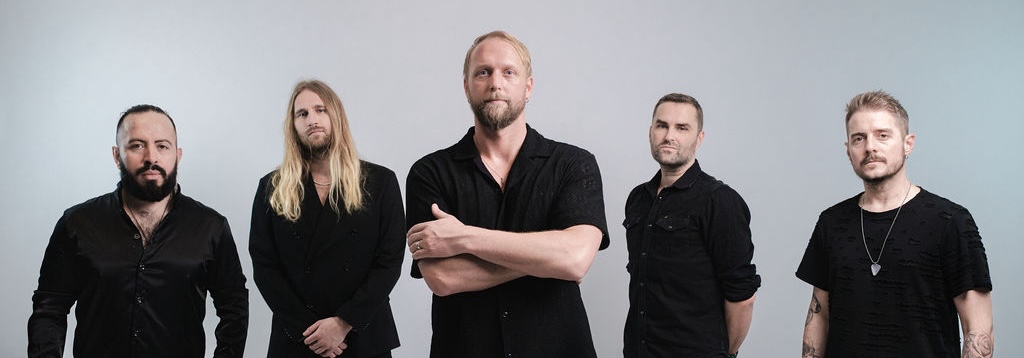
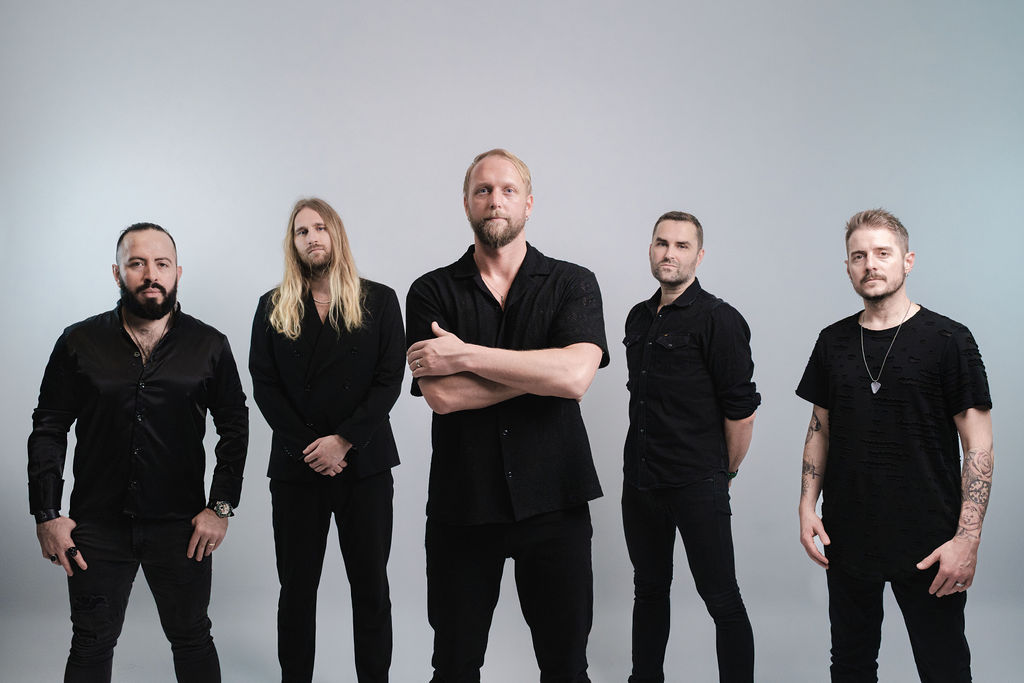
Scorpio: Today our guest is the progressive metal band TEMIC, who released their second album last Friday. With us is Miguel. Miguel, can you please introduce yourself?
Miguel: Hello, hello. Very nice to be here. My name is Miguel Pereira, and I'm the bass player for TEMIC. I joined right after they released their first album, so I've basically been their live member since then, even though I didn't record that album. For the last two and a half years I've been involved in recording and putting together the new album, Ceiba. So, really excited about it.
Welcome. How did it feel to become a permanent member of the band? When did it start to feel that you're more than just a session musician?
It started with a couple of shows a couple of years ago. Those shows served as a kind of trial, to see whether, beyond the technical ability, we also gelled in terms of personality. And I think everything worked out. So after those first two shows, already two years ago, we decided that this is more than just a gig, and I've been part of the band since then. It was a pretty quick move from the band, and I was happy with that.
Season of Mist, your label, frames TEMIC as a supergroup. Does that label fit? Do you agree with it? Does it give anything to the band?
I think for the first album it kind of made sense, because it's a nice, catchy moniker. People go, "Oh, supergroup. Who is there? Anyone famous I know?" And yes, most people know at least Eric and Diego for sure.
But I also personally think it might have some negative impact sometimes, because people associate "supergroup" with a one-time-only kind of thing, like a project. So supergroup band, yes, I can agree with that. Supergroup project, no, because we are here to stay. We are here to make music and keep going through this loop: recording an album, publishing it, touring, moving on to the next one. We want to keep doing that for as long as we can.
So in a way it's good, because it attracts people. But I hope people see past it and don't think it's a one-time thing, where everyone just takes a photo and moves on to their next project. This is the main activity for all the members.
And where is TEMIC based right now? I know you're in Norway. Is everybody in Norway?
Me, Fredrik the singer and Simen the drummer are in Norway — in different parts of Norway, actually. Eric is in Tulsa, in the US, and Diego is in Mexico City.
How often do you get together to rehearse and to write material? How does the songwriting work across all these different parts of the world?
The songwriting happens mostly on our own. Eric will have an idea, put out a demo for us to listen to, and then we work on top of it. The same with Diego, and the same with me and Fredrik when we have ideas. It's more of a personal thing: when an idea is good enough to be shared, then everyone gets involved. It's not really like we're online saying, "What do you think of this riff? Can we do something with it?" It's not like that. Each member tries to bring a full-fledged idea of a song, or as close as possible, and then we all work on it, each in our own studio, of course.
That said, on this album there are a few songs that were composed as a band before I joined, especially "Beyond the Voice" and "Broken." They were written during writing sessions in Norway, while the first album was still being promoted. But those are the exceptions.
You joined as a permanent member for this album. What were your specific contributions to the songwriting?
When I get a song idea from the other members, some of it already comes with a demo bass, so I can listen to it and ask myself, "Is this what I would play?" I listen to it a lot, then I mute it and try to come up with my own things, and see whether they fit the song better or not. So I feel I have the freedom to suggest my own bass lines, let's put it like that.
A lot of the time, with unison phrases for example, if the unison is already written, the bass has to do the same. Then it's just a matter of how to play it technically. Should I use my fingers? Three fingers? Two fingers? So it becomes more a technical detail than a compositional input from me.
But in other parts, where it's more open and the bass can do things other than follow the guitars and keys, I have the freedom to bring my own ideas, and there's a lot of back and forth. Every song goes through countless versions until we're happy with it.
Is there a song on the new album that has the most of you in it — the most of the Pereira sound?
Yeah, I think "Casting Stone." There are a lot of what we call in the band "bass licks" — small moments where I try to add my own flair. "Casting Stone" is the one I really look forward to playing the most, because it's both technically challenging and super exciting for us to play. And it has a lot of my personal traits, to put it like that. People who follow me from other bands will hear it and go, "Oh, this is Miguel."
When I first listened to the album — I was lucky to get early access from the label — "Casting Stone" stood out immediately with that laser-like bass. I was like, "I think that's bass, but it sounds very interesting."
Yeah, there are a lot of cool bass licks there. But I end up adding my own flair in all the songs. Without trying to make any puns, I see myself in a lot of these songs — including the song "See Myself."
"Broken" is probably one of the exceptions, right? It's a very mellow, very quiet song. There isn't much room for dynamic bass there.
No, the bass there is actually synth bass. Live we might do something different — without giving away too many spoilers — but on the record it's synth bass, so it's not me playing on "Broken." There's no bass on "Broken," on the intro, where there are no instruments at all, or on "Night of Veils."
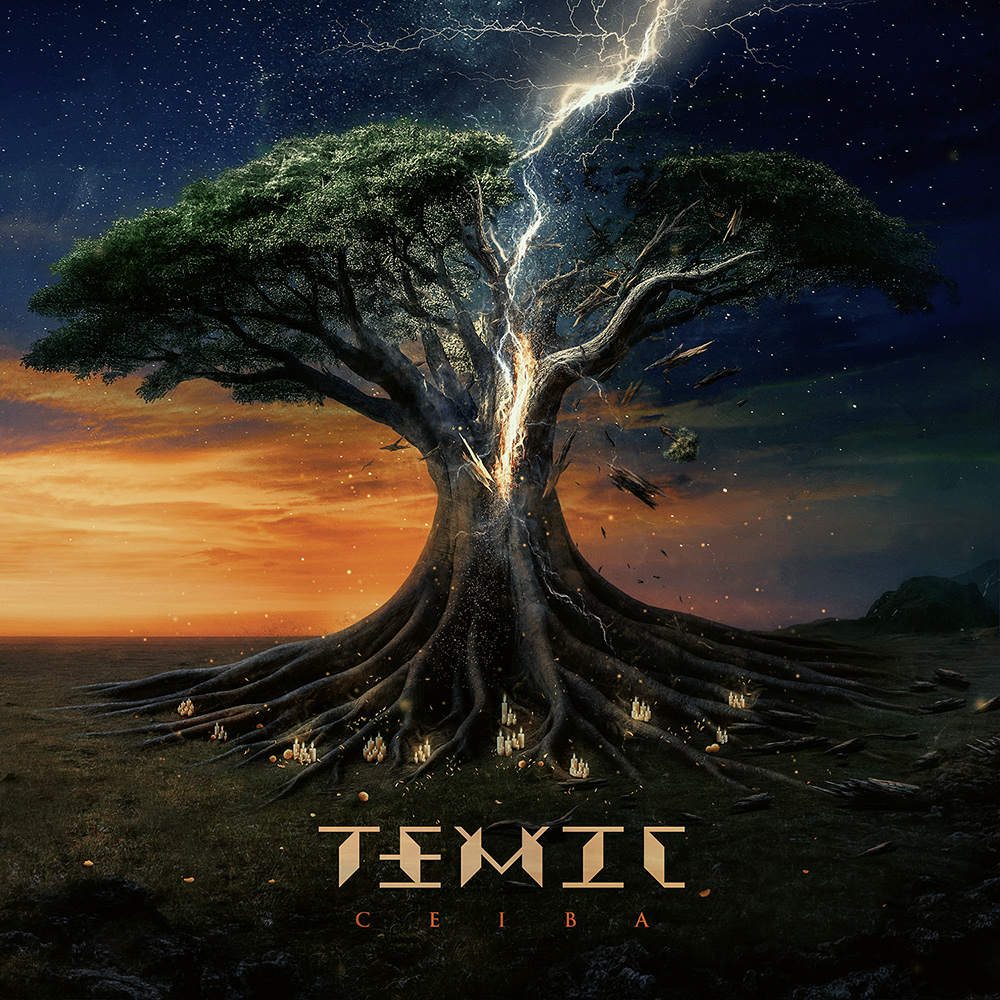
About the concept of the new album: it's called Ceiba. What can you tell us about the story, and about the tree we see on the cover? As I understand it, the ceiba is that tree?
Correct. The ceiba is a type of tree that's very common where Diego is from.
When we were looking through the lyrics and the ideas behind each song, we found a common thread among them: different types of loss. Then we decided to really push that idea and adapt some of the lyrics to match the concept. So it's not one of those concepts that started as a concept, where you then write all the songs to fit it. We realized there was a common line, a common thread across all these songs, and decided to make something coherent out of it.
It's also not the type of concept where there's a story and a single character moving through it. It's never told in the first person or by a narrator as such. But hopefully it gives the listener different points of view on loss — losing a loved one, losing a friend or losing oneself.
The theme could sound a bit dark, but we try to put a hopeful spin on it. I hope that when people finish the album, they don't feel so negative about what loss is, but feel hopeful.
I can hear that even in the first proper song — not the intro, but "Ashes." The chorus is very catchy, it brings the light, and you can hear that optimism.
Absolutely. And there are others. "Parting the Waves Inside" also starts kind of dark, and then comes an almost '90s, uplifting chorus. "As Long As We Last" is a super hopeful song, in both the lyrics and the melodic themes. So we try to balance it — not too dark, but not too happy either. I think we hit a good balance there.
Does Diego write all the lyrics, or do the other members contribute too?
Diego, Eric and Fredrik all wrote lyrics for this album. I don't remember off the top of my head who wrote what, but you'll find it in the liner notes on the vinyl or the CD.
You play a six-string bass. At what point do you just call it a very low-tuned guitar?
Good point. A lot of prog metal bass players have used six-string basses for their whole careers, and so have I. I've been playing bass since I was maybe 14, and six-string since I was about 16.
So it's not really about getting as close to a guitar as possible. It's about giving me the freedom to play both the low and the high register without moving across the fretboard like a maniac, and without changing tuning all the time. It gives me the reach without retuning or adjusting my hand position. It might look challenging to people who aren't used to it, but it's not really very different from playing a four- or five-string.
When you listen to the album, you can definitely hear the bass as a very prominent instrument. It's not your typical bass from some classic rock band, with four root notes and that's it.
No, there are a lot of notes and transitions and licks, all the way up the register. I use almost every note up to the last one on the highest string, and I always use the lowest note on the lowest string. And when I down-tune to drop A, it's a massive register — almost as wide as a piano, in terms of how low and how high I can go.
Do you ever use a pick? In some of the live videos, it's all fingers.
I do use a pick for a few seconds in a few songs, just for the sound of it. It's not a technical thing, like I have to do it because there's no other way to play it with fingers. If anything, I'm much faster and better with my fingers than with a pick, because I rarely use one. But some parts of the songs need a more percussive attack and a lot of ghost notes, and there I use a plectrum. I have a small pocket on the bass where I put it in and take it out between songs when I need it. You'll see that in a few videos.

Another thing that's very visible in the videos is your face.
Yeah. I think people find it entertaining. But I don't do my bass face to entertain — it's something I've always done. Anyone who's seen me play live with TEMIC or any of my other bands knows I'm expressive. I'm Portuguese, and I think we feel things slightly differently in Southern Europe compared to, say, someone from the Nordic countries. In Norway especially it's very visible: people are a bit colder and keep to themselves, and I'm a bit all over the place. I think that brings a certain level of energy to the stage that suits TEMIC pretty well.
I think that's what you want to see at a show, right? You come to see, not just to listen. You can sit at home and listen to the music, but at a show you want to see some energy from the band and get that energy yourself.
Absolutely. One of our mottos is that we're there to entertain people, to make sure everyone goes home thinking, "Wow, this was a show. They had a good time, and I had a good time." And the first step to making people have a good time at a concert is for them to see that you're having a good time on stage.
I challenge anyone to come to one of our concerts and think, "Oh, these guys are bored." We're never bored. We're always having the time of our lives. Of course, there's no pyrotechnics — we're not throwing flames into the audience. It's not RAMMSTEIN yet. But we try to be lively on stage and really interact with people. Fredrik, for example, jumps into the audience and sings in the middle of the crowd all the time, and that's not very common in this type of music.
So we try to have a level of connection with the audience that goes beyond, "Okay, I'm a prog musician. Look at me, I can play all my notes, I'm very good." We try not to be that band, and to go a little beyond that. Having said that, it is important that we play the notes right, because someone out there wants to see you playing them right. So we try to balance it.
Has anyone in the audience ever pointed out your mistakes? Like, "You missed something there," or "You played the wrong note"?
Yeah. The prog audience is known to have its own prog police, so there's always a prog police officer somewhere at the back saying, "Good show, but that solo — could do better, Miguel." And it hurts, but we move on, and the next day we're there trying our best again.
Ceiba is 66 minutes long. These days a lot of bands release singles, and we live in times of short attention spans, with TikToks and Instagram Reels. Did you consider cutting the album down, or worry that it might be too long?
That was a big discussion. Good point. We initially aimed not to go beyond 60 minutes, which is maybe the sweet spot for a prog album right now. I like to think a prog audience is willing to listen to more than two or three songs that are ten minutes long. I mean, back in the day, prog albums were all 74 or 80 minutes — they used as much time as a CD could hold. So we're already shorter than in the old days, but I think 60 minutes is a very reasonable length. We did go a little beyond that, because in the last edits we realized, "Oh, we need something extra here, and something extra there."
So I think we're deliberately trying to give our fans a challenging experience, where they feel they need to invest themselves a little. We still have some catchier or shorter songs, but most of the songs are on the longer side. As a whole it's one big piece, and being a concept album, it's made to be enjoyed as one continuous piece. We're aware of the challenge, but since so few bands do that these days, we hope to fill that niche of bands that still focus on the album rather than the individual song.
Did you have to shorten some songs, or even remove whole songs from the album?
We have plenty more songs that didn't make the cut. We have well over 80 minutes of music completely demoed and almost ready to hit play. So some things were left out, both because they didn't fit the theme and because they didn't fit the flow. It's very important to have a good flow from song to song, and we have to give credit to Diego here — he's the mastermind at listening to all the songs and figuring out which one should come before which. Once we felt the flow was right, there was no point in squeezing in a song just because it's so cool, if it doesn't fit the flow of things. But it means we have more songs for the future.
Do you have specific plans for those songs — an EP, or will they go on the third album?
No, we don't have a plan for what's next. But if you ask me, shooting from the hip, I'd say that if anything, they'll go on the next album. That should be the goal, too: after the promotion ends, in a year or so, we should focus on writing the next album, and those songs could be part of it. But we haven't really discussed it — I'm just giving my opinion.
You've already played a very unusual metal show, because it was on a boat: the Cruise to the Edge festival, sailing out of Miami. So you've also crossed the Atlantic to perform together in North America. What was it like to be in this part of the world as a band, and on a cruise ship at that?
It's been great. We've been there twice already, and we're coming back next year, in April '27, I believe.
Some of the members had been there before — Eric and Diego played it many times with HAKEN, SHATTERED FORTRESS and Neal Morse — so we'd only heard good things about it. They said it's like a big family of 1,500 people on a boat, with a new show starting every half hour or so. It's an amazing audience, and we know everyone there is a prog fan, so we don't need to cater to a new audience. We already know the people there want to see us — us and all the other bands.
It's been a great experience to live on this prog-infested boat. It's a lovely week that we all look forward to. We've been lucky to be there two years in a row, and we're going for the third year in a row. If you ask me, I'd be there every year — it's a lot of fun. And as a fan myself, I get to see other bands I love and meet artists I've never met before, so it's good musician bonding too.
Do you ever get the feeling that you can't escape it? As a musician there can be too much pressure, or fans on every corner, and you can't really hide because you're on a boat, all in the same space.
But you know what? Everyone is super respectful. Big fans will come and ask for an autograph, and we can say, "Okay, we have an autograph session later," and they respect that. Some of us also bring our families, and when we're with our families, the fans are maybe a bit more careful: "Okay, he's with his wife and kids, let's not approach them all the time." We love talking with fans, so for me it's not really a big deal.
It might sound like, "You're having coffee in the same place as all the fans — won't they stop you all the time?" They might cheer you on, but you still have your almost-vacation time between concerts. In theory it sounded less practical than it really is. It works pretty well, actually. So I'd urge you to try and attend if you can.
You were also supposed to play ProgPower USA last year, but that didn't happen. Can you tell us why?
That was visa issues. The ProgPower USA promoters were the ones arranging our visas, because four of us don't live in the US, so we need visas to enter, and we need a work visa to perform. Currently it's a bit trickier. It depends on which officer in the visa application process is evaluating your case, and it's hit or miss. Sometimes you're lucky and they approve it in no time. Sometimes they start asking too many questions, deem the band not relevant for the American market, and deny entry to some of the members or the whole band. And as long as one member can't enter, we can't go.
So it's not super appealing right now to cater to the American market, but we hope that changes soon.
Are you still trying, or are you taking a bit of a pause from actively trying to come to the US?
I'm not sure what management is doing. I'm pretty sure they're still looking for alternatives, but I haven't heard of any concrete plans. It would be lovely to do something around Cruise to the Edge, since we're already on that side of the world — to pair the Cruise to the Edge concerts with something in the area. That would be the most viable thing. But then again, for North America you still need the visas in place well before you arrive. I'm sure management is looking into it.
TEMIC is not your only band. How big is your involvement in your other musical endeavors?
Right now, TEMIC is really my musical home. That's where I spend my time in music. I'm still part of a few other bands, namely WITHEM, BIG CITY and TERRA ODIUM, but it's mostly studio work for those bands, so it doesn't really interfere with my activity in TEMIC — which is a daily thing: promotion, learning the songs. And I take care of a lot of things in the band besides playing bass. I coordinate the website, the logistics and the planning of things, so it requires a lot of time. I'm happy to be able to focus on TEMIC at this point in my life.
Since you're coordinating the website: have you talked about putting out more content for your fans on social media? A lot of bands do this now, and it's an important part of modern band promotion.
Absolutely. That's on our roadmap, together with our label, Season of Mist. We have detailed plans for how to keep engaging with our fans, with a lot of videos, snippets, playthroughs, solos and interviews. Whenever we're on our own recording, playing or rehearsing, we try to capture as much footage as possible, and then we'll trickle it out on our social media.
Right now we want the focus to be on promoting the album that just came out and getting the tour rolling. Once the tour is rolling, we'll keep the social media alive with a lot of what happens on tour. The important thing is that we don't lose momentum after the album is out, and that we keep promoting it so the fans don't forget.
How cool is it for you that one of the biggest music accounts on YouTube is actually a bassist, Davie504? I don't know if you're familiar.
Absolutely. He's a funny guy, and I've been following him for many years. It's fun that bass players get some attention — usually no one really cares, right? But at least everyone knows Davie.

Have you seen the video where he went with Rob Scallon to Phoenix, Arizona? There's an instrument museum there, and they played what's supposed to be the bass with the lowest notes in the whole world.
That's funny.
Would you like to play that bass?
Yeah, that goes lower than mine, for sure.
We were just talking about bassists, and how you said people usually don't hear about them. There are also a lot of jokes about bassists. Do you have a favorite bassist joke?
Oof. No, I try to forget about them, so I don't dwell on them. But internally in the band we have a lot of banter, and they like to say, "How hard can it be? You just play one note at a time with one or two fingers. It can't be too hard. Look at me, I play the keys — I use all ten fingers and both feet." So yeah, people like to think it's easy because you use fewer limbs, or fewer fingers. But I take it with a smile, and I understand where it comes from. It doesn't stop me from doing my homework and practicing my bass, regardless of whether people think it's easy or difficult. At the end of the day, every instrument is relevant in its context.
When we watch TEMIC's videos, it doesn't look easy.
No. It's good to hear.
Continuing with the bass: who are your top five bassists of all time? I know it can be hard, and they don't have to be ranked — just five bassists who come to mind, maybe your influences.
The bass player who got me to start playing bass actually had nothing to do with prog. It was Flea from RED HOT CHILI PEPPERS. That's when I realized bass could be a cool instrument, not just "boom, boom, boom, boom" — something boring. After him came Timmy C from RAGE AGAINST THE MACHINE; that was the kind of music I really enjoyed in the '90s. So those two, outside prog, are the ones I'd say were influential — not in how I sound today, but in making me pick up a bass, a four-string back then, and learn to play it.
After that, around '98 or '99, I found out about prog and got more and more into DREAM THEATER. So naturally John Myung is one of my influences, because that's how I learned a lot of my chops: how to move my fingers fast and adapt scales into a bass arrangement.
After that, I'd say Tony Levin is also very influential — not so much for the technique, but for his approach to playing and the kinds of sounds he gets out of the bass. And another bass player I really admire is Dave LaRue from the STEVE MORSE BAND, who's been very influential on a lot of the tapping and slap approach I still have in my playing today.
So it's a bit old school. I don't have very recent influences, but I think we're shaped early in our careers, and then we just expand on that. I've been shaped by these five bass players, and that made me who I am today, if you ask me.
Thank you for your time today, Miguel. It was a pleasure to have you as a guest.
It was my pleasure, Volodymyr. I hope I managed to pique your interest with some of my answers, and if there's anything else you're curious about, feel free to reach out.
For everybody reading: go check out TEMIC's latest album, Ceiba, out now on Season of Mist. As I wrote in my review, and I may be repeating myself: if you're a prog fan who likes songs and songwriting in prog metal, not just technicality, you'll definitely love this album.
Fantastic review. That's how I'd put it as well. Technical capability is important, but that's not what drives TEMIC — even though it's there.
TEMIC on the web: Website · Bandcamp · Facebook · Instagram · YouTube
Ceiba is out now on Season of Mist.
Read our Ceiba review.
Thanks to Will Yarbrough at Season of Mist for arranging this interview.
Photos: Mountain Head Media. Ceiba cover art: Hicham Hamzi.
Video version: