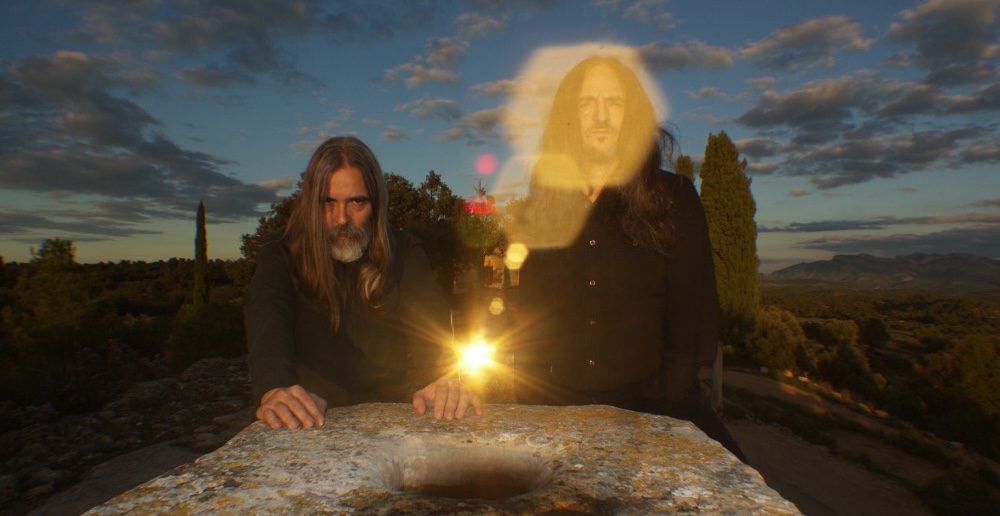
Scorpio: Your third album, Graveyards of Joy, just came out on Season of Mist. You're one of the masterminds behind this Spanish–British project that's now grown into a full band — can you introduce yourself and your role in TODOMAL?
Chris: Hi, Volodymyr — it's a pleasure to be with you. My name's Chris, and I'm part of the duo that recorded this last album and the previous ones — three albums in total. It's basically me and my friend, simple as that, making music for the sake of it. It's an excuse to be together and enjoy life — part of a therapy, really. What we really love is working on arrangements. I can't play drums, but I've composed some of the basslines, guitars and keyboards; I sing and write the melodies and harmonies, and I tend to do the original demos. My colleague Javi is more of a left-side-of-the-brain person — very technical. He mixes the album, he's a very proficient drummer, and he picks up any instrument easily. So I make the demos, we meet up, and then we just work on it like a couple of mad professors. [laughs] It's pretty easy, and it's fun.
You call this a trilogy — Graveyards of Joy being the third chapter, after the first album back in 2021. When did you decide it would be a trilogy, one whole story and concept, rather than three separate records?
The trilogy is a powerful concept, isn't it? But honestly, we only really realized it once we'd delivered the album. These records were made against the backdrop of a pretty grim period in our lives — we lost a lot of family members. It felt like the kind of thing you want to wrap up and flush down the toilet, or put in a drawer and forget it's there. So it gives us a fresh start, especially now that we've become a live band too. We've expanded — it feels like an extended family: we've got an agent, a crew member, a bigger team. The idea of a trilogy just resonates with a lot of people — the fact that you're asking about it is proof of that. [laughs] So to be honest, it really only came up while we were thinking about the marketing of the album.
You've said the album — and the previous ones — reflect personal tragedies. How did making that music and putting it on record help you cope with the grief?
Quite a lot, actually. Javi and I live almost 600 kilometers apart — he's in Guadalajara, in Castilla–La Mancha, and I'm in Barcelona. Each album has been worked on in separate sessions, in different places. I'm lucky enough to have a village house in Teruel, in the middle of nowhere, and what I'd do is retreat there on my own, a week at a time. It's quite common in Spain to have a house you inherited from your parents or grandparents in some godforsaken village — so you have a sanctuary where you can spend a week or a week and a half alone, just making music. That's how at least two-thirds of the album gestated, and it's portrayed on the cover too. It's a rural, slow-brewing record: you put stuff down at night, then look at the stars, have a funny cigarette and a glass of wine with friends down in the village, and just try to cope with grief. That's how it was made.
The press release says the band is rooted in the emptied provinces of the Spanish interior. What pulled you toward building the album around depopulation?
A lot of it is because La Mancha, where Javi is from, is basically the land of Don Quixote — there's a strong connection there. This time we recorded in a region called Matarraña, a beautiful area. People don't always realize it, but there's a ring around Madrid where almost nobody lives. There's an area near Soria that's, I think, the second most depopulated in all of Europe. Trying to explain that to someone Dutch or British — it only really lands when you're actually there. Because we're always traveling back and forth, that became part of the backdrop of the album. You've got these huge open spaces where your mind can roam; you feel calm, everything's desert-like, but there are no fences. I've got British and Scottish roots, and if you travel around Scotland or the north of England, everything is fenced off — partly because of all the cattle — and that gives you a caged-in feeling. In these depopulated parts of Spain there are no fences, so you really feel you can walk wherever you want. There's a sense of freedom, even though it's a brutal, barren place to live. And funnily enough, in the village where we recorded, my neighbor is an American techno producer from the '90s, there's a British guy down the road with kids, a couple of Dutch folks — so I feel strangely at home. [chuckles] Like refugees in some kind of epicurean garden. That's the overall feeling of the album.
Chris and Javi — the core duo behind the TODOMAL trilogy.
You mentioned there are more musicians on this album than just the two of you. Were they part of the writing, or only the recording?
It's only Javi and me recording — and that'll probably continue that way, even if the credits get a bit confusing. [chuckles] I do my demos with the drums and everything; I compose on piano and guitar, with the bass in one hand — a bit like Ray Manzarek of The Doors, but singing. Those three elements are the whole singer-songwriter toolkit, and that's how the songs are made. But we've had help. Cecilia, our live keyboard player, is a musicologist, so it was easy to spend an afternoon working on vocal lines — like on the opener, "Mare Ignis," just layering things up. Manu Clavijo, a violinist from Madrid, took our software string lines and sent back live, multilayered violins and strings. There's Teodora Gosheva, a good friend from North Macedonia with a lovely voice, who's been on all three of our albums. And a friend of ours, Dario Garrido, played some of the strumming parts — when you've got a proficient colleague, you just send the files and it's back within the hour. Javi's the drummer; I think we recorded all the drums and re-amped all the guitars in about three hours in the studio. We do it all ourselves and mix it too — a pretty mad-professor approach. [laughs]
For the live shows you've got a full band now — and I noticed almost everyone's called Javier. Is that a requirement to join? Do you have to be a Javi? [laughs]
Absolutely — I can't get used to it. [laughs] No, we use nicknames. The drummer's called Bud; I played with him in my previous band, and he's your archetypal big, hard-hitting drummer who plays very precisely and very hard, which has given the live shows a really good push. Then there's the other Javi — Javi Félez — who runs a studio and has recorded a lot of underground extreme-metal bands. He's been instrumental in opening us up to the contacts that eventually led to signing with the label and finding an agent — that whole music-business side. Otherwise it's just me and my mate making music in the middle of nowhere, on our trippy hippie journey. [laughs]
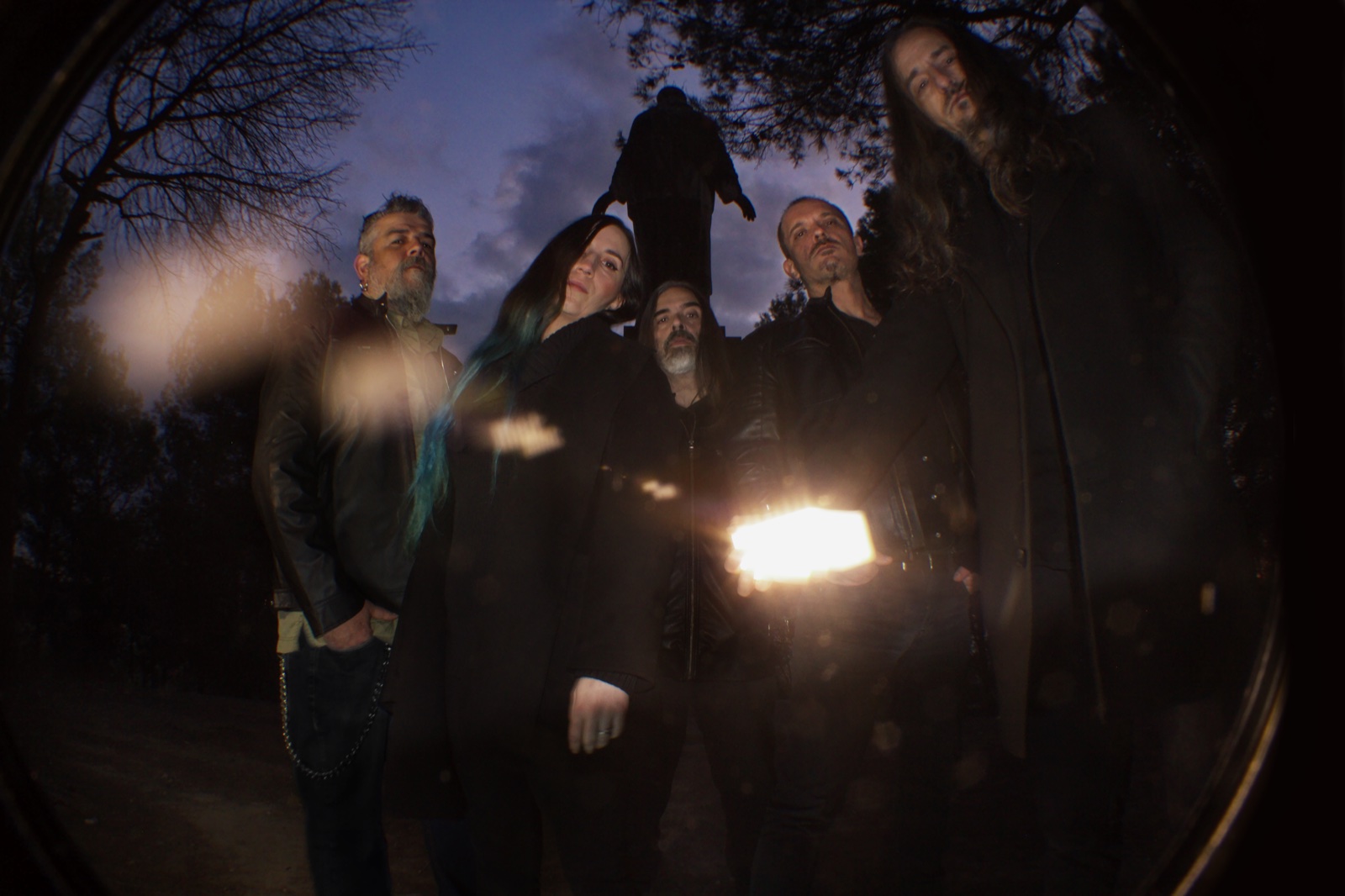
The full TODOMAL live lineup.
The label files your music under atmospheric doom metal. What do you make of that term — do you agree with it, or is it just something the label put on you?
Honestly, I don't really know. It's perfectly understandable — people need to pigeonhole you in some way, to present you to others. Attention spans are so short these days that maybe it's actually good for us: someone reads the tag and decides. Damned if you do, damned if you don't. We just try to do the best we can with music aimed at people we think will devote time to it — a more humane, old-school kind of listener. I'm making music for people my age who'll sit with it, thinking, "I'd like to listen to an album a bit like Pink Floyd's Dark Side of the Moon back in the day." And what does "atmospheric" even mean? It's very hard to say. I once suggested something like "widescreen rock." [laughs] It's just too difficult to pigeonhole, especially on a metal label — if it were an indie thing, a 4AD kind of artist, it'd probably be different. But I honestly don't know. You just make the music and hope it lands on some ears, even if it's a hundred people, or ten, or two. [laughs]
I've listened to the album, and there's real diversity from song to song — acoustic passages, guitars that almost sound baroque. It's doom, sometimes close to funeral doom, but even though you come from more extreme genres, you went with clean vocals and no growls at all. Was there ever a moment of "maybe we put some growls in here," or was it clean vocals from the start?
[laughs] I'll be honest: the moment I hear a growl, my mind switches off. The first album I ever picked up in this style was Tales of Creation by Candlemass, from a record shop right in front of Gaudí's La Pedrera on Passeig de Gràcia in Barcelona — I bought it just for the Doré engraving on the cover, in yellow, and I loved it. My family is quite Christian; I was brought up in the Church of England in Barcelona, so there were huge stained-glass windows and everyone singing hymns. At that age you like Metallica, like most teenagers — but then you find an album like Candlemass, with operatic singing and melody, and there's more to it than growling. So not growling is just natural for me. I know some people switch off if they don't hear a growl, but what can you do? Sorry, guys. [chuckles]
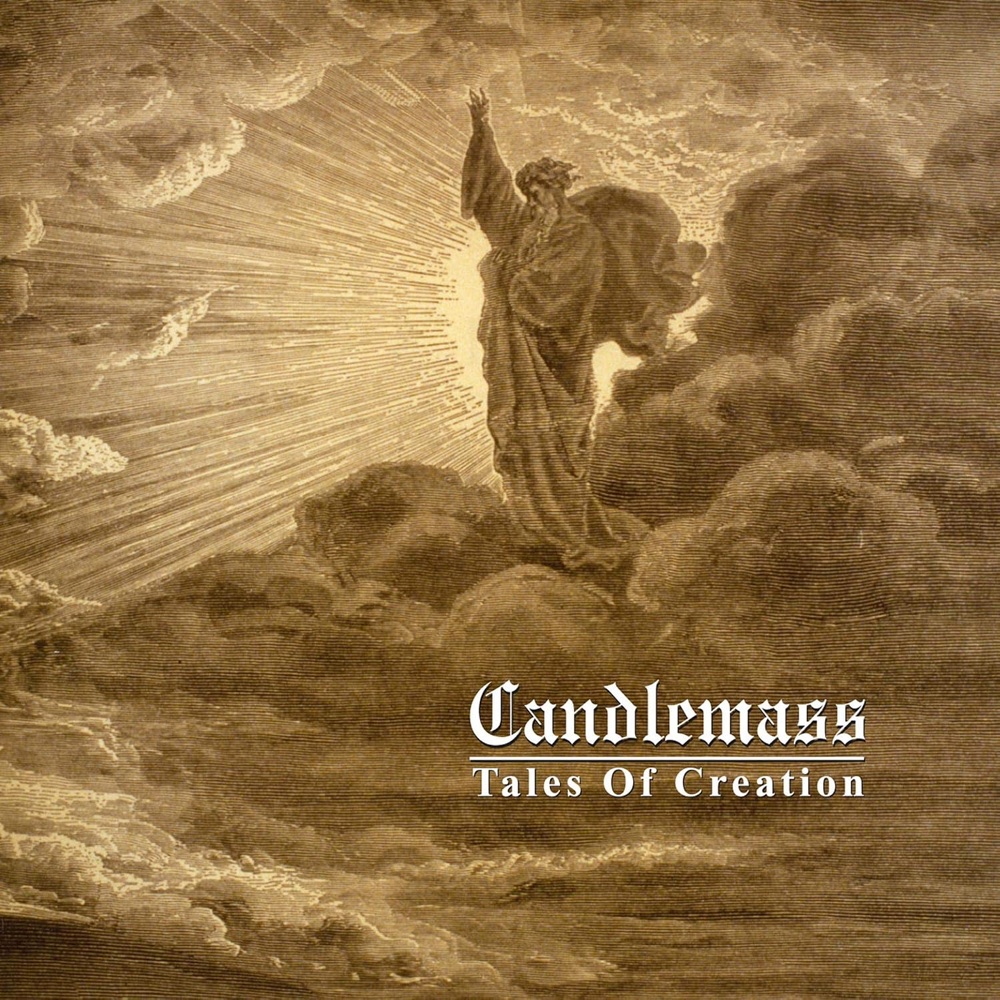
CANDLEMASS — Tales of Creation (1989), the album that started it all for Chris.
Let's talk about the visual side — the cover is a painting by a Catalan artist. How did you pick it? Were you in the museum in Barcelona, saw it, and decided that was the one?
Yes and no — it's not on display, at least not at the time. It's a famous local painting; the artist, Lluís Rigalt, was a well-known teacher in the 19th century, part of a school of Spanish painters who traveled to Paris. There's a lot of French influence, but it's translated into the light and feel of that part of Spain. You get this afternoon light at certain times of year — lots of ruins covered in vegetation, extensive landscapes, basically unspoiled. I was flicking through the archive of the Catalan National Museum, which has an inventory you can just browse, and it felt right. There's this tiny little boy in it who feels really small, with an old figure behind him. Funnily enough, I'd read an art-student dissertation about the painting that didn't even mention some of the items in it, which felt strange — that clicked for me too. So I told Javi, "I'd really like this to be the cover," because the core of the album for me is the songs "Deliverance" and "Graveyards of Joy," which I recorded there in about an afternoon. We contacted the museum, paid for the usage rights, and that was it.
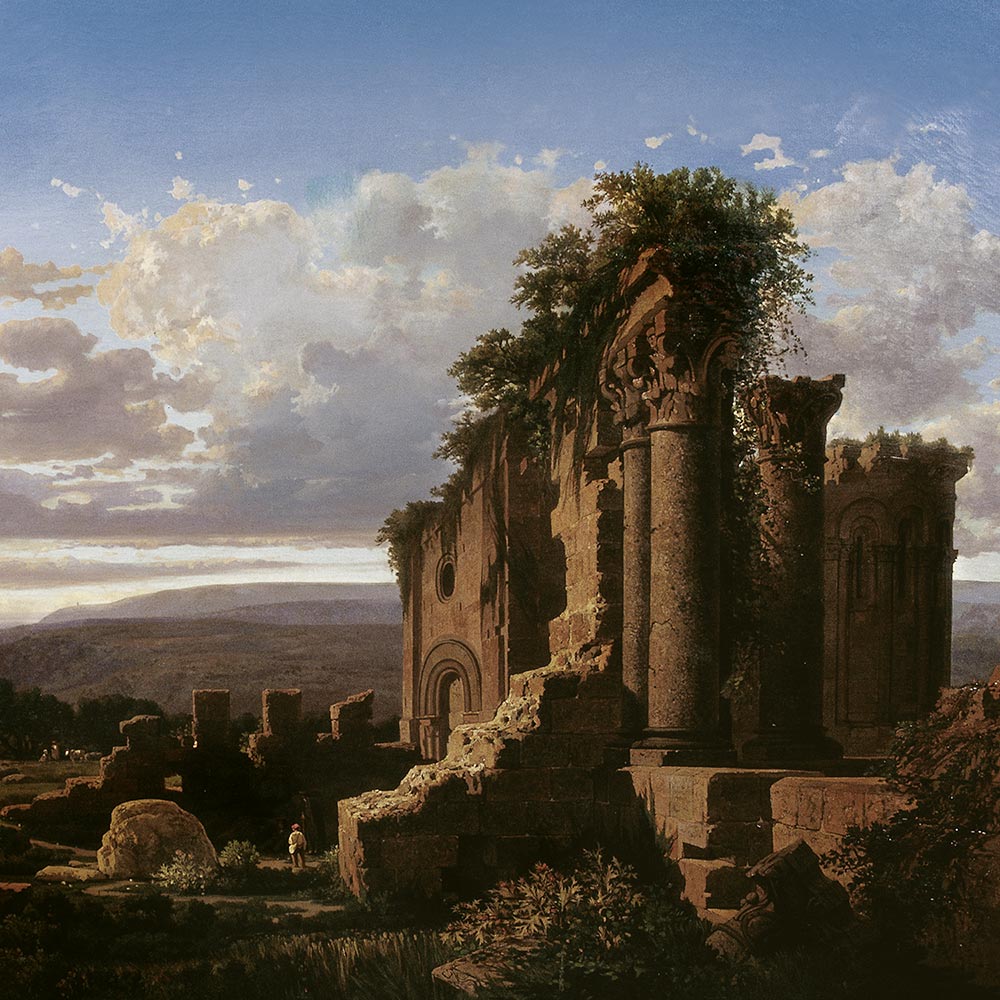
TODOMAL — Graveyards of Joy (Season of Mist, 2026). Cover: painting by Lluís Rigalt.
You also decided not to put a band logo or the album title on the cover — just the painting.
Just the painting. Part of it is a legal thing — one of the conditions is that you don't manipulate the image, same as with our previous album. On the first album I photoshopped my own cover, but for the other two I thought, never mind, you just put a sticker on it and that's it. It's a way of paying tribute to and recognizing the art of a local painting. People in the scene complain a lot about the lack of originality these days, and I couldn't really copy anything without it feeling a bit contrived.
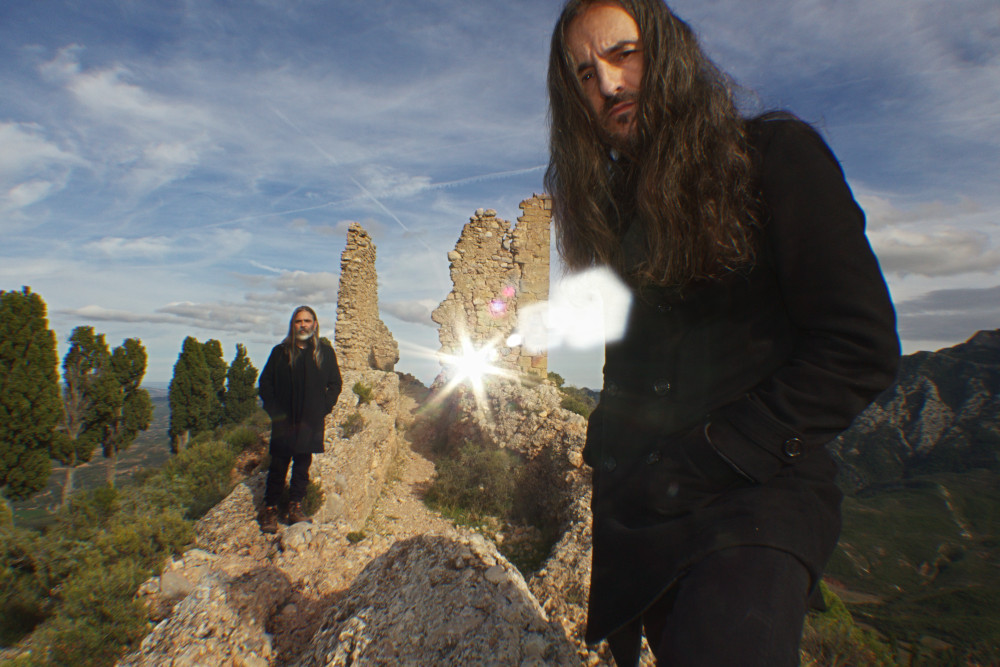
You carried that same feel — the light, the ruins — into the press photos. You're standing in ruins with beams of light and reflections.
Absolutely. The exact photo you've seen is completely untouched — there's no Photoshop at all — it's just a specific 5 p.m. light. It was shot in the Ermita de la Misericordia, a small church in a village called Cretas, in the Matarraña, in Aragón — you can look it up on Google Maps. It was November, at five o'clock; there's maybe a five-to-ten-minute window of that light. Let me show you something — [holds up a record] this is one of my favorite albums, Al Stewart's Modern Times, with a cover by Hipgnosis, the Pink Floyd cover duo, Storm Thorgerson and Aubrey Powell. Our photo is pretty much a tribute, and it works — it gels with that specific light, and with the album cover. A happy accident. You don't need a photographer. [laughs] You put the timer on, and it's just two guys with a tripod running around and hitting the button — in that five-to-ten-minute window. And you just hope an accident happens, and when it does, it's a beautiful thing, because it captures a moment that isn't contrived. Only this weekend we were back from Resurrection Fest, one of those big 30,000-to-40,000-people festivals, full of modern bands. We were sandwiched next to one of these very young "dancing" bands — no amps, a young girl growling along — and it all feels very contrived: you arrive and everyone's posing for Instagram. It just doesn't happen that way for us. Accidents — letting things slow-cook — that's the beauty of it. [laughs] And things like talking to you make it all the more beautiful and fun.
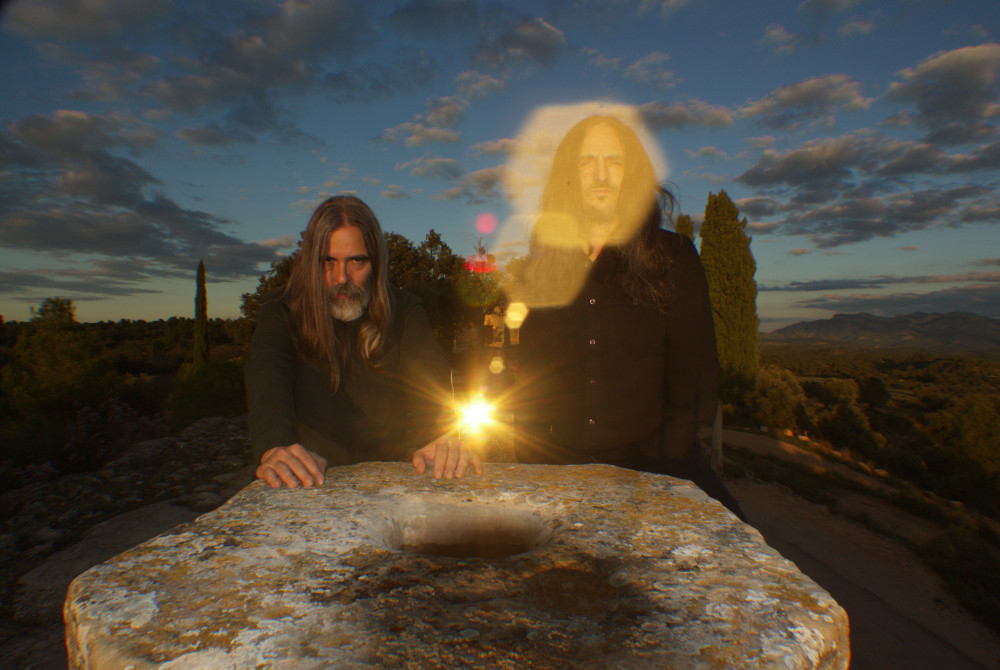
No Photoshop — just that five-to-ten-minute window of light.
Let's talk about the "Graveyards of Joy" video and the song itself. I like how it starts dark and doomy, in black and white, and by the end there's more light and color — the music turns more symphonic, with strings and more of a major-key melody. So despite the dark title, there's hope at the end.
Absolutely. We did the same on our previous album, A Greater Good — if you listen to it, it's very similar in structure, with these little songs; it's more our formula. There's always an end. On the song "Greater Good," for instance, there's a mixture of minor and major chords that brings a kind of relief. I don't know how much black metal or really extreme music you listen to — all of them want to be more extreme than the next band, but then the guy's backstage in teddy-bear underwear. [laughs] You can't be the most extreme person in the world; nobody's like that, and you can't live in a bloody graveyard, can you? It's beautiful for ten minutes, maybe. So the end has to finish with something that moves you, that relieves you. It's a very monotonous song, too, so any tiny change is welcome. It's hard for me to judge, because I recorded all the vocals in one afternoon — I just concentrated and did the original takes, second takes at most; if it feels right, okay, let's do it, next. It captures a moment, and that's really what we're after: not going to a studio, but bringing the studio to your sanctuary and having your moment to sing it. That ending is really Javi's arrangement — he loves a major chord here and there, and it can be even more powerful than something minor and brutal. Funnily enough, some of our mates are in the most important extreme underground bands, and they love it. It's a bit of a contradiction — really extreme people, in underground cult bands, who are fanboys of this music. It works, I guess. [laughs]
It's healthy for creative people to be open-minded, isn't it? Why limit your horizons?
Indeed. Anyone who's open to music, or has some latent, interesting talent, can enjoy any kind of music if it's good — if it resonates, if it carries some emotion. That's important, and I think it's the most important thing for TODOMAL and this album: something that's real. If it can filter into the way people listen, that's a tiny little triumph for us, especially in this AI environment full of cynicism. We're a band from Spain — there are no really big Spanish bands in the scene, let alone in this genre; Moonspell from Portugal might be the nearest example. So you start from a blank slate, with literally nothing to lose, which means you can just do your own thing. For us it's like a green-field operation. Hopefully people resonate with it, and we can continue with the project.
This is your first album on Season of Mist — third overall, but the first two were self-released. What does having a bigger label behind you open up, or let you do that you couldn't before?
I've been asked this before, and it's a tough one, because it has different dimensions. Bear in mind we're at the bottom of the food chain — definitely not the label's priority. [laughs] We still do everything ourselves: all the videos, a lot of the press. But it gives you a kind of validation in the scene, which, unfortunately, shouldn't be the way it works. If you come across an album on some obscure — I'm just guessing — Estonian label, you've never heard of any Estonian doom, so why would you listen? But back in the day, if you were playing doom on Peaceville Records, that was different. We actually had a band called Asgaroth signed to Peaceville. So it's a kind of social validation. It's very strange, though — Graveyards of Joy was delivered six months ago, and we had to wait all that time for it to come out, which I really didn't like, because you move on; we're constantly moving on in our lives. So that's been a negative of being on a label. But that validation is something our agent can use — to help us play bigger festivals, get onto a tour, get a certain person to listen to the album, or reach a magazine like yours, where a smaller label might not have. I had a few reservations, because it's a very extreme-metal-oriented label and I didn't really know what to expect, but the folks there are fantastic, and old friends work there, so that's helped a lot.
They're known for Rotting Christ and Septicflesh, but they also have projects that aren't even metal — Heilung's folk, some Southern gothic rock from the States.
It's a very strange thing, and a positive one. It's a style that takes a brave decision to sign one of those bands. In our case, we're just a terribly cheap and easy band to work with — Javi and I are two guys, a cottage industry. We do it all ourselves, we can shoot videos, we really don't need anyone else — we don't even want anyone else, right down to the photos. But it means putting in a lot of energy, a lot of soul, and our own money. It's like going on holiday with your wife or your best friends: you're going to spend money either way, so it's basically the same. Overall it's been very positive. Yesterday I did an interview for a Hungarian magazine that voted us album of the month — nines out of ten — which has been incredible; we never expected it. We're growing very quickly for such a young band. Our first gig was only about a year and a half ago — we played with Pain of Salvation at a big festival, then with Candlemass and My Dying Bride. We've been very lucky. Economically it's very hard for bands nowadays, so we'll see how it feels in a year when we start thinking about recording a new album — whether we're really excited, or a bit cynical about it. I'm in my late 40s and Javi's in his mid-50s, so we've got nothing to lose now. [laughs]
The trilogy's finished and you've got a tour planned. Once that's done, what's next — do you already have new material?
I've probably got material for two albums; I could just carry on forever. But we need to get together and weed it down to something that feels good, that the two of us like. As I said, I'm more of a right-side-of-the-brain person and Javi's the opposite, so I squeeze my ideas through that filter — if it doesn't work, it doesn't work, but he's got to like it, and that's very important. After the tour we've got a couple of gigs in Barcelona and a very interesting festival in the south of France I'm really looking forward to. Beyond that, I don't know — probably more gigs, and some very loose ideas for next year. Javi and I will just keep recording; it's fun to meet up and work on ideas. We delivered this album last Christmas in a rush, then had to wait six months, so I've learned the earlier you start, the better — there are always lots of bands on a big label, and you have to wait for a slot. So we'll probably move on to a new album; it just has to feel right. I don't know, Volodymyr — maybe I'll slip in the shower and break my neck, maybe I'll win the lottery, maybe I'll become a nun. Who knows? [laughs]
We definitely need more TODOMAL music — so be careful in that shower, Chris. [laughs] Thank you so much for your time today; it's been a real pleasure. Any farewell words for our listeners and your fans?
I definitely won't shower again, Volodymyr. [laughs] As I said at the start, thank you so much for your time and patience, and for actually listening to the album — that's a little treasure in itself, at least for us here in Spain. We just hope you're having a nice day wherever you are, and that you take good care of yourself, your friends and your family. That's a very important thing.
TODOMAL on the web: Bandcamp · Instagram · Facebook
Graveyards of Joy is out now on Season of Mist.
Thanks to Will Yarbrough at Season of Mist for arranging this interview.
Video version: