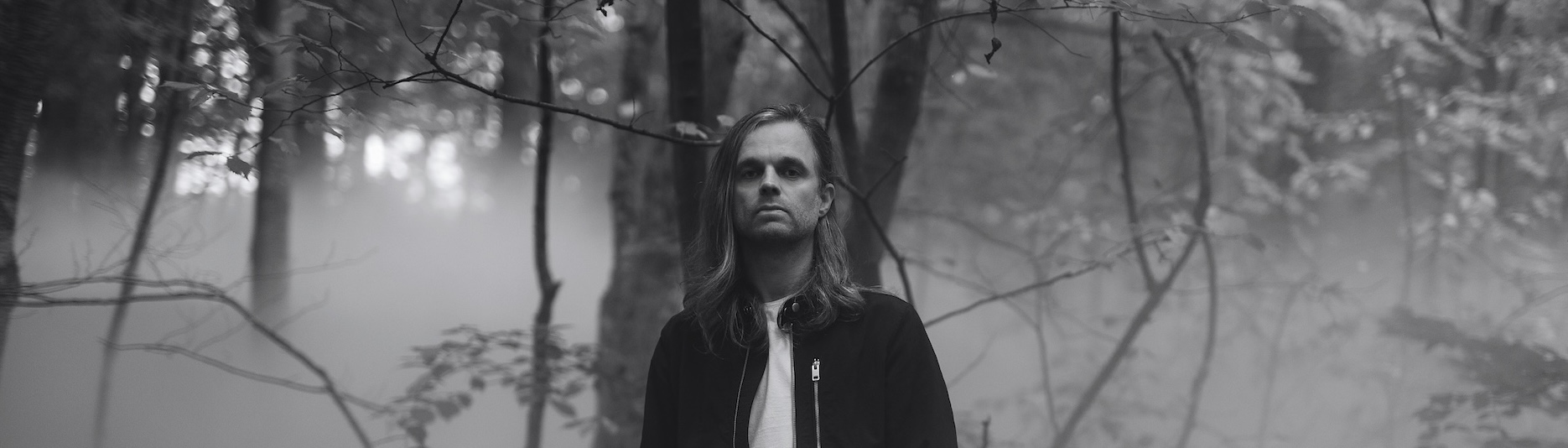
Scorpio: Congrats on the debut. You started your career in black metal, then moved into jazz — quite a drastic move for most people. Now you're back to black metal with Via Doloris. Does the project feel like going back to where you started?
A bit, yes. What looks like a move to jazz from the outside was, for me, always there — or at least it's been there for many years. I didn't grow up with jazz, I grew up with metal and classical. At some point my guitar interests sent me in new directions, so I started playing jazz, got really into it, and then suddenly I got the opportunity with Satyricon — we're talking 2007. During the first Satyricon years there wasn't much time to develop the jazz side. But as soon as I stopped playing with the band in 2013, I played a lot of jazz — it had always been there, just not in the foreground. That continued until the end of the 2010s. Then, quite abruptly, I felt like playing metal again and making music, which I hadn't really been doing — I'd been very focused on guitar playing itself, learning styles, getting good on the instrument, rather than writing. Eventually I felt like I really needed to do my own thing. That's how Via Doloris was born.
Musically, how would you explain Via Doloris to someone who hasn't heard it? Any jazz influence sneaking in?
Oh, no, not at all — it's actually quite pure. I don't like to mix styles much. Some people are great at fusion; I'm not really into that. Musically I'm pretty conservative, I like things pure — pure black metal, pure jazz, pure ambient electronica, whatever it is. Usually when people mix things up it doesn't work for me. It can, but usually it doesn't. As for description: it definitely sounds like black metal with a very dark edge. Sometimes aggressive, sometimes much more melancholic than aggressive, sometimes a bit progressive, with quite a bit of focus on the guitars.
What stood out to me across multiple tracks is how you open with this disturbing guitar tone — almost like a chainsaw. "Ultime Tourment," the longest track, is a good example. It's clearly intentional — how did you land on that?
It's not accidental — you can hear that guitar pattern on at least three songs, it comes back like a signature. I don't exactly remember how it started, but the first song I finished for the album was "Omniprésents," the third track, and the whole idea was already there: it's in the intro, on some breaks, in the middle section with different voices and harmonies. In my head it reminds me of — I don't know if you're familiar with Celtic traditional music, but we use it. I've been very into that genre at some point in my life, and I've been to a lot of shows. One of the most striking things for me is how those songs start — it's always quite epic, because you hear the bagpipes loading up. There's this drone note that stays through the whole song.
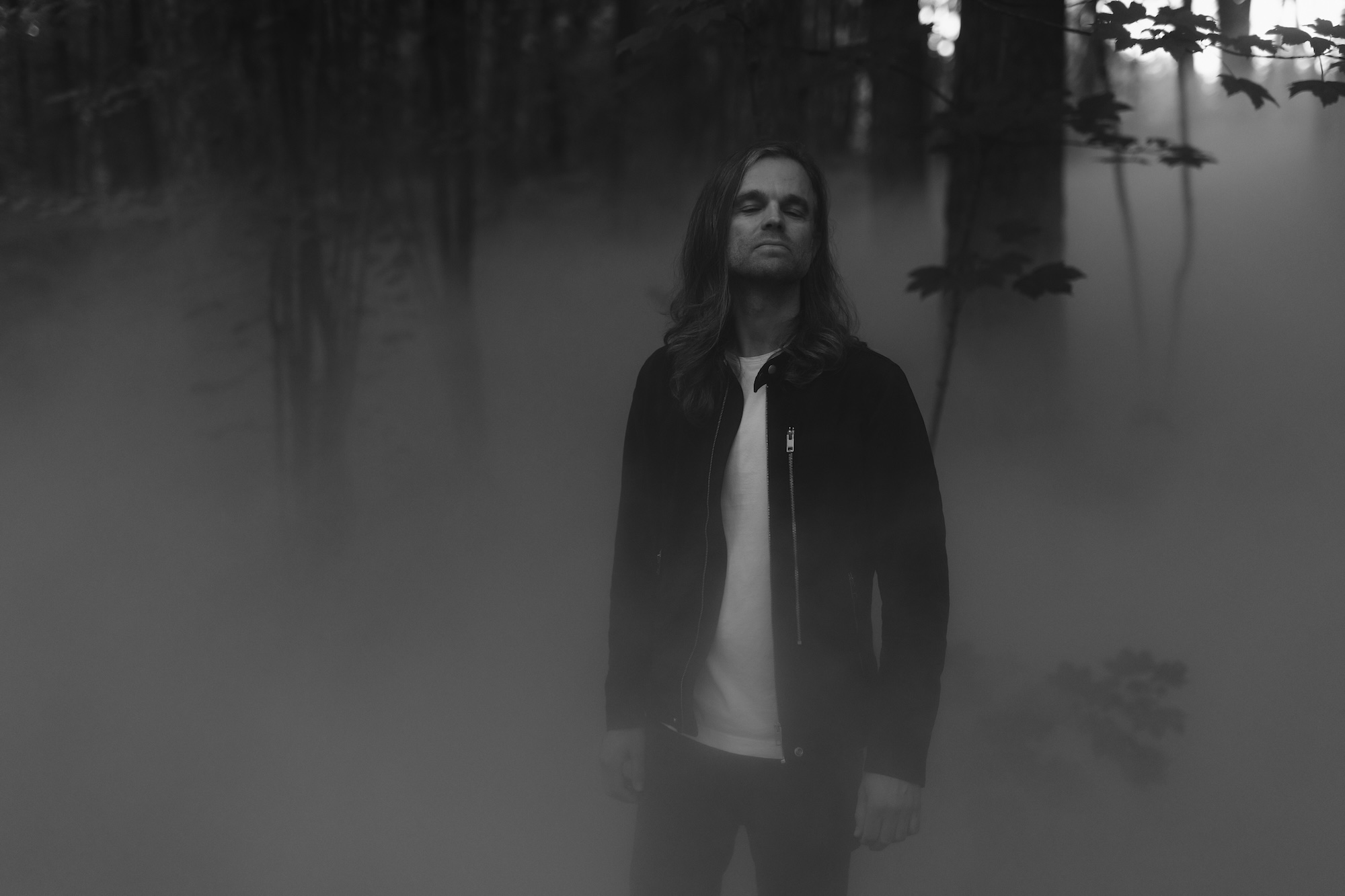 Photo by Linnea Syversen @fotograflinneasyversen
The drone note, right?
Exactly. And when they start there's always this half-second where the pitch isn't quite set, and then suddenly it is, and it's climbing slightly. Something about that moment really gets me — it sets a tone, like, okay, now we're ready for war. Those instruments have also historically been used as war instruments, to impress the enemy. So it felt like a good combo: one foot in traditional music, one foot in the war theme. I guess it became a kind of gimmick I've been using and reusing on the record.
"For the Glory" has a very war-like, battle-like title, and it's diverse musically — fast to slow to quiet. How do you decide which parts go where?
I don't decide anything, honestly — I just follow the stream, and I only decide once I'm happy with what's come to me. I'm very focused on not forcing solutions. I work a lot, regularly, until something feels exactly right; if it isn't, I wait, or keep looking. I've kind of tuned into a certain frequency — the vibe of this album — and I harvest ideas that come on the guitar in my home studio, pre-producing as I go, making adjustments, trying and trying until things feel right. That's how you end up with eight-minute songs that feel good.
The songs are pretty long — more what you'd expect from atmospheric black metal than the more classic style.
I've always loved long black metal songs, so that's no surprise.
Besides guitars, you also sing on this album. The vocals are noticeably dry — not much reverb, not buried in the mix the way vocals sometimes are in atmospheric black metal. Intentional?
Yeah. A friend once told me I really like dry mixes, and I think that's true. I like things right in front of you, where you hear them clearly and they're not overly processed — I like the real thing. Even the guitars, sure, they're processed through distortion, but that's about it — you can almost hear the playing, I hope. We tried to do the same with the drums, and I think we succeeded to a good extent. It's a polished mix in its way, but I like things raw and dry, and I think it suits this kind of music and the atmosphere of the album.
Drums are the one instrument you didn't play yourself — you brought in a Satyricon bandmate.
When I was making the demo at home, I was pre-producing while composing — writing at the computer, playing guitar, and writing very detailed drum parts at the same time, not just "put a beat here and it'll be fine." I was focused on the right feel for the snare, the hi-hat, all of it. Gradually I started hearing a drum sound I couldn't replicate in software — I'm no software musician — and I realized it sounded like Frost. Not surprising, since I'd played with him for years, between 2007 and 2013 with Satyricon — at the time I was making this music there was no talk of me rejoining Satyricon, that came later. So it felt natural that he'd be the drummer for this project. It wasn't about "having Frost" for the name — that would've felt weird, and some people might read it as a commercial move.
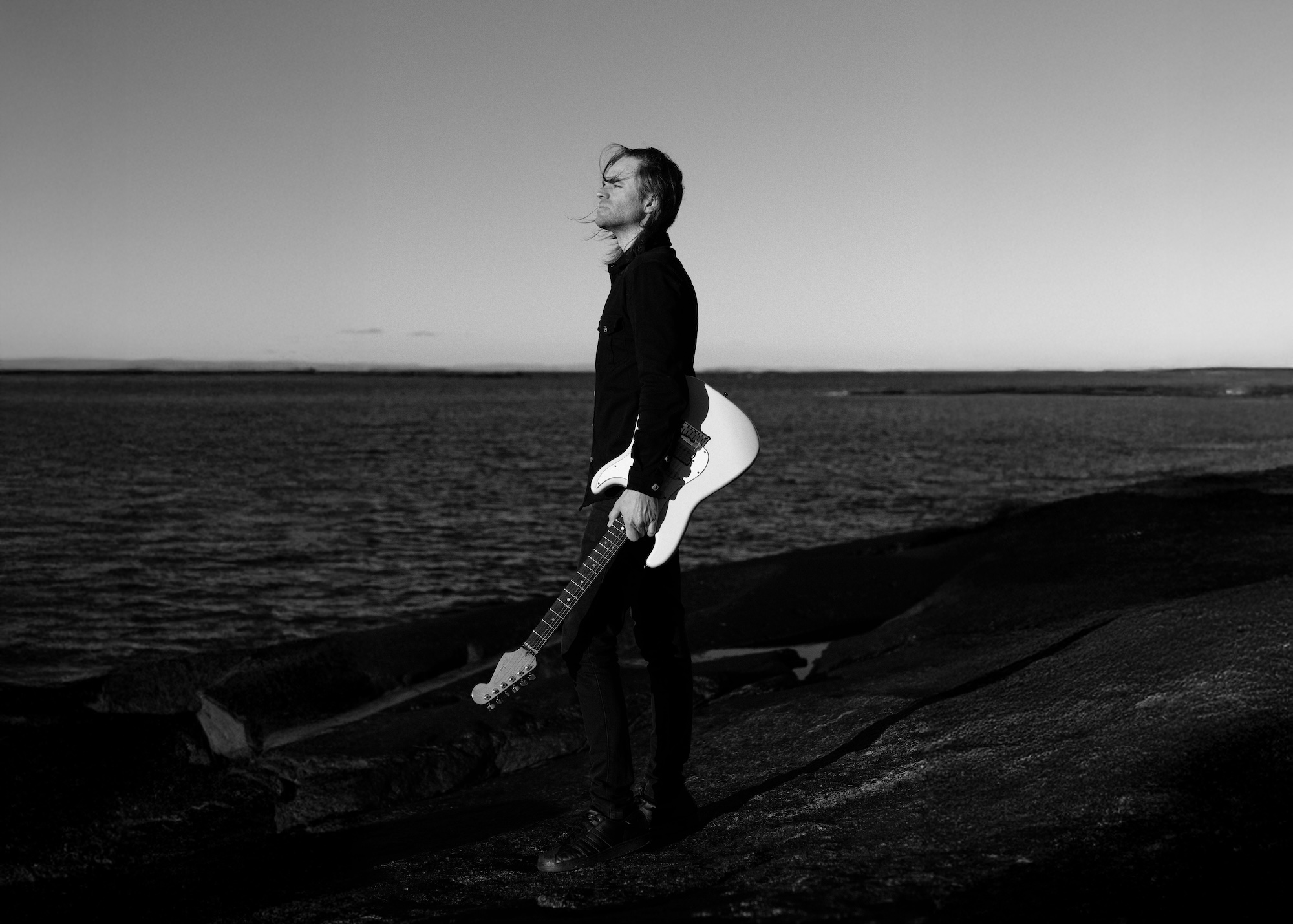 Photo by Linnea Syversen @fotograflinneasyversen
Like inviting a star for the movie.
Exactly — to make it bigger. But that's never been the point; I've never had commercial goals with this record. The point was to get the best drummer, and I know his work ethic, I know his playing — to me he's the best black metal drummer there is. We live in the same town, which helps. He liked the demos when I sent them and agreed to play on the record.
Now the lyrics — you sing in English, French and Norwegian. How do you decide which song gets which language?
That's also been a natural process, no pre-made plan. I write the music before touching the lyrics, so they're separate processes entirely. The one thing I knew from the start was that the closing track, "Visdommens Vei," had to be in Norwegian — the atmosphere is very Norwegian to me, with harmonies that lean somewhat folk-music-like. Beyond that I go on instinct. Lyrics come fast for me, unlike the music, where I take a lot of time — I like them to be an automatic, direct flow of words. "Omniprésents" felt right in French almost without thinking about it — my subconscious doing the work. The more personal songs naturally end up in French, my mother tongue. The catchier songs — "Communion," "For the Glory" — felt right in English, which is a catchier language, maybe a bit less deep for me, but catchier. I try not to over-control the artistic process, or I feel I lose the essence of what I'm doing.
How does that connect to the album title, "Guerre et Paix" — War and Peace?
If you understand all three languages it's fairly clear. It's about existential struggle — the war and peace I'm referring to isn't out in the world, it's the internal war and peace we all live with. Every song depicts a facet of that theme. "Communion" is more about aggression and hate. "Un Franc Soleil" is more about a hope that might show up one day — deeper feelings, maybe connected to depression. "Omniprésents" takes a more literal war approach, tied to the forces of nature. Each song shows a different face of it, and honestly I could write many more — war and peace is a theme that never runs dry, you could talk about it for a whole life.
You also made the cover art yourself.
Yes, I've been doing basically everything. The photo isn't mine, but I modified it and built the whole design and artwork myself.
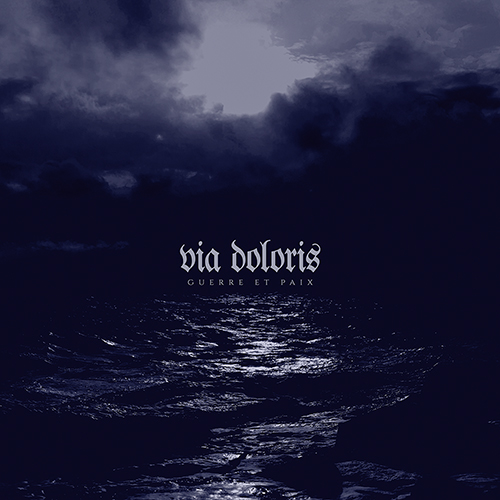 Guerre et Paix album cover. Cover photo by Linnea Syversen @fotograflinneasyversen
It's a striking cover — if I saw it in a record store without knowing the band, I wouldn't necessarily clock it as black metal. No pentagrams, no inverted crosses — it reads more like doom. What were you going for?
That's a fair point. Musically it's definitely black metal to me, but thematically I'm not sure it is — some people might disagree, and I don't really mind. I've never been interested in metal's clichés, never looked up to them, never used them to choose bands. A skull, a pentagram, an inverted cross — I never cared about that. I'm drawn to deeper lyrical concepts, what an artist has to say about life or music. So the cover doesn't touch any of those metal references — it's a modified image meant to convey coldness and the threat that runs through the war side of the album, with a glimpse of hope in the light above, an opening in the clouds, balancing it with the peace side of things.
You wrote the music, the lyrics, recorded almost everything, made the cover — was staying a solo project the whole point, rather than building a band?
It just happened naturally. I've learned in life that you're never better served than by yourself, so why not do everything if I can? I'm not a professional recording engineer, but I can record guitars at home, and I had help from people who are good at what they do for drums, vocals and mixing — but I was there the whole time. I've done a lot of design work for my projects over the years, so none of it was new to me. There was no time pressure, so I took the time to do things the way I wanted. My experience is that if you expect things from other people, you can end up disappointed — and on something this personal, having control mattered, not for control's sake, but so I wouldn't be.
Will Via Doloris stay a studio project, or are there live plans?
I'm looking into it, honestly can't say yes or no yet. I've been contacted about it. The one real issue is that I'm used to a certain level of production on my projects, whether jazz or metal — I've got real experience and I'm not playing with beginners. Via Doloris is a very small project in scope, and I'm not sure I could put together a live production that's satisfying at this stage. That'll be the deciding factor. Right now I'm back with Satyricon this year and busy with festival runs, so we'll see after the summer — maybe I'll be able to decide then.
Do you already have ideas for a next Via Doloris album, or are you pausing for now?
I've had ideas for a while, and I already have new music started — nothing ready, but a good amount from last year. The album had been finished and sitting "in a box" for a while before release, which gave me time to develop new things. I've got some other ideas connected to the project too, but I'd rather wait before saying more — it's still a bit into the unknown. I really hope everything I have planned for Via Doloris takes life. [laughs] It very probably won't stop at this album — I'd be surprised if it did.
You mentioned the Breton bagpipe and Celtic folk influence earlier. Any chance of pushing further into folk elements, or even a separate folk project? Even in the metal world, bands like Wardruna and Eihwar get a lot of love from metalheads who'd swear they're not into folk.
Honestly, I don't know that world too well. I've seen the success of Wardruna and Eihwar, but I feel pretty far from all that — it's not how I do things. I don't build visuals around it, I don't use special instruments, it's purely a musical influence in the background. I'm not heading toward pagan folk aesthetics, even though I've appreciated a lot of old folk music. I don't think that's the direction for Via Doloris. But I've got a bunch of ideas, and who knows what comes out if I mix them together someday. Never say never — but it's not my vibe right now. Definitely not.
Thank you for your time today, Gildas — and congratulations again on the album.
Thank you for the interest.
VIA DOLORIS on the web: Official site · Bandcamp · Instagram · Facebook
VIA DOLORIS on Season of Mist.
Guerre et Paix is out now on Season of Mist.
Thanks to Will Yarbrough at Season of Mist for arranging this interview.