Scorpio: You already have a long list of projects, past and present. Why did this material need a new one instead of fitting into any of them?
Tor-Helge: Many reasons, but one of the main ones, like always, is that I'm very impatient and impulsive. I got an idea and I just went for it. That's typical for me. I also have so much music lying around that I've never had the opportunity to build on. So I started collecting ideas, and I found a set of songs that I thought fit very well together, and I wanted to jump into it and make something with it.
And the older bands are either busy, or they're older people with jobs and families and obligations, so they don't have as many possibilities to drop everything and jump into a new project the way I do. So I just went for it and started another one.
The other thing is that I wanted to try collaboration instead of doing a band, or having a few people form the core of the project. I wanted it to be expansive, wide. So it was an opportunity to work more with other people and let their ideas and inspiration shape it more than I would myself. But the main reason was my impulsivity, I guess, as usual. That's why I have two thousand bands now. And once I started, it snowballed and grew almost uncontrollably, so I just followed along.
You have a large number of musicians on this, some you'd worked with before. You also let people change parts you had already written. How did the collaboration actually work?
I wanted them to have a lot of influence on the music, to do what they felt was right for every song. I made an initial set of sketches, about twenty of them, which fit nicely into the three chapters I'd planned — or maybe I shouldn't say planned, but that was roughly the idea. I sent them the whole big bunch of sketches, very stripped down. I muted a lot of what I'd recorded myself so they wouldn't be too influenced by it. And then I just told them, "Do whatever you want, whatever you feel is the right thing."
We didn't discuss much about what I expected or what I wanted it to be. I wanted it to be a collage, a mix of everything, so it was very open for everyone. All the vocalists wrote their own lyrics, and there was never any discussion about whether they should use this or that. They just sent me their results — call them experiments, improvisations, jamming, whatever. Then I got everything back and had a huge amount of very wide-ranging material, so it was a bit of a mess. And then I started to shape it and fit it all together. At that point I was more in a remixer or producer role.
There were two groups of people I asked. One was people I knew from before, from all the projects — MANES, LETHE and so on. I also had a bunch of recordings from ten years back that had never been used. They've just been following along all this time, because I save everything I make. I have an enormous folder with hundreds and hundreds of primitive sketches and ideas, and I picked things from there too, so some of them came along from the older recordings.
The third group came from one post on Facebook, where I said I had an idea about collaborations and asked if anyone wanted to do something. A bunch of people answered, and I let most of them jump in. Many of them I'd never met before. I didn't really talk to them, I just said, "Go. Do your thing. I have no idea what you're doing, I don't know you, I have no idea what you're trying to do, but do it."
So it was messy, but that was the experiment, if you can call it that. I don't really like the word experimental, but in a way it was an experiment in creating so much different material and trying to make it sound like one thing, one whole. It was very interesting work. I was surprised how easily it went, much more smoothly than I feared.
It wasn't really planned either, because initially I wanted it to be very low level. Do it yourself, post some MP3s on the internet, never talk to a label, don't call it an album. But that idea disappeared very quickly, because labels started getting in touch and people started to expect things. It snowballed much faster than I'd hoped, so I went along with it and said, "Okay, let's do it." And then we had a real project up and running. It evolved very slowly but steadily on its own. Uncontrollably.
It went from putting some MP3s online to Chapter I. How many chapters do you have in your head right now?
At the moment there are three laid out already, with the songs almost finished. Chapter two is more or less done. I need maybe a month to finish it, but I want a bit more ornaments and spices and exciting things in it, maybe a few more "what the fuck" moments. Chapter three is about fifty percent finished. So I'm quite relaxed right now, because so much of it is nearly there. What's left is more of a finishing and producer role.
The plan is three, because I had enough songs for three albums and decided at the start to do three. Whether there'll be more depends on whether people want to do more, whether they get bored, whether anyone wants to hear more. I have no idea, but there are three planned, so there will be at least three. I hope. Unless someone backs out, of course, but who knows. Let's see what happens.
Have you talked to the label about the schedule yet? Do you want them out faster than a label normally moves?
I'd like to release as fast as possible. I would really, really like to release it today if that were possible. But labels don't work like that. They're slow, which is also one of the reasons I have so many projects, because after a month I'm so restless I have to do something. My guess is it'll be the typical year or two between albums, unfortunately.
I'll start talking to the label now and start planning how we should do it, because I want to jump in and finalize it. If I started today it would be finished very quickly. But it depends a bit on the label, because they do the organization and the logistics and the money and all that. That's the boring stuff. So it's more up to them at the moment. If it were up to me it would be today. I'm restless, as you said. I always want to do more and more. But we'll see. Hopefully it's not too long until the next one, but I can't push the button myself.
Everyone sent you their recordings and you assembled it as a producer. Did you ever get together in person, or was all of it done over the internet?
I see a few of them, because they live in Trondheim — there are quite a few, four, five, six, seven of them. But not specifically for the music or for this project. Everyone worked completely on their own. I thought that was important, actually. I really liked the idea of them being distanced from the personal side of it, so they wouldn't be affected by me sitting in a room looking at them. Maybe they would have restricted themselves, or it would have changed their headspace. I liked the idea that they could hide away and do their own thing without interruptions, without anything disrupting their flow.
So everyone worked alone and sent in their material by mail or whatever. It was a distance project this time. The exception is a few things recorded for the older bands that never got used — some of those recordings are from five or ten years ago, and back then we were recording a bit differently. But apart from that, everything new for this project was done on their own.
You mentioned "what the fuck" moments. For me the biggest one on the album is the French rap in the first song.
I guess so. That was my initial guess too, because I was wondering about the video. I thought that song would be the one most people would have trouble with, especially metal people. Consider that the album is released on Season of Mist, and that's very much raw metal. I think only a minority of the fans of what that label releases are big fans of French rapping.
But surprisingly, one of the people yelling loudest for that song to be the video was Michael from Season of Mist himself, the boss. He absolutely wanted that song, because it was his favorite. We thought about it too, because it's very varied — it's probably the song with the widest span of things in it. And, as you said, it's probably the song with the biggest "what the fuck" moment. I like presenting the project that way, to set the level so you don't expect the usual. You have no idea what you're getting.
I knew some people wouldn't like it, but there were surprisingly few hateful reactions. A few, of course, but fewer than I thought. I think people are a bit more open nowadays than, say, ten years ago. We did something similar with MANES in the old days, on an album from twelve or thirteen years ago, and people were not as open to it back then. So it was surprisingly well received, considering the metal connections. It's interesting to see how people react.
I'm from Ukraine, and when I first heard "Would You Take This Heart" I thought the vocals were in Ukrainian, until I caught a few words that were different and read that it's Polish. How did you start working with Martyna Halas?
That goes back many, many years. She had contacted Eivind, who plays in ATROX, because she liked ATROX and THE 3RD AND THE MORTAL and some other Trondheim bands, and they're also in MANES. They talked about doing some projects, but it never happened.
Later, when I started thinking about a new project, I talked to Eivind about whether he knew anyone. It would be interesting to have people other than the usual ones I've worked with before, to get new impulses and new ideas. So I asked if he knew someone who'd be interested in trying something, and he told me about her and put me in contact.
She told me she'd always wanted to try something different from what she usually does. She normally does the more aggressive singing, more nu metal-ish — I don't really think it's nu metal, but more aggressive. So I was a bit skeptical, because that wasn't the vocal type I was looking for. But then she tried one song, which was actually the video song, "The Rhythm of Silence." I heard it and said, "Okay, do whatever you want on as many songs as you want," because I really liked what she was doing. I could hear that if she opened up and did whatever she wanted, there could be really nice things in there.
As for the Polish singing, I heard exactly the same reaction from someone else a little earlier — I think they also thought it was Ukrainian. There are similarities in the language, I think. It was her idea. She asked because we had the Buddhist monk chanting on that song, and she mentioned afterwards that it was nice to have this international feeling to it. So would I be okay if she did something in Polish? I said, "Of course. If that's what you want to do, do it." And eventually she added this Polish, almost spoken.
I think it's really nice, because for me, someone who doesn't understand the language, it's exotic. It makes the song different. It's probably similar to what other people feel when they hear some of my older bands where the vocalist sings in Norwegian. They have no idea what's being sung, but they can hang on to the atmosphere and the feeling instead of the words. I've always thought of vocals as an instrument, not as lyrics or poetry, so I like focusing only on the sound of it and not the words. I hope she'll do more.
I also want to talk to Marita about doing something in Norwegian, to get more of that. And there's Gabriel singing in Italian on the album, even though the lyrics are in English. So there's a bunch of languages in there.
Martyna has become almost one of the main people now, because she's singing on the new album, on the majority of the songs. Once she got the inspiration and got motivated, the songs just rolled in. There'll be much more of her next time, both her and Marita. That'll be really interesting.
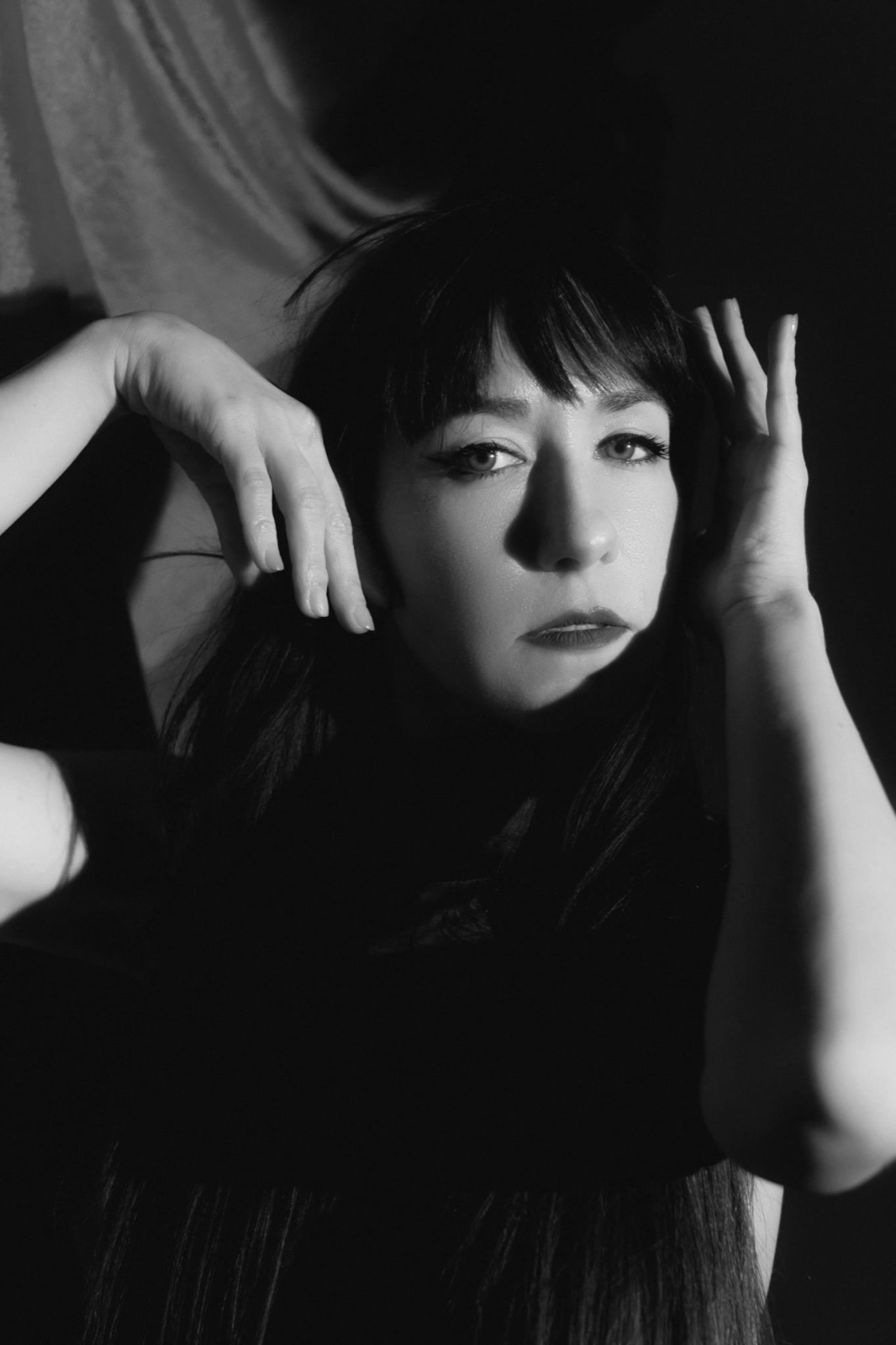
There's Polish, French, English and Buddhist monks on the record. What about Norwegian?
Maybe. As I mentioned, I've asked Marita about it. We talked a little and she said, "Yeah, why not." So we'll see. But Norwegian — for us Norwegians, if you hear singing in Norwegian, we go, "Oh no, that doesn't work." Because we've had the Norwegian pop artists, and those people singing in Norwegian sound bad.
But we'll see. I'd really like to try it. I think it could be interesting just for the variation, for the width of the languages. So why not, as long as there aren't stupid lyrics like, "Hey, hey, it's Friday, let's party." As long as there's nothing like that, it could work. I actually think there will be something, but again, plans are meant to be broken. Big, big chances, without promising anything. No promises.
On first listen, the song that stood out for me was "Behind Me." Those siren-like guitars and the sounds around them are genuinely disturbing. You can't have that one on in the background.
Yes. I think of it as the big spike sticking out of the album. If you listen in headphones with your eyes closed, you get disrupted by it, and I like that idea. That one is entirely Christophe, or Chris, whatever he calls himself, going wild on his own. And then Eivind added more distorted guitars, so it got more and more distorted.
It's a disturbing song, but a nice break from the rest, which is fairly mellow. It's good to have a bit of dirt in there, something scarier, a pointier part. It's more of a nightmare song than a dream song. A nice variation.
For chapters two and three, are you working with the same musicians, or are there new additions?
Some of it is the same. The songs I put aside weren't set aside because they were worse or less finished. I separated them very early, partly so I'd know I had good songs for chapter two, and partly because I wanted to build the flow of the album. I was very conscious about the order of the songs. I wanted it to flow completely when I listened to it, with no weirdness when the songs change, so it flows naturally. I ended up with these eight songs because that's where the flow was best.
But on the next album there are songs that are maybe more finished. I actually think there are songs there that are much, much better than what's on the first album. So I don't regret it, but I was skeptical about not using them, because I like them so much.
Those are mostly the same people. There are also a couple of contributors who recorded parts for songs that didn't happen, so there are new people on the second one already, and I've been talking to a few more. There are five, six, seven of us who have done more than before, plus a couple of new ones. So it's a mix of new and the same. The same but still different.
It'll be exciting, at least for me, because there are new faces, new voices, new instruments. But as I said, plans have a tendency to change. I never think too far ahead, because then I'll probably end up somewhere very different. At the moment it feels like a natural evolution. Not a revolution, an evolution. Even though it was all made at roughly the same time.
It's hard to nail it down and say, "That's how it's going to be," because I always want to change things and I always change my mind. Maybe I'll reorder something. But I've already set up the playlist for the next eight songs. Whatever happens, happens. I have a good feeling about the way forward.
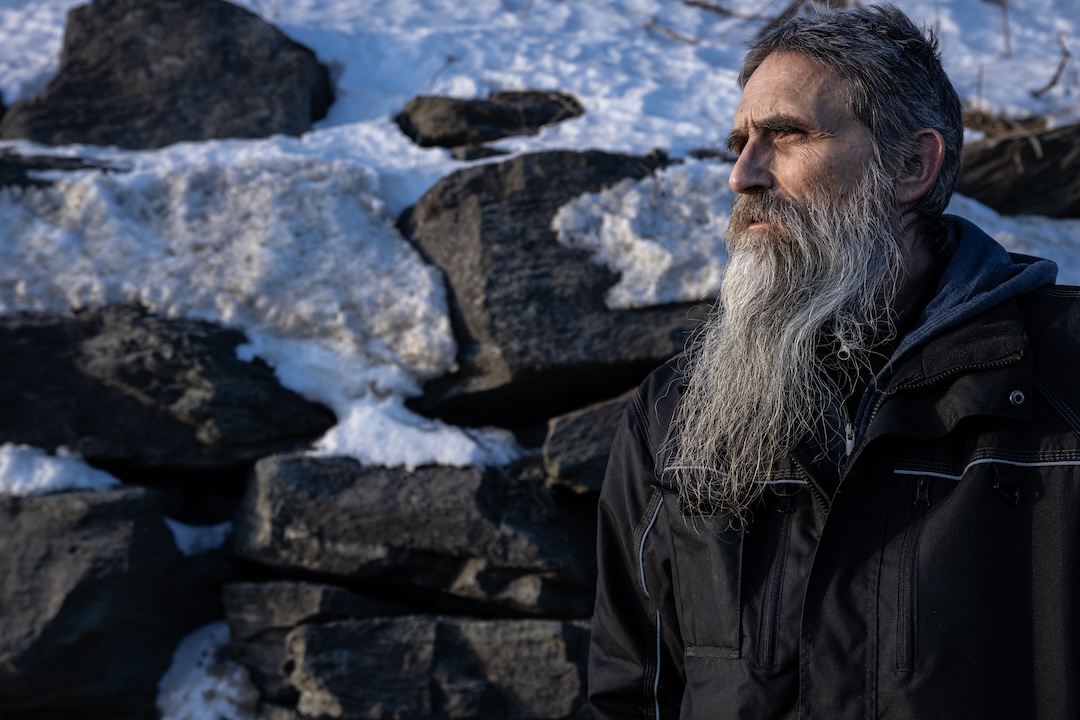
Not planning too far ahead seems to take some of the pressure off. You act on the information you have right now instead of getting stuck.
Yes. If you think too far ahead you worry too much about things, what if, what if. I think it's very important not to have that. That's also why I wanted so many songs, and why I'd already laid out three albums — so that I could be certain, maybe not consciously but subconsciously, that the second album wasn't influenced by the reaction to the first.
It's a typical thing you hear: a lot of bands think the second album is the hardest to make, because they've heard the reaction to the first one and start worrying about the next, thinking about what they have to do. I wanted to avoid that completely. And after so many years I've gotten past it anyway. I've learned not to care and to just do whatever my subconscious tells me.
It's nice not to be influenced by reactions, because then you're following your heart, or your liver, or whatever, one hundred percent. That's what I want to do. Even if people hate it, that's their problem, not mine. Of course, if we're going to release something, people have to receive it properly. But I think the next album is made without much concern about the reaction to the first one.
That's really my idea about everything. When I make music, that's the only thing that's important. I don't make music for other people, but I'm very lucky and happy that people actually like it, even when I'm not trying to please them. It's not egotistical thinking exactly, but I make music only for myself. I want to make songs that appeal to me, and I think I've managed that more this time.
HOLISSSTIK is primarily a studio project. Is there any version of it that plays live? Maybe not with everyone, but in some form?
I've thought about it, and we've talked about it with a few of the closest ones, the people most involved. Practically, it is possible, because we could strip it down completely to one laptop and one vocalist. I could arrange the songs and use my trigger equipment. But that might not be very interesting to watch.
Arranging all the logistics to get all the people together would be impossible, and organizing rehearsals and travel would be really hard. So I doubt there'll be many live performances, unfortunately. I'm also not a big fan of live playing, neither playing nor watching. I don't like the live format too much, so I'm not pushing very hard. It's possible, but the chances aren't great. It could be interesting to try it once, though, for example here in Trondheim.
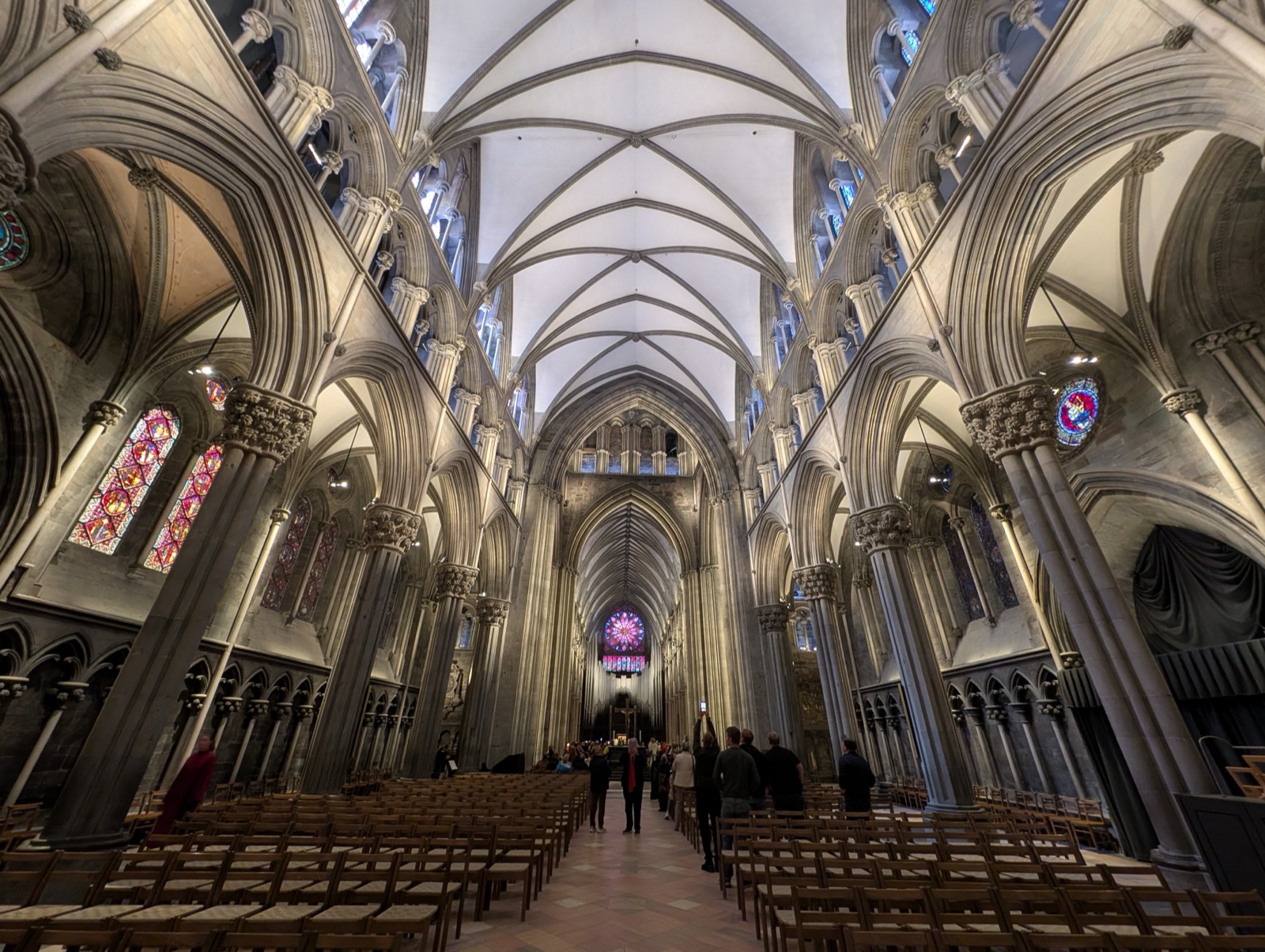
At Nidaros Cathedral?
That would be amazing. Arrange it, film it, record it, get as much out of it as we could, get as many people into the concept as possible. That could be really amazing, but the planning would be a nightmare. I won't say no, but probably not. I know a couple of the others are very interested in it, and a couple of others are very much not. There's too much to handle, because of the whole concept, because of how international the way we make this music is. Unfortunately.
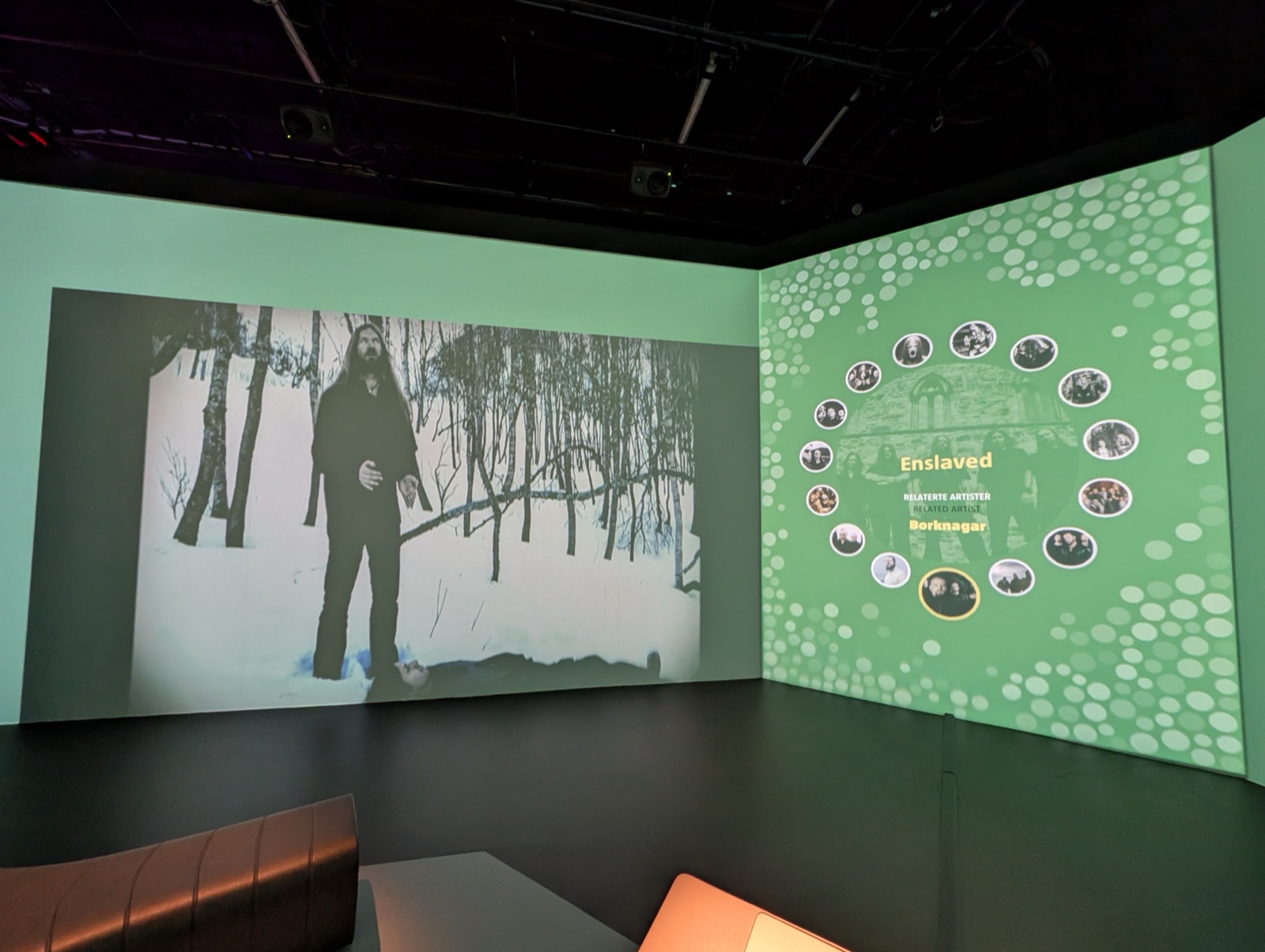
When I was in Trondheim last year I went to Rockheim. Growing up in Ukraine, metal was something underground. In Norway you go to a museum and it's just part of the culture. I'd never have imagined going to a museum and hearing ENSLAVED and DIMMU BORGIR played loud, and learning about it as culture rather than some niche underground subculture.
That's true, but I think they've realized it's a big export article. It's probably what Norway is most famous for now, the black metal period, because it was international when it happened and there was such media hysteria around it, and what happened was quite intense at the time.
They've realized it now because it's become a bit cleaner, more acceptable, and people have mellowed. It's not as oppositional, not as dangerous. Especially extreme metal — we don't see much heavy metal, for example, but extreme metal has become normalized. Everybody knows there's a lot of it. So it gets attention and it gets a position in a lot of things, in the culture, as you said, and in all that promotion.
For me it can be a bit much, because I think it waters it down and mellows it. They're actively trying to make it more acceptable, even the bands themselves, and I don't really like that. I like the offensive part, the danger part, the part people can't really accept. Now people aren't surprised if I mention that I play in some black metal bands. They say, "Okay, that's like U2," instead of being shocked. So it's a two-sided thing. It's everywhere, normalized, almost like pop music here. It's weird if you compare it to how it was in the really old days, when people almost spat on you and yelled after you.
It's probably both good and bad. I'm quite distanced from all of it now, one foot inside and one foot outside, so I see a little of both. I don't think too much about it, but it's interesting to see.
The album came out last Friday. What reactions have you seen so far, from media and from fans?
Surprisingly good, but I always have the suspicion that I only hear from people who think it's good, and the people who found it boring don't say anything. They just complain at home on their own. That suspicion is always in the back of my head. But the reactions I've been reading have been surprisingly good, even from typically more metal outlets. So there's obviously something in it that people can attach to or feel.
People probably like the atmosphere, because it's still fairly dark — not extremely dark, but more DEPECHE MODE and MASSIVE ATTACK dark than BURZUM dark. They feel that minor chord thing, maybe. And I think I still have some of the same ideas from the old metal days, I just play them on synths instead. There are actually one or two parts on this album that were used almost identically in the most extreme of the bands, almost unchanged. But because they got new dressing and new production, they suddenly become completely different, even though the notes and the chords are exactly the same. Maybe that atmosphere carries over into the more electronic material and people hear it anyway, as if it should be a metal riff. There isn't much riffing on the album though, so there's no headbanging.
It's been surprisingly good, especially from the metal circles. That was more positive than I thought it would be. I had a little fear that the Season of Mist name might affect people's opinions, that they'd be thinking about metal while they listened, because ninety percent of that audience is probably quite extreme metal. But it's been received very well, and the messages and comments have been nice too.
It's early, of course. The most energetic people, the ones who absolutely want to tell me what they think, have already come along, so those are the people I've heard from. The quieter ones might be sitting at home thinking, "Ah." I don't know. But nice reviews, point scores, that kind of thing. It looks good so far.
The label is probably more interested in that part than I am, because as soon as I got the vinyl in my hand I thought, "Okay, that's enough for me. I got everything I wanted. Perfect." For me it's a hundred percent nice. Of course it's nice to hear that people like it, that they can connect to it and feel something when they listen. That's always nice. That's the whole point of releasing anything.
So now we wait for chapters two and three. Thank you for your time today.
HOLISSSTIK on the web: Website · Bandcamp · Facebook · Instagram · YouTube
Chapter I: This Endless Solitude is out now on Season of Mist.
Thanks to Will Yarbrough at Season of Mist for arranging this interview.
Video version: